
Why Investment Properties Need Specialized Insurance Protection
Finding the best home insurance for investment property requires understanding that rental properties face unique risks that standard homeowners policies simply don’t cover. Here are the top considerations when choosing coverage:
Key Features of the Best Investment Property Insurance:
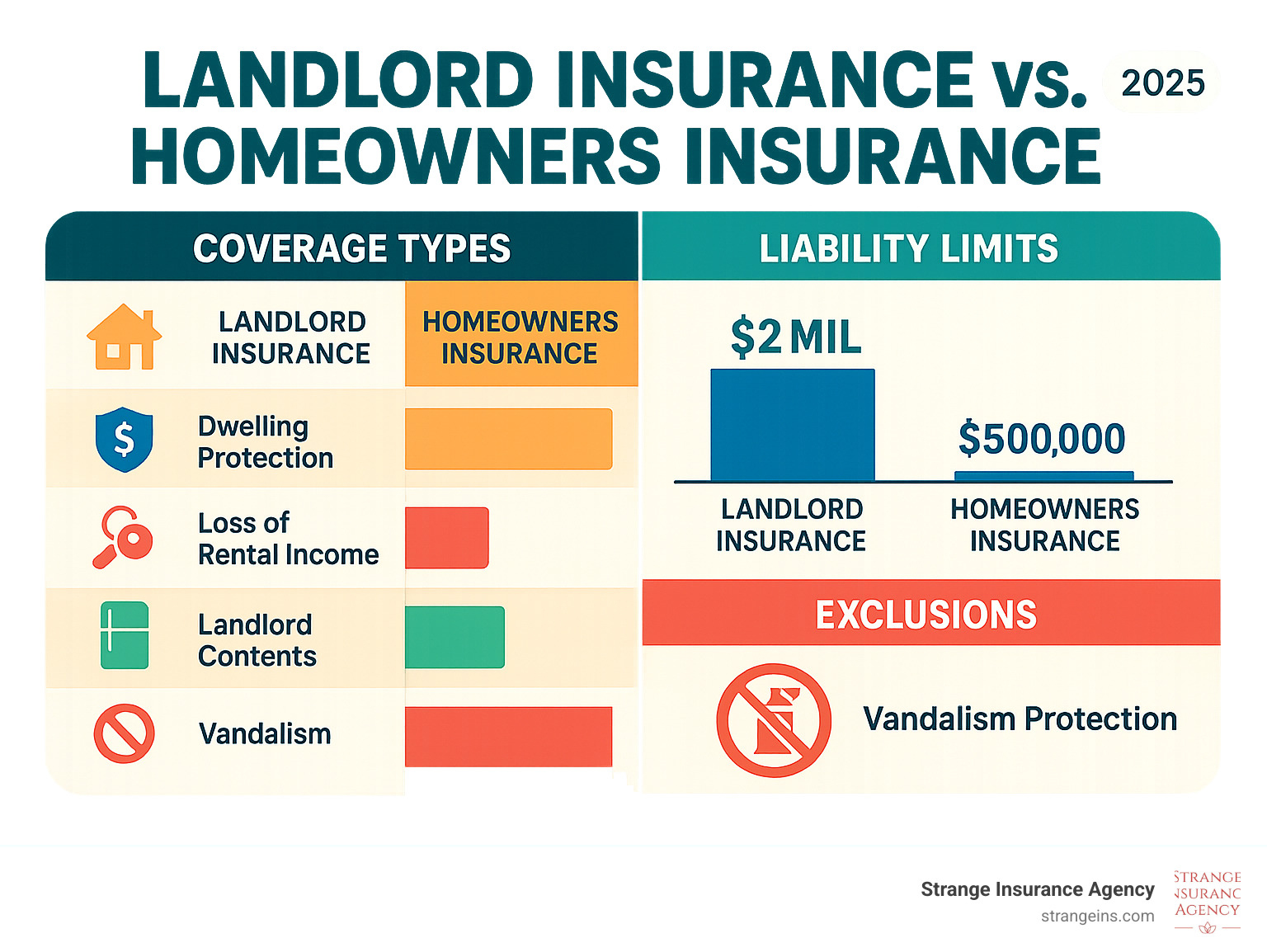
- Dwelling Protection – Covers building structure and attached fixtures
- Liability Coverage – Protects against tenant and visitor injury claims (minimum $2 million recommended)
- Loss of Rental Income – Replaces lost rent when property becomes uninhabitable
- Landlord Contents – Covers appliances, furniture, and maintenance equipment you own
- Vandalism Protection – Covers intentional damage by tenants or others
Top Provider Types:
- Traditional Carriers – Comprehensive coverage with local agents
- Digital-First Companies – Fast quotes and mobile management
- Specialty Programs – Portfolio coverage for multiple properties
- Broker Services – Custom solutions from multiple insurers
As rental property owners quickly find, standard homeowners insurance won’t cover tenant-related risks or rental income losses. Landlord insurance typically costs about 20% more than regular home insurance, with average annual premiums around $1,500 for houses and $350 for apartments in Ontario.
The stakes are high when you’re depending on rental income to cover mortgage payments and generate profit. One major claim or liability lawsuit could wipe out years of rental income without proper protection.
I’m Christian Strange, and through my 15+ years in insurance and business consulting, I’ve helped countless property investors secure the best home insurance for investment property to protect their portfolios. The right coverage strategy can make the difference between a profitable investment and a financial disaster.
Basic best home insurance for investment property terms:
- liability insurance for real estate investors
- home warranty rental property
- investment property portfolio insurance
Why Your Investment Property Needs Its Own Policy
Here’s the reality that catches many new landlords off guard: the moment you start collecting rent, you’re running a business. And businesses face completely different risks than homeowners.
Your regular homeowners policy? It’s designed for owner-occupied homes where you control what happens inside. But rental properties operate in a different world entirely.
Tenant situations create unpredictable risks that keep experienced landlords awake at night. Even careful tenants can accidentally start kitchen fires or forget to turn off faucets before leaving for vacation. When that overflowing bathtub damages the unit below, your standard homeowners policy won’t help because it excludes coverage for non-owner-occupied properties.
Empty properties become sitting ducks for problems you’d catch immediately in your own home. Small pipe leaks can flood three rooms before anyone notices. Vandalism becomes more tempting when properties sit vacant between tenants. Some insurance policies even exclude coverage entirely during vacancy periods.
Your mortgage lender adds another layer of complexity. Lender requirements for rental properties are much stricter than personal homes. They’ll demand specific coverage amounts and want to be listed on your policy. Regular homeowners insurance won’t meet these commercial lending standards.
The financial pressure intensifies when you consider cash flow protection. Your rental income covers the mortgage, property taxes, maintenance, and hopefully generates profit. But if a covered loss makes your property unlivable, you’re still paying all those expenses while losing every dollar of rental income. This double hit can turn a profitable investment into a money pit overnight.
Legal liability exposure as a landlord extends far beyond what homeowners face. You’re responsible for maintaining safe conditions for tenants and their guests. Slip-and-fall accidents, inadequate lighting, or failing to address known hazards can result in lawsuits that target your personal assets. Most experienced landlords carry at least $2 million in liability coverage for good reason.
Without proper asset preservation through the right insurance, a single major claim could force you to sell your investment property at a loss. Years of building equity and generating rental income can disappear in one unfortunate incident.
What makes the best home insurance for investment property?
The best home insurance for investment property goes beyond basic coverage to address the unique challenges rental properties face.
Coverage scope matters more than you might think. Look for comprehensive or “all-risk” policies that protect against a wide range of situations rather than just specific named events. This broader protection helps when unexpected problems arise.
Liability limits deserve serious consideration given your exposure as a landlord. Industry professionals recommend starting with $2 million in liability coverage for rental properties. This amount helps protect your personal assets if someone gets injured on your property.
Income replacement through loss of rental income coverage acts like a financial safety net. Calculate your annual rental income and make sure your policy covers at least 12 months of lost rent payments during repair periods.
Deductible strategy requires balancing your premium costs against potential out-of-pocket expenses. Higher deductibles lower your monthly premiums but increase what you’ll pay during claims. Consider your available cash reserves when making this decision.
Core & Optional Coverages Every Landlord Should Know

When you’re shopping for the best home insurance for investment property, understanding your coverage options can feel overwhelming. Let me break down what really matters so you can make smart decisions about protecting your rental property investment.
Dwelling coverage forms the foundation of your policy. This protects the physical structure of your rental property – everything from the walls and roof to the floors and built-in fixtures. You’ll want this amount to reflect what it would actually cost to rebuild your property from scratch, not just what you paid for it.
Landlord contents coverage protects the items you own as the landlord. Unlike your personal homeowners policy that covers your clothes and furniture, this coverage protects appliances like refrigerators and washers, your lawn mower and maintenance tools, and any furniture you provide to tenants.
Premises liability coverage is absolutely critical – and honestly, it’s where many landlords make costly mistakes. When someone gets hurt on your rental property, this coverage steps in to handle medical bills, legal defense costs, and potential settlements. I’ve seen slip-and-fall claims easily hit six figures, which is why most experienced landlords carry at least $2 million in liability protection.
Here’s where the best home insurance for investment property really shines: loss of rental income coverage. When a covered loss makes your property unlivable, you’re still stuck with mortgage payments, taxes, and other expenses while losing your rental income. This coverage replaces that lost rent and can even cover additional living expenses for displaced tenants until repairs are finished.
Vandalism and malicious mischief coverage protects against intentional damage – whether it’s from angry tenants, former renters seeking revenge, or random troublemakers. This includes everything from graffiti removal to replacing windows and repairing deliberate property destruction.
Water damage deserves special attention because it’s both the most common and most expensive type of rental property claim. Standard water damage protection might leave you exposed to certain types of water problems. Improved coverage can include sewer backup, water line breaks, and even overland flooding.
Legal expense coverage is like having a lawyer on speed dial. It provides 24/7 legal helplines and covers costs for eviction proceedings, tenant disputes, and other landlord-tenant legal issues. This is far more economical than hiring attorneys at $300+ per hour when problems arise.
Smart landlords also consider optional coverages like overland flood insurance for properties in flood-prone areas, earthquake coverage in seismically active regions, and equipment breakdown protection for HVAC, electrical, and plumbing system failures. Building code upgrade coverage can be a lifesaver if you need to rebuild and bring everything up to current codes.
For more detailed information about coverage options, visit our Investment Property Insurance page.
| Coverage Type | Standard Policy | Improved Coverage |
|---|---|---|
| Dwelling Protection | Replacement cost | Guaranteed replacement cost |
| Liability Limits | $1 million | $2+ million |
| Loss of Rental Income | 12 months | 24 months |
| Water Damage | Basic coverage | Comprehensive including sewer backup |
| Legal Expenses | Not included | Full coverage with 24/7 helpline |
| Vacancy Coverage | Limited/excluded | Extended vacancy protection |
The key is building a coverage package that matches your specific situation and risk tolerance. Every rental property is different, and the best home insurance for investment property for your neighbor might not be right for you.
The Best Home Insurance for Investment Property: Company Types Compared
When you’re searching for the best home insurance for investment property, you’ll encounter several different types of providers, each with their own approach to serving landlords and real estate investors. Understanding these differences helps you make the right choice for your specific situation and investment goals.
The insurance landscape has evolved dramatically over the past decade. You now have more options than ever before, from traditional face-to-face agents to cutting-edge digital platforms.
Traditional Carriers – Pros & Cons
Traditional insurance companies have been the backbone of the industry for decades, offering all-risk packages through local agents who know your area inside and out.
These established carriers shine when it comes to comprehensive coverage options. Their local agents can sit down with you face-to-face to explain complex coverage details and help you steer tricky claims situations. There’s something reassuring about having a real person you can call when things go wrong.
Multiline discounts are another major advantage. When you bundle your rental property insurance with your personal auto or homeowners coverage, you can often save 10-15% on your total premiums. These companies also typically have strong financial ratings and extensive claims-handling experience.
However, traditional carriers often come with higher premiums due to their overhead costs. Their paper-based processes can feel painfully slow when you need a quick quote or policy change.
Digital-First Providers – Pros & Cons
The tech revolution has brought us insurance companies that exist entirely online, promising instant quotes and seamless digital experiences.
These providers can give you pricing in under two minutes, and their mobile apps let you manage everything from your smartphone. Some even use AI-powered claims processing that can settle simple claims within minutes. The reduced overhead often translates to lower premiums, and you can access your policy information 24/7.
The downside? When you’re dealing with a complex rental property claim – say, a tenant’s negligence caused water damage that affected multiple units – you might find yourself wishing for more personal attention than a chatbot can provide. Coverage options may also be more limited.
Specialty Investor Programs – Pros & Cons
Some insurance programs focus exclusively on real estate investors, understanding that your needs are different from the typical homeowner.
These specialized programs offer features like portfolio blankets that can cover multiple properties under one policy, making management much simpler. Month-to-month billing adjusts as you buy and sell properties, which is perfect for active investors. Vacancy coverage addresses one of the biggest gaps in standard policies.
The trade-off is limited availability – these programs aren’t offered everywhere or for every property type. They may also require minimum numbers of properties or higher coverage amounts than smaller investors can justify.
Broker & Concierge Approach – Why It Often Wins
Working with an experienced insurance broker combines the best of all worlds: multi-quote shopping, custom bundling, and expert advice all rolled into one service.
A good broker shops your coverage with dozens of insurance companies, comparing not just price but coverage quality and claims service. They can create custom solutions that fit your exact portfolio and risk profile. When claims happen, your broker advocates for you with the insurance company.
At Strange Insurance Agency, we take this approach because we’ve seen how much it benefits our clients. We work with over 30 insurance companies to find you the best home insurance for investment property without you having to make dozens of phone calls or fill out countless forms. Our concierge service means we handle the heavy lifting so you can focus on what you do best – finding and managing great rental properties.
For more detailed information about our approach, visit Best Home Insurance for Rental Properties.
How to choose the best home insurance for investment property

The key to finding the right coverage is systematic evaluation rather than just grabbing the cheapest quote you can find.
Compare limits, not just premiums. A policy that costs $200 less per year but has $1 million liability instead of $2 million could leave you financially exposed. Look at dwelling coverage amounts, liability limits, and loss-of-rent maximums side by side.
Review exclusions carefully. Every policy excludes certain situations – the question is whether those exclusions match your risk profile. Common exclusions include normal wear and tear, certain types of water damage, and coverage gaps during extended vacancies.
Check financial ratings from AM Best or similar rating agencies. You want an insurance company with at least an A- rating. A financially weak insurer might offer attractive premiums but struggle to pay claims when disasters strike.
Service benchmarks matter more than many investors realize. Research customer satisfaction scores, average claims processing times, and complaint ratios with your state insurance department.
For additional guidance on protecting your financial interests, these helpful tips from the FDIC provide valuable consumer protection insights.
Costs, Discounts & Smart Savings
Let’s talk money – because understanding what you’ll pay for the best home insurance for investment property helps you make smart decisions and find real savings.
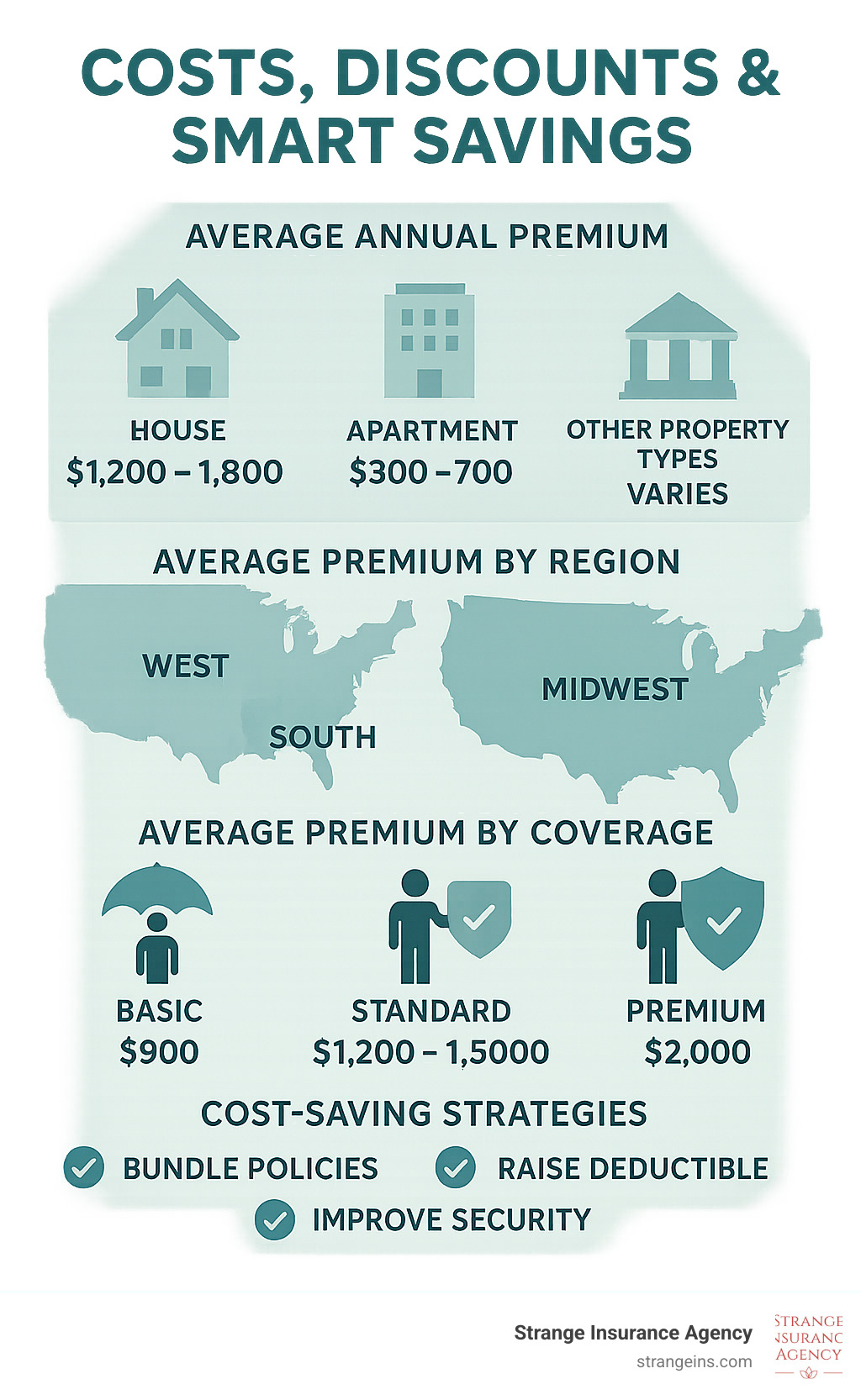
Here’s the reality: landlord insurance costs about 15-25% more than regular homeowners coverage. In Ontario, you’re looking at roughly $1,500 annually for houses and around $350 for apartment units. But don’t let these averages fool you – your actual costs depend on several key factors.
Property type makes a huge difference in your premiums. Single-family houses carry higher costs because there’s more to protect and more ways things can go wrong. Condominiums often cost less since the building structure is already covered by the HOA’s master policy. Multi-unit properties usually mean more complexity and higher premiums.
Your property’s location and characteristics play starring roles in pricing too. Urban properties might cost more due to higher crime rates, while rural properties could face different risks. Older buildings often carry higher premiums because aging electrical, plumbing, and heating systems are more likely to cause problems.
The age and condition of your property matters more than you might think. That charming 1920s rental with original wiring might look great, but insurers see potential fire hazards. Meanwhile, properties with modern safety features like monitored security systems, updated electrical panels, and fire suppression systems often qualify for meaningful discounts.
Your deductible choice directly impacts your premium costs. Choosing a $2,500 deductible instead of $500 can cut your annual premium by hundreds of dollars. Just make sure you have enough cash reserves to cover that higher deductible if you need to file a claim.
Smart landlords know how to bundle their way to savings. Combining your rental property insurance with your personal home and auto policies often opens up multi-policy discounts. Some of our clients save 15% or more just by consolidating their insurance with one carrier.
Security upgrades pay for themselves through insurance discounts. Installing monitored alarm systems, deadbolt locks, smoke detectors, and even simple upgrades like motion-sensor lighting can reduce your premiums. These improvements also help prevent claims in the first place – a win-win situation.
Maintaining a claims-free record is one of the best long-term strategies for keeping costs down. Many insurers offer substantial discounts for landlords who go several years without filing claims. This doesn’t mean you should avoid legitimate claims, but it does reward careful property maintenance and tenant screening.
If you own multiple rental properties, portfolio discounts can add up quickly. Many insurers offer better rates when you insure several properties together, and specialty programs for real estate investors often provide even better pricing for larger portfolios.
Annual payment plans might seem like a bigger upfront cost, but they eliminate monthly processing fees that can add $100 or more to your yearly costs. If cash flow allows, paying annually is almost always cheaper than monthly installments.
For detailed cost breakdowns and regional comparisons, check out our comprehensive guide on Average Rental Property Insurance Cost. The research shows that shopping around and understanding these cost factors can save property investors significant money while still securing excellent protection.
The cheapest policy isn’t necessarily the best value. The best home insurance for investment property balances comprehensive coverage with reasonable costs – protecting your investment without breaking your budget.
Frequently Asked Questions about Investment Property Insurance
When you’re researching the best home insurance for investment property, these three questions come up most often. Let me give you straight answers based on what I see working with landlords every day.
Is landlord insurance mandatory in Canada?
Here’s the thing – Canadian law doesn’t require you to carry landlord insurance, but that doesn’t mean you should skip it. Think of it like wearing a seatbelt. Nobody’s going to pull you over for not having insurance, but the consequences of going without can be devastating.
If you have a mortgage on your rental property, your lender absolutely will require adequate insurance coverage. They’re protecting their investment, and they’ll specify minimum coverage amounts in your loan agreement. You’ll also need to name them as an additional insured party.
Even without a mortgage, the financial risks are simply too high for most investors. One slip-and-fall lawsuit or major fire could wipe out years of rental income – and potentially your personal assets too. That’s why most experienced landlords carry at least $2 million in liability coverage.
I’ve seen too many property investors learn this lesson the hard way. The peace of mind alone is worth the premium cost, which typically runs about 20% more than standard homeowners insurance.
Can I require tenants to carry renters insurance?
Absolutely, and you should! This is one of the smartest risk management moves you can make as a landlord. You can include a lease clause requiring tenants to carry renters insurance with specific minimum coverage amounts.
Renters insurance protects both you and your tenants. It covers their personal belongings if there’s a fire or theft, and more importantly for you, it provides liability coverage if they accidentally cause damage to your property or someone gets hurt in their unit.
Most landlords require tenants to carry $100,000 to $300,000 in liability coverage. You can also ask to be named as an “additional interest” on their policy, which means the insurance company will notify you if their coverage gets cancelled.
The best part? Renters insurance is incredibly affordable – usually $15-30 per month. Most tenants don’t mind this requirement once they understand it protects their own belongings too.
How does loss of rental income coverage pay out?
This coverage is a financial lifesaver when disaster strikes your rental property. Loss of rental income coverage compensates you for lost rent when your property becomes uninhabitable due to a covered loss like fire, storm damage, or vandalism.
The coverage kicks in when the damage is severe enough that tenants can’t reasonably live in the property. The insurance company pays based on your actual rental income – either what’s in your lease agreement or fair market rent for similar properties.
Coverage continues until repairs are complete or until you hit your policy’s time limit, which is usually 12 to 24 months. Some policies also cover extra expenses like temporary housing for displaced tenants or rush charges to speed up repairs.
The key is having adequate limits. Calculate your annual rental income and make sure your policy covers at least 12 months of lost rent. If you’re collecting $2,000 monthly rent, you’ll want at least $24,000 in loss of rental income coverage to protect against extended repair periods.
You’re still responsible for mortgage payments, property taxes, and insurance premiums even when your property is uninhabitable. This coverage prevents that double financial hit from destroying your investment returns.
Conclusion
Finding the best home insurance for investment property isn’t just about checking a box – it’s about building a safety net that lets you sleep soundly while your properties work for you. After 15+ years in this business, I’ve seen too many investors learn the hard way that cutting corners on insurance can turn a profitable venture into a financial nightmare.
Your rental property represents more than just an investment – it’s your financial future. Custom coverage custom to your specific situation makes all the difference between weathering unexpected storms and watching your investment dreams crumble. Whether you’re just starting with your first rental or managing a growing portfolio, the right insurance strategy adapts and grows with you.
The peace of mind that comes from proper coverage is invaluable. When that 2 AM phone call comes about a burst pipe or kitchen fire, you’ll face the situation knowing your insurance has your back. No scrambling to figure out how you’ll cover repairs while still paying the mortgage on an uninhabitable property.
Liability protection of at least $2 million isn’t just a recommendation – it’s your shield against lawsuits that could reach into your personal assets. One slip-and-fall claim or serious injury on your property could wipe out years of rental income and put your family’s financial security at risk.
Rental income security through comprehensive loss-of-rent coverage keeps your cash flow stable when covered events make your property temporarily uninhabitable. This protection ensures that fire, storm damage, or vandalism won’t derail your investment plans or force you into financial hardship.
At Strange Insurance Agency, we get it. Every real estate investor faces unique challenges, and cookie-cutter insurance solutions just don’t cut it. Our concierge approach means we do the heavy lifting – shopping your coverage with over 30 insurance companies to find the perfect match for your needs and budget.
We’re proud to serve property investors throughout Virginia, North Carolina, West Virginia, and Florida. Our team combines deep insurance expertise with genuine care for your success. When you work with us, you’re not just buying a policy – you’re gaining a partner who understands your investment goals.
Ready to protect your rental property investment with confidence? Let’s have a conversation about building the best home insurance for investment property strategy for your situation. Our experienced team will walk you through your options and help you make informed decisions that support your long-term success.
Your investment deserves protection that goes beyond the basics. For information about safeguarding your other business interests, explore our business insurance services.