
Why Norfolk Homeowners Face Hidden Flood Risks
Homeowners insurance norfolk policies typically don’t cover flood damage, a gap that leaves many residents vulnerable to one of the area’s most common natural disasters. Here’s what you need to know:
Quick Facts About Norfolk Flood Coverage:
- Standard homeowners insurance excludes flood damage
- Separate flood insurance is required for water damage protection
- Norfolk averages 6+ severe weather events annually
- 30-day waiting period applies for most flood policies
- Coverage available in all flood zones, not just high-risk areas
Norfolk’s coastal location brings charm, but also weather unpredictability. Hurricanes and sudden thunderstorms pose a constant water threat to local homes.
Many homeowners assume their standard policy protects them from all water damage. This assumption creates a dangerous coverage gap, leaving families with massive repair bills after floods.
The reality is stark: when flood waters rise, standard homeowners policies won’t pay for the damage. Virginia averaged over six severe weather events annually from 2019 to 2023, with tropical cyclones being the most damaging.
I’m Christian Strange. With over 15 years in insurance, I’ve helped many Norfolk families understand the importance of combining homeowners insurance norfolk with flood protection. At Strange Insurance Agency, I’ve seen how the right coverage prevents financial devastation.
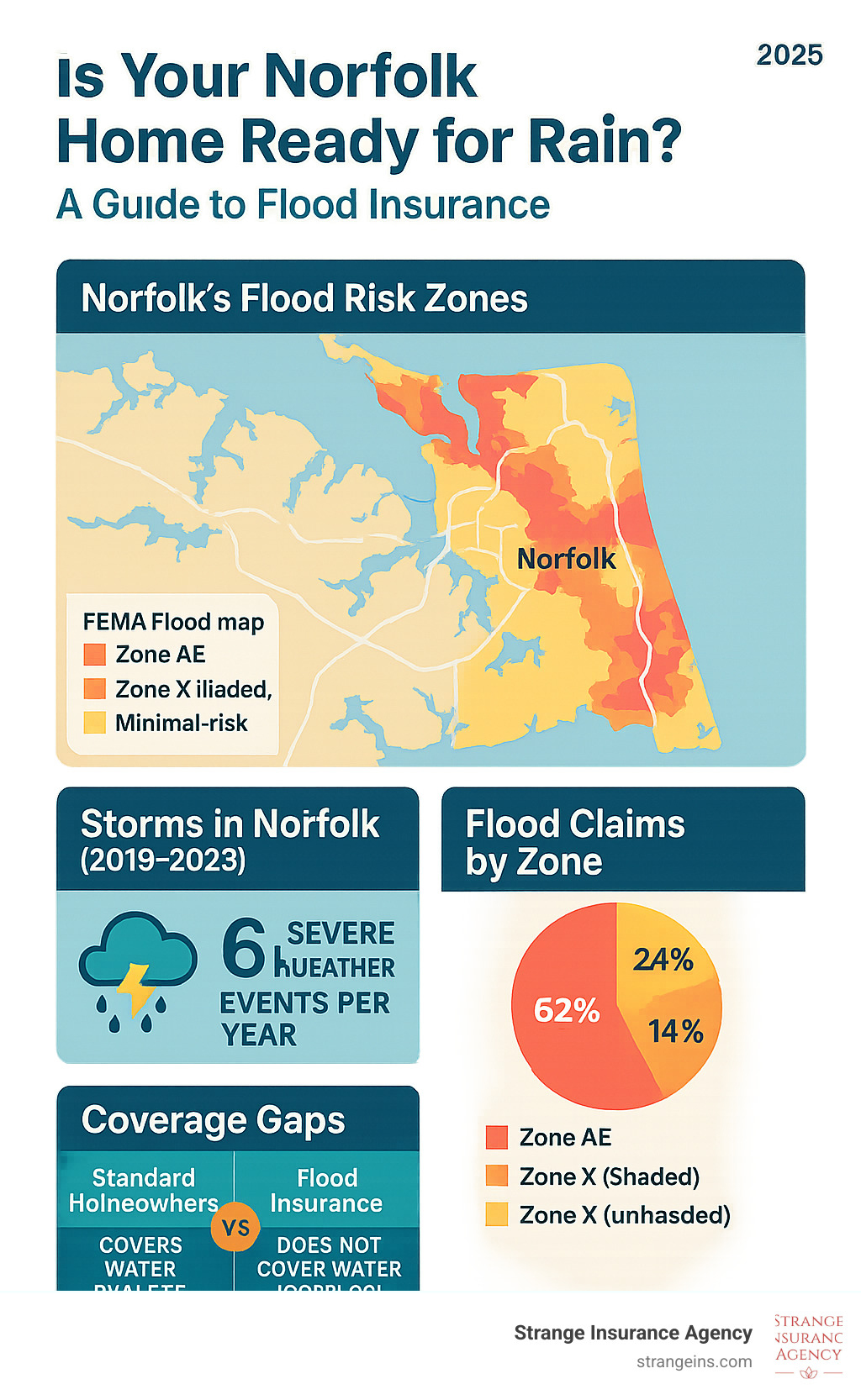
Related content about homeowners insurance norfolk:
- average cost of homeowners insurance in virginia
- home insurance quotes virginia beach
- home insurance hampton
Why Standard Homeowners Insurance Isn’t Enough in Norfolk

Many Norfolk homeowners are surprised to learn that standard homeowners insurance norfolk policies don’t cover flood damage. Too many families find this gap the hard way: after a storm floods their home, they learn their policy won’t cover the damage.
Let’s review what a standard homeowners insurance norfolk policy protects. Dwelling coverage is the backbone, protecting your home’s structure from perils like fire, lightning, and wind. If a tree crashes through your roof, this coverage helps with repairs.
Personal property coverage protects your belongings—furniture, electronics, clothes—from events like fire or theft.
Liability protection is a crucial safety net. It covers legal fees and settlements if someone is injured on your property or you damage someone else’s.
Additional living expenses are vital if a covered loss makes your home unlivable, paying for temporary costs like hotels and meals during repairs.
Norfolk’s coastal location creates unique challenges. Proximity to the Chesapeake Bay and rivers means we face hurricanes with destructive winds and water, plus severe thunderstorms that can overwhelm drainage systems.
Virginia averaged more than six severe weather disaster events annually from 2019 to 2023, according to NOAA’s National Center for Environmental Information, with many causing significant local flooding.
The critical issue is the flood exclusion in standard policies. When water enters your home from rising groundwater, overflowing rivers, or storm surge, your regular policy offers zero protection.
Common Exclusions in a Homeowners Insurance Norfolk Policy
Understanding what your policy doesn’t cover helps you identify where you need additional protection. Flood damage is the most significant exclusion for Norfolk homeowners.
The insurance definition of a flood is water that rises from the ground, covering multiple properties. This includes river overflow, rapid surface water accumulation from heavy rain, and mudflow.
Don’t confuse water backup with overland flooding. Your policy might offer an add-on for water backing up through sewers (internal plumbing failure). But water flowing into your home from outside is overland flooding, which requires a separate flood policy.
Other common exclusions include earth movement (earthquakes, landslides), neglect (ignoring a small leak that grows), and normal wear and tear.
For more details on standard policy limits, see our guide on what standard policies cover. Understanding these gaps is key to protecting your Norfolk home.
Decoding Flood Insurance: What’s Actually Covered?
When your standard homeowners insurance norfolk policy won’t cover a flood, you need specialized flood insurance. From an insurance perspective, a flood is a temporary condition where water covers normally dry land. This includes river overflow, rapid surface water accumulation, mudflow, and land collapse along waterways.
Most flood insurance is through the FEMA-managed National Flood Insurance Program (NFIP). However, private flood insurance options also exist, sometimes offering higher limits, broader protection, or better pricing. Flood insurance is focused coverage with specific rules on what is and isn’t protected.
What a Flood Policy Protects
Flood insurance has two main parts: building coverage and contents coverage.
Building coverage protects your home’s structure and permanently attached items. This includes the foundation, electrical and plumbing systems, and your HVAC. It also covers built-in appliances, permanently installed carpeting, and debris removal. Detached garages are typically covered up to 10% of your building coverage.
Contents coverage is purchased separately to protect your belongings. This includes furniture, clothing, electronics, and other personal items. Be aware of limits on valuables; most policies cap items like jewelry or artwork at around $2,500 total. We can discuss additional options for expensive pieces.
Having both building and contents coverage protects your home’s structure and your belongings. We help Norfolk families Compare Flood Insurance Quotes to find the right combination of coverage.
What’s Not Covered by Flood Insurance
Understanding flood insurance boundaries helps you plan for complete protection.
Basement improvements are a major exclusion. Finished walls, flooring, and most personal belongings in a basement aren’t covered. Exceptions include essential appliances like washers, dryers, and freezers.
Items outside your home’s main structure are not covered. This includes decks, pools, landscaping, and fences.
Another gap is Additional Living Expenses. Most NFIP policies don’t cover hotel or meal costs if you’re displaced during repairs, which can be a significant expense.
Cash, precious metals, and vehicles are not covered. Cars, boats, or RVs need protection through a comprehensive auto policy.
Flood insurance also excludes lost income from a home business and any mold or moisture damage that could have been prevented.
These exclusions highlight the need for a complete protection strategy. Understanding what’s not covered helps us identify where you might need additional planning or coverage.
Securing Your Policy: How to Get Flood Insurance in Norfolk

Getting flood insurance for your Norfolk home can be straightforward. At Strange Insurance Agency, we handle the heavy lifting, streamlining the process so you don’t have to spend hours calling different carriers. Here’s how we work together.
Step 1: Assess Your Risk
First, we assess your specific risk using actionable data to find the best protection at the right price. Flood maps are the starting point. FEMA’s maps show your property’s flood zone (e.g., high-risk Zone A/V or lower-risk Zone X), which directly impacts rates and requirements. Elevation certificates are crucial in high-risk zones. Prepared by a surveyor, this document shows your home’s elevation relative to the base flood level and can lead to significant premium savings.
Step 2: Gather Necessary Documents
The information we need is basic, and I’ll guide you through it. We’ll need property details (construction, foundation) and your desired coverage amounts. NFIP policies cap at $250k for buildings and $100k for contents, but private options can go higher.
Step 3: Work with an Insurance Professional
This is where our concierge approach shines. We access quotes from over 30 companies, giving you more options. We make comparing quotes effortless, looking beyond price to examine deductibles, limits, and exclusions. We also help you understand policy details, explaining each quote in plain English, including the critical 30-day waiting period for new policies. You can’t buy flood insurance right before a storm hits.
House Hunting in Norfolk? What to Consider for Insurance
If you’re house hunting in Norfolk, let’s discuss insurance considerations that can save you money and stress. Flood zone location is a top factor. A waterfront home in Zone V will require flood insurance with a mortgage, and premiums can be high. Even homes in moderate-risk zones can flood.
Home elevation can make or break your budget. A few feet can mean the difference between affordable coverage and high premiums. Ask if an elevation certificate exists for a property you’re considering. The age and type of foundation and proximity to water also matter.
I always advise checking insurance costs before making an offer. It’s devastating to find that homeowners insurance norfolk and flood coverage will strain your budget after you’ve fallen for a home. We can help you How to Get a Flood Insurance Quote for any property, so you can avoid sticker shock after closing.
Understanding Your Complete Homeowners Insurance Norfolk Policy and Costs
Protecting your Norfolk home means understanding the combined cost of your standard homeowners insurance norfolk policy and flood insurance. It’s about getting the right protection at a fair price, not just the cheapest premium.
Several key factors determine your flood insurance premium. Understanding them helps you make smarter coverage decisions.
Your flood zone designation is the biggest cost factor. High-risk zones (A or V) have much higher premiums than low-risk zones (X). Your deductible choice offers control over your premium; a higher deductible lowers your annual cost but increases your out-of-pocket expense for a claim. The coverage amount you choose also affects your premium. Finally, your home’s building characteristics are key, including foundation type, number of floors, and elevation.
Here’s a realistic picture of what Norfolk homeowners might expect to pay annually for flood insurance:
| Factor | Low-Risk Zone (Zone X) | High-Risk Zone (Zone A/V) |
|---|---|---|
| Estimated Annual Premium | $600 – $1,500 | $2,500 – $6,000+ |
| Typical Deductible | $1,000 – $2,000 | $1,000 – $5,000 |
| Coverage Limits | Up to NFIP maximums | Up to NFIP maximums |
| Required for Mortgage? | Often not required | Almost always required |
These are flood insurance costs only – your separate homeowners insurance norfolk policy premium isn’t included here.
Finding the Right Homeowners Insurance Norfolk and Flood Coverage
Our concierge approach makes getting the right protection easy. We take time to understand your needs and build a plan that fits your family and budget. For context on total costs, see How Much Does Virginia Home Insurance Cost?.
Bundling policies can lead to significant savings. Combining your home and auto policies often qualifies you for multi-policy discounts. With access to 30+ carriers, we explore all bundling options for you.
We also look for all available discounts. You may qualify for being claims-free, having a security system, a new home, an impact-resistant roof, or water mitigation systems.
Reviewing coverage annually is essential. As your life changes, we ensure your homeowners insurance norfolk and flood policies adapt to provide current protection at a fair cost. We build lasting relationships, providing personalized service that makes insurance feel like genuine protection you can count on.
Frequently Asked Questions about Flood & Home Insurance in Norfolk
I’ve answered many questions from Norfolk homeowners over the years. Here are the most common ones, which can help you make informed decisions about your biggest investment.
Is flood insurance required in Norfolk, VA?
The answer depends on your situation. Legally, Virginia does not require flood insurance. The state doesn’t mandate it, though going without any insurance is very risky.
However, your mortgage lender likely requires it. If your home is in a high-risk flood zone (A or V) and you have a mortgage, your lender will almost certainly require flood insurance to protect their investment.
Once your mortgage is paid off, the lender requirement ends. But the flood risk doesn’t disappear. I’ve seen homeowners drop coverage after paying off their loan, only to face devastating costs later. Even when not required, I strongly encourage flood insurance for peace of mind, as standard policies don’t cover the water risks inherent to our coastal city.
How long does it take for a flood insurance policy to take effect?
Planning ahead is critical. Most new flood policies have a 30-day waiting period before coverage begins. The waiting period prevents people from buying insurance just before a storm hits. I get panicked calls every hurricane season, but by then, it’s often too late.
There are important exceptions to this rule:
- If you’re buying a new home or in other loan-related situations where a lender requires flood insurance, the policy can often become effective immediately at closing.
- If your property’s designation changes due to updated FEMA maps, you may have only a one-day waiting period if you buy coverage within a year of the revision.
The bottom line: Don’t wait for a storm to approach. Secure your policy well before hurricane season to get through the waiting period.
Can I get flood insurance if I’m in a low-risk area?
Absolutely. It’s a dangerous myth that you don’t need flood insurance outside of a high-risk zone. This assumption can be costly.
A surprising statistic: a significant percentage of flood claims come from properties outside high-risk zones. Lower risk doesn’t mean zero risk. Heavy rain can overwhelm storm drains anywhere in Norfolk.
For those in moderate or low-risk areas (Zone X), the NFIP offers Preferred Risk Policies. They provide excellent coverage at a much lower premium, making them one of the best values in insurance.
Think of it like a seatbelt: you have it for unexpected events. For a relatively small annual cost, you gain enormous peace of mind knowing you’re protected, regardless of your zone. With unpredictable weather, it’s better to be protected and not need it than to face massive damage unprepared.
Conclusion: Protect Your Biggest Investment from Norfolk’s Next Storm

As we’ve explored, protecting your home in Norfolk from the unpredictable forces of nature, especially water, requires a comprehensive approach. We’ve seen that standard homeowners insurance norfolk policies, while vital for many perils, explicitly exclude flood damage. This is a critical gap that leaves many homeowners vulnerable to one of our area’s most prevalent risks.
Norfolk’s coastal beauty comes with its own set of challenges – from hurricane season to intense thunderstorms and the realities of sea-level rise. Proactive protection isn’t just a good idea; it’s an absolute necessity for safeguarding your biggest investment and your peace of mind.
Don’t wait until the news is broadcasting storm warnings and the rain is already falling. By then, it’s often too late to secure the coverage you need. Flood insurance, with its typical 30-day waiting period, is a policy you need to have in place before you need it.
At Strange Insurance Agency, we pride ourselves on being your concierge insurance partner. We understand the unique risks faced by Norfolk homeowners, and we’re committed to providing you with personalized, expert guidance. We don’t just offer one option; we provide multiple quotes from 30+ companies, ensuring you get comprehensive coverage custom to your needs, all with quick service and a friendly, warm approach.
Let us help you understand your options, compare policies, and secure the right protection for your home and family. Your peace of mind is our priority, and we’re ready to make getting the right insurance simple and easy.
Don’t let the next big rain event catch you unprepared. Get a personalized homeowners and flood insurance quote today!