
Why Product Liability Insurance is Essential for Small Business Success
Finding the best product liability insurance for small business is a critical step, but it doesn’t have to be overwhelming. There are affordable, straightforward options to protect your business.
Top Product Liability Insurance Options for Small Businesses:
- Business Owner’s Policy (BOP) – Bundles product liability with general liability and property coverage (average $57/month)
- General Liability with Product Coverage – Most policies include product liability automatically (average $42/month)
- Standalone Product Liability – For high-risk manufacturers or specialized products (varies by risk level)
- Industry-Specific Policies – Custom coverage for food, electronics, or manufacturing businesses
Since a landmark lawsuit in 1944 involving an exploding bottle, businesses have been held responsible for protecting consumers from product defects—even when not directly at fault.
Today, the average product liability lawsuit costs over $700,000 to defend, with jury awards averaging nearly $1.5 million. Whether you manufacture toys, import electronics, or sell beauty products online, your business is part of a supply chain that courts hold responsible for any product that causes harm.
This financial protection goes beyond lawsuits. Many retailers and major online marketplaces require proof of product liability insurance before they will sell your products. It has become as essential as a business license.
I’m Christian Strange, founder of Strange Insurance Agency. With 15 years of experience in insurance and treasury management, I’ve seen how the right coverage empowers business owners. It allows them to shift their focus from “what if” scenarios to sustainable growth.
Quick best product liability insurance for small business definitions:
Understanding Product Liability Insurance: Your First Line of Defense

Product liability insurance is your first line of defense if your business makes, sells, or distributes products. It protects your assets and provides essential peace of mind by covering costs from claims that your product caused injury or property damage. Without it, your business could face significant legal bills, medical costs, and settlements.
This insurance also opens doors. Many large retailers, suppliers, and landlords require you to have product liability coverage before they will partner with you. For sellers on major e-commerce platforms, for instance, it’s often a mandatory requirement to sell on the platform. With this coverage, you’re not just protected; you’re also positioned for growth and better partnerships. For a deeper dive, see our guide on Business Liability Insurance.
So, who needs this coverage? Due to a legal concept called “strict liability,” any business in a product’s supply chain can be held responsible if it causes harm, even if you didn’t directly cause the defect. This includes:
- Manufacturers: You hold primary responsibility for a product’s safety.
- Retailers: You can be sued directly by a customer, even if you didn’t make the product.
- E-commerce Sellers: Selling online, including on major e-commerce platforms, makes you accountable for the products you sell.
- Wholesalers & Distributors: As intermediaries, you assume risk when moving products from the factory to the retailer.
- Importers: When bringing products into the U.S., you are often legally considered the manufacturer and hold the same level of liability.
What is Product Liability Insurance and How Does It Work?
Product liability insurance is a type of “third-party coverage,” meaning it protects your business when a third party (like a customer) claims your product caused them harm. It typically covers:
- Bodily Injury Claims: Covers medical bills, rehabilitation, and lost wages if someone is injured by your product.
- Property Damage Claims: Covers costs if your product damages someone else’s property, like a faulty appliance causing a fire.
- Legal Defense Costs: This is a critical component, covering attorney fees, court costs, and other legal expenses, even if the lawsuit is ultimately dismissed.
When a claim is filed, you notify your insurer. They investigate the claim, manage your legal defense, and pay for settlements or judgments up to your policy limits. With the average product liability case costing $712,916 to defend and jury awards averaging $1,479,368, this coverage is a must-have for any business that deals with products.
What’s Covered (and What’s Not) By Your Policy
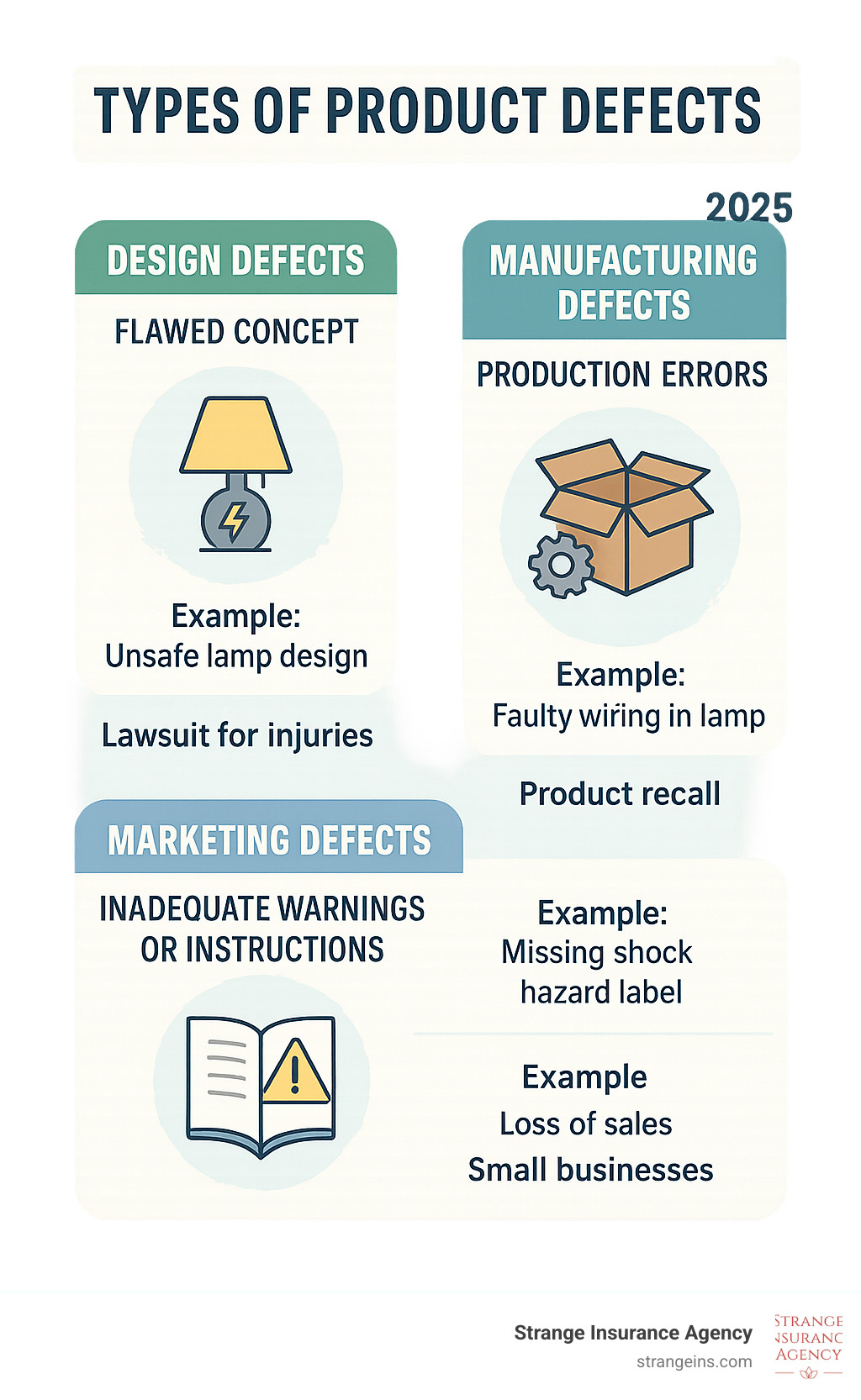
Knowing what your policy covers is key. Product liability insurance is designed to handle claims arising from three main types of product defects:
- Design Defects: The product is inherently unsafe due to its design, even if manufactured correctly.
- Manufacturing Errors: A mistake during the production or assembly process makes a well-designed product unsafe.
- Inadequate Warnings (Marketing Defects): The product lacks clear instructions or warnings about potential dangers.
It’s equally important to understand what is typically not covered. These exclusions are why a comprehensive business insurance plan is necessary:
- Employee Injuries: Covered by Workers’ Compensation insurance.
- Product Recalls: The costs of recalling a product require a separate product recall insurance policy.
- Damage to Your Own Property: Covered by Commercial Property insurance.
- Professional Mistakes: If you provide services or advice, you need Professional Liability (Errors & Omissions) insurance.
- Commercial Auto Accidents: Covered by Commercial Auto insurance.
To learn more, read our guide on What Does Business Liability Insurance Cover?. For claims that exceed your primary policy limits, Commercial Umbrella Insurance provides an extra layer of protection.
Finding the Best Product Liability Insurance for Your Small Business
Navigating the insurance world can feel complex, but finding the best product liability insurance for small business should be a straightforward process. At Strange Insurance Agency, our goal is to simplify this for you, securing coverage that fits your unique business so you can focus on growth.

When finding the right policy, we focus on policy customization, because your insurance should be as unique as your business. We also prioritize industry specialization, connecting you with carriers who understand your field, and bundling options to simplify your plan and save you money. Finally, we consider state-specific needs, using our expertise in states like Virginia, North Carolina, West Virginia, and Florida to provide guidance custom to your local market.
Choosing the best product liability insurance for small business by industry
The type of product you handle directly impacts your liability risk and insurance needs. Here are some examples:
- Retail (General Goods): A shop can face a claim if a product it sells, like a cosmetic, causes an allergic reaction.
- Food and Beverage: This industry carries high risks of illness, contamination, or allergic reactions from its products.
- Manufacturing: Businesses that design and create products face direct liability for design flaws, production errors, and inadequate warnings.
- Construction and Installation: Liability can arise if an installed component, like a piece of furniture, is faulty and causes injury or damage.
- Beauty and Cosmetology: Products like creams and makeup can cause skin reactions, making proper coverage essential.
- E-commerce and Online Sellers: Whether you’re a drop shipper or an online boutique, you are part of the supply chain. Many online marketplaces require sellers to carry product liability insurance. We often help clients, including international sellers, steer these requirements.
Finding the best product liability insurance for small business by bundling policies
For many small businesses, the most efficient way to get product liability coverage is not through a standalone policy but as part of a larger insurance package. A Business Owner’s Policy (BOP) is an excellent option.
A BOP is a convenient package that bundles three key coverages, often at a lower cost than buying them separately:
- General Liability Insurance: This is your foundational protection against claims of injury and property damage. Most general liability policies automatically include product liability coverage, making it a great starting point. Learn more about General Liability Insurance.
- Commercial Property Insurance: This protects your physical assets, such as your building, equipment, and inventory, from perils like fire and theft.
- Business Income Insurance: Also known as business interruption insurance, this helps replace lost income if your business must close temporarily due to a covered event.
A BOP simplifies your insurance by combining these coverages, reducing paperwork and providing a strong safety net for your business.
Best Options for Businesses in Virginia, North Carolina, and Beyond
Your business’s location is a key factor in determining your insurance needs. Legal environments and local risks vary by state. As a concierge insurance agency based in Virginia and North Carolina and serving clients in West Virginia, Florida, and beyond, we understand the unique landscape of our region.
We stay current on state-specific regulations and analyze local market risks that could affect your policy. This is where the importance of local expertise truly matters. Our team understands your community and its challenges, allowing us to provide customized advice that ensures you are properly insured—not over or under-covered.
Our guide to Small Business Insurance offers valuable insights for business owners looking to protect their operations.
Decoding the Cost of Product Liability Insurance
Many small business owners are relieved to learn that the cost of product liability insurance is far more affordable than they imagine. Protecting your business from potentially devastating lawsuits is an accessible investment.

The cost is clearer when you realize most small businesses don’t need a standalone policy. The best product liability insurance for small business is often bundled within a general liability policy or a Business Owner’s Policy (BOP), making it both convenient and cost-effective. You’re paying a small monthly fee to protect against potential six-figure lawsuits, making the value clear.
How Much Does Product Liability Insurance Cost?
The price of product liability coverage depends on how you purchase it. For most small businesses, the most common and affordable approach is General Liability with Built-in Product Coverage. This bundled coverage typically costs around $42 per month or $500 annually.
Industry data shows that nearly one-third of small businesses pay less than $30 per month for their general liability policy (which includes product liability), while 41% pay between $30 and $60 per month. Standalone Product Liability Policies are more expensive, averaging around $99 per month or $1,192 annually, and are typically for businesses with higher-risk products.
You can often achieve annual premium savings by paying your entire premium upfront. Most insurers offer a discount of 5-10% for paying annually instead of monthly.
Standard coverage limits of $1 million per-occurrence and $2 million aggregate provide robust protection while keeping premiums reasonable. The most accurate pricing comes from a personalized quote that considers your specific business.
What Factors Influence Your Premium?
Insurance companies assess several factors to determine your business’s risk level and calculate your premium. Understanding these can help you make informed decisions.
- Industry Risk: Businesses in higher-risk industries (e.g., children’s toys, food products) face higher premiums than those in lower-risk sectors (e.g., office supplies).
- Product Type: Items that are ingested, used by children, or have electrical components carry higher risk and cost more to insure.
- Annual Revenue and Sales Volume: Higher sales mean more products in the market, increasing the statistical chance of a claim.
- Claims History: A clean claims record can lead to better pricing, while a history of claims may increase your premium.
- Policy Limits: Higher coverage limits provide more protection but come with a higher premium.
- Deductible Amount: Choosing a higher deductible will lower your premium, but you’ll pay more out-of-pocket if a claim occurs.
- Quality Control: Documented safety and quality control measures can demonstrate lower risk and may help reduce your premium.
- Your Role in the Supply Chain: Manufacturers typically face the highest premiums, as they hold primary responsibility for product design and creation.
At Strange Insurance Agency, we leverage relationships with over 30 top-rated insurance companies to provide multiple quotes, ensuring you receive competitive rates customized to your specific situation.
Frequently Asked Questions about Product Liability Insurance
Navigating business insurance can bring up many questions. Here are answers to some of the most common inquiries we receive about product liability insurance.
Is product liability insurance included in general liability insurance?
Yes, in most cases. Product liability coverage is typically included in a standard general liability insurance policy, often as a built-in feature or an endorsement. For most small businesses, this bundled coverage is sufficient.
However, businesses with very high-risk products may need a standalone product liability policy for more extensive coverage. It is always wise to check your policy details or consult with an agent to understand your exact coverage and identify any potential gaps. This ensures your business is not unknowingly exposed.
Do I need product liability insurance if I sell online or am a drop shipper?
Yes, absolutely. The legal principle of “strict liability” means that any business in the supply chain can be held accountable if a product causes harm. This includes online sellers and drop shippers. Even if you never physically handle the product, you can be held legally responsible for injuries or damages it causes.
Furthermore, major e-commerce platforms often require their sellers to carry product liability insurance with specific coverage limits. Failing to meet these requirements can put your selling privileges and your entire online business at risk. A single lawsuit could be financially devastating, making this insurance essential for the stability of your online venture.
What coverage limits should my small business choose?
Choosing the right coverage limits is a critical decision. There are two main limits to consider:
- Per-Occurrence Limit: The maximum amount your policy will pay for a single claim or incident.
- Aggregate Limit: The total maximum amount your policy will pay out during the policy period (usually one year).
For industry standards, a general liability policy with a $1 million per-occurrence limit and a $2 million aggregate limit is a common benchmark. This level of coverage provides robust protection and meets most contractual requirements.
To determine if these limits are right for you, you must assess your risk level. Consider your product type, sales volume, and the potential severity of harm it could cause. A business selling products with a high potential for serious injury will need higher limits than a business selling low-risk goods.
Consulting an agent is the best way to assess your specific risk profile. We can help you select coverage limits that provide adequate protection without overspending, ensuring you have the best product liability insurance for small business needs.
Protect Your Business and Your Future
We’ve covered the essentials of product liability insurance, from understanding product defects to the specifics of policy coverage. It’s clear that in small business, protecting your hard work isn’t just an option—it’s a necessity.
Think of product liability insurance as a smart investment in your business’s resilience. A single claim can be financially devastating, which is why proactive preparation is crucial. Here at Strange Insurance Agency, we’re committed to helping small business owners like you “Insure Wisely and Thrive.”
We know your time is valuable, and our job is to make insurance simple. As a concierge insurance agency in Virginia and North Carolina, also serving clients in West Virginia, Florida, and across the U.S., we provide a personal touch to guide you through the process.
Our network allows us to source multiple quotes from over 30 top-rated companies. This ensures you get the best coverage options customized for your business, all delivered with the quick and efficient service you deserve.
Don’t let the “what ifs” hold your business back. Take a proactive step to safeguard your products, protect your customers, and secure your financial future. We’re ready to walk you through every step to find the best product liability insurance for small business that gives you true peace of mind.
Ready to protect your business and focus on your dreams?