
Finding Your Affordable Virginia Home Insurance Policy
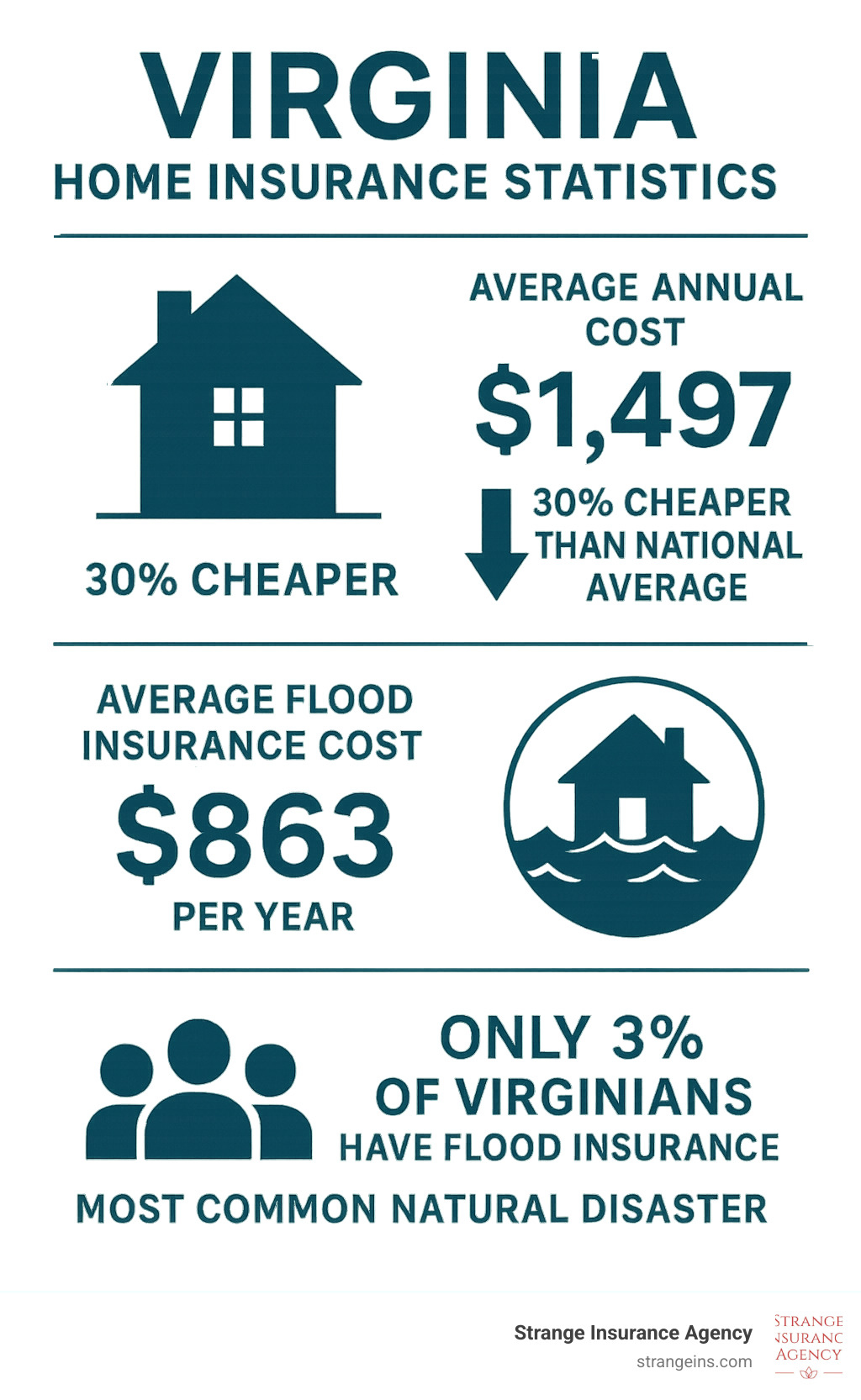
Finding the cheapest home insurance in Virginia is possible by comparing quotes from multiple insurers. The state average is around $1,497 annually, which is 30% below the national average. However, rates can vary significantly, with some of the most affordable policies costing less than $900 per year, while others can be much higher depending on your home’s location and value.
Key Money-Saving Tips:
- Bundle home and auto policies
- Increase your deductible
- Install security systems
- Maintain good credit
- Shop around annually
Virginia homeowners face unique risks, including more than six severe weather events annually, from coastal hurricanes to winter storms. Despite this, Virginia’s home insurance rates remain competitive. Location is a major factor; for example, rates in Belmont can be over 60% lower than in coastal Virginia Beach.
It’s also important to note that home insurance prices jumped 40.1% over the last six years in Virginia, making it more critical than ever to find the right balance between cost and coverage. Comparing quotes is the most effective way to secure an affordable policy that provides comprehensive protection.
Cheapest home insurance in virginia word guide:
- average cost of homeowners insurance in virginia
- best home insurance companies virginia
- home insurance quotes in virginia
Understanding the Average Cost of Home Insurance in Virginia
On average, homeowners insurance in Virginia costs around $1,497 per year, which is approximately 30% cheaper than the national average of $2,151. This makes the Old Dominion an attractive state for homeowners, especially compared to neighboring states.
However, this is just an average. Your actual cost will depend on factors like your home’s age and location, your claims history, and your credit score. It’s also important to note that home insurance prices have risen by 40.1% in Virginia over the last six years, including an 11.1% jump in 2023 and another 9.9% in 2024. This trend, detailed in an article from Axios, highlights the need to shop for competitive rates. Understanding what influences your premium is the first step toward finding the cheapest home insurance in Virginia. You can learn more in our guide on Factors That Affect Home Insurance Rates.
How Dwelling Coverage Affects Your Rate
Dwelling coverage (Coverage A) is a major factor in your premium. It covers the cost to rebuild your home and is based on replacement cost, not market value. Higher dwelling coverage means a higher premium, as it reflects a greater risk for the insurer.
Here’s how dwelling coverage typically affects the average annual cost in Virginia:
| Dwelling Coverage Limit | Average Annual Cost |
|---|---|
| $200,000 | $1,058 |
| $350,000 | $1,497 |
| $500,000 | $2,008 |
| $1,000,000 | $3,751 |
What Is the Cheapest Home Insurance in Virginia for My City?
Location is critical, and rates can differ dramatically across the Commonwealth due to local risks like crime rates and exposure to natural disasters.
For example, Belmont, VA, has one of the lowest average annual costs at just $1,180. Other inland cities also have more affordable rates, including Linville ($1,282), Leesburg ($1,304), and Abingdon ($1,384). Even a major city like Richmond ($1,475) is close to the state average.
Conversely, coastal cities in the Hampton Roads area face higher risks from hurricanes and flooding, leading to higher premiums. Virginia Beach averages between $2,451 and $2,793 per year, which can be 64% more than the state average. Other coastal cities like Norfolk ($2,280), Chesapeake ($2,230), and Accomac ($2,231) also have liftd rates. This striking difference between inland and coastal rates underscores why your specific address is so important when seeking the cheapest home insurance in Virginia.
How to Find the Cheapest Home Insurance in Virginia
Finding the cheapest home insurance in virginia is about being a smart shopper, not compromising on coverage. The most effective strategy is to shop around and get multiple quotes to compare how different companies price the same level of protection. Knowing which discounts you qualify for can also lead to significant savings. For more tips, see our guide on How to Save Money on Home Insurance.

Key Factors That Influence Your Premium
Several factors determine your home insurance premium in Virginia:
- Home Location & Construction: Coastal areas are pricier due to weather risks. The materials used to build your home (brick, wood) and its proximity to a fire station also matter.
- Roof Age and Condition: An older roof signals higher risk. A new roof can often lead to premium savings.
- Claims History: A history of frequent claims can lead to higher rates.
- Credit Score: In Virginia, a higher credit-based insurance score can often result in lower premiums.
- Protective Devices: Discounts are often available for homes with burglar alarms, fire alarms, and sprinkler systems.
- Attractive Nuisances: Features like swimming pools or trampolines can increase your liability risk and your premium.
Top Ways to Lower Your Insurance Bill
Here are some of the best strategies to reduce your premium without sacrificing essential coverage:
- Bundle Policies: Combine your home and auto insurance with the same provider for a multi-policy discount. Learn more about the Bundling Home and Auto Insurance: Benefits and Savings.
- Increase Your Deductible: Choosing a higher deductible (e.g., $1,000 instead of $500) lowers your premium. Ensure you can comfortably pay this amount out-of-pocket.
- Install Security Systems: Protective devices like smoke detectors and burglar alarms can earn you valuable discounts.
- Maintain a Good Credit Score: A strong credit history is often linked to lower insurance rates.
- Review Coverage Annually: Your needs change over time. An annual review ensures you aren’t over-insured.
- Maintain a Claims-Free History: Avoiding small claims can help you qualify for discounts.
- Ask About Other Discounts: Inquire about savings for being a new homebuyer, paying in full, or getting an advanced quote. Many insurers offer a variety of discounts, which you can explore in our article on Common Home Insurance Discounts You Might Qualify For.
What Does a Standard Virginia Home Insurance Policy Cover?
Understanding what you get for your money is crucial when looking for the cheapest home insurance in virginia. A standard policy is a comprehensive safety net for your most valuable asset.

In Virginia, the most common policy is the HO-3 form. It provides “open perils” coverage for your home’s structure (covering all damages except those specifically excluded) and “named perils” coverage for your personal belongings (covering only dangers listed in the policy, like fire or theft). For a deeper dive, see our guide on Understanding Your Home Insurance Policy.
Finding the Cheapest Home Insurance in Virginia with the Right Coverage
A low premium is only valuable if it protects you when needed. Here are the core components of a standard Virginia homeowners policy:
- Dwelling Coverage (Coverage A): This is the heart of your policy, covering the physical structure of your home. The amount is based on the replacement cost—what it would take to rebuild from scratch.
- Other Structures (Coverage B): This protects structures not attached to your house, like a detached garage, shed, or fence. It’s typically set at 10% of your dwelling coverage.
- Personal Property (Coverage C): This covers your belongings, such as furniture, clothes, and electronics. You can choose between actual cash value (which includes depreciation) or replacement cost value (which pays for new items). High-value items like jewelry may need extra coverage.
- Loss of Use (Coverage D): Also known as Additional Living Expenses, this pays for costs like hotel stays or rent if a covered event makes your home unlivable during repairs. It’s usually about 20% of your dwelling coverage.
- Personal Liability (Coverage E): This is a financial shield if you’re found legally responsible for injury to someone else or damage to their property. Standard limits are often $100,000 to $500,000, but higher limits are recommended.
- Medical Payments to Others (Coverage F): This provides a small amount of coverage (usually $1,000 to $5,000) for medical bills if a guest is injured on your property, regardless of who is at fault.
Protecting Your Home from Virginia’s Weather Threats
Virginia’s diverse geography, from the Blue Ridge Mountains to the Atlantic coast, brings a mix of weather challenges. While we focus on finding the cheapest home insurance in virginia, ensuring your policy is tough enough to handle these threats is paramount.

From 2019 to 2023, Virginia experienced more than six severe weather disaster events annually. These events include coastal hurricanes and tropical storms, inland tornadoes, severe thunderstorms with hail, and heavy winter storms. Understanding these potential threats is the first step in ensuring your home is properly protected. For more on flood risks, visit the Virginia Department of Conservation and Recreation.
Essential Additional Coverage to Consider
A standard policy has limitations, especially for certain types of water damage. Consider these extra layers of protection for Virginia’s unique weather patterns:
- Flood Insurance: Standard policies do not cover flood damage. With flooding being Virginia’s most common natural disaster, this separate policy is critical. Just one inch of water can cause over $25,000 in damage, yet only 3% of Virginians have flood insurance. The average policy through the National Flood Insurance Program (NFIP) costs about $863 per year.
- Windstorm Coverage & Hurricane Deductibles: While wind is typically covered, coastal properties may have a separate hurricane deductible. This is a percentage (1-5%) of your dwelling coverage, not a flat dollar amount, so it’s crucial to know if your policy includes one.
- Sump Pump and Water Backup Coverage: This add-on covers damage if water backs up through sewers or drains, which isn’t covered by a standard policy. New legislation effective July 1, 2025, will require insurers to offer this coverage.
- Other Key Endorsements: Depending on your location and needs, you might also consider landslide coverage for hilly areas, an umbrella policy for extra liability protection, or equipment breakdown coverage for major home systems like your HVAC.
Frequently Asked Questions about Virginia Home Insurance
Navigating home insurance can bring up questions. Here are clear, simple answers to some of the most common ones we hear from Virginia homeowners.
Is homeowners insurance required by law in Virginia?
No, the state of Virginia does not legally require homeowners insurance. However, if you have a mortgage, your lender will almost certainly require you to maintain a policy to protect their financial investment. Even if you own your home outright, insurance is an essential tool for protecting your largest asset from unexpected disasters like fire or theft.
What happens if I can’t find home insurance?
If you’ve been denied coverage in the private market, often due to a property being considered high-risk, you still have options. Virginia has a last-resort insurance program called the Virginia Property Insurance Association (VPIA), also known as a FAIR Plan. The VPIA provides basic property coverage for homes that can’t get it elsewhere, ensuring essential protection is available. You can learn more about this state-run plan at www.vpia.com.
How have Virginia home insurance costs changed over time?
Home insurance costs in Virginia have been rising, with prices jumping 40.1% over the last six years. This includes increases of 11.1% in 2023 and 9.9% in 2024. Several factors are driving this trend:
- Increased Natural Disasters: More frequent and severe weather events lead to more claims and higher costs for insurers.
- Inflation and Supply Chain Issues: The cost of construction materials and labor has skyrocketed, making repairs more expensive.
- Rising Reinsurance Costs: The insurance that insurers buy to protect themselves from massive losses has become more expensive, and these costs are passed on to consumers.
These trends make it more important than ever to shop around to find the cheapest home insurance in virginia that still meets your needs.
Let Us Help You Find the Best Rate
Finding the cheapest home insurance in virginia that provides excellent coverage can feel overwhelming, especially with rising costs and unique weather threats. The good news is you don’t have to do it alone.
At Strange Insurance Agency, we offer personalized, concierge service custom to your specific needs. As an independent agency, we partner with over 30 top-rated insurance providers. This allows us to do the heavy lifting for you, comparing multiple quotes to find the most competitive rates for the comprehensive coverage you need.
We’ll help you understand your policy, identify every available discount, and streamline the entire process. Let us put our knowledge to work for you. Our mission is to find you the cheapest home insurance in virginia that also delivers superior protection for your home and family.
Ready to find your perfect policy? Let’s chat.