
Understanding Flood Insurance Quote Variations
Does flood insurance quote differ for different companies? The answer is both yes and no, depending on whether you’re looking at NFIP (National Flood Insurance Program) policies or private flood insurance:
| Insurance Type | Do Quotes Differ? | Why? |
|---|---|---|
| NFIP Policies | No | NFIP rates are set nationally and do not differ from company to company or agent to agent. All partners use the same pricing approach. |
| Private Flood Insurance | Yes | Private insurers set their own rates based on proprietary risk models. Quotes can vary significantly, with average costs ranging from $38 to $206 per month. |
When shopping for flood insurance, many homeowners are surprised to find this dual pricing system. While NFIP policies offer consistent pricing regardless of which agent or company you contact, the private flood insurance market operates much differently. Private insurers use their own risk assessment methods, coverage options, and pricing models that can result in substantial quote variations for the same property.
The difference stems from how each system evaluates risk. NFIP uses Risk Rating 2.0, a standardized approach that considers factors like flood frequency, property elevation, and distance to water sources. Private insurers, meanwhile, may use more advanced technologies like LiDAR elevation data or proprietary AI models to determine your premium.
Understanding these differences is crucial when comparing quotes, as it can potentially save you hundreds or even thousands of dollars annually on your flood protection.
“Nobody ever thinks it’s going to be their house. You always hope for the best and prepare for the worst.” – Jeff Baugh, Houston homeowner and NFIP policyholder
I’m Christian Strange, and with over 15 years of experience in insurance and risk mitigation, I’ve helped countless homeowners steer the complexities of whether does flood insurance quote differ for different companies to find the best coverage for their unique situations.
Glossary for does flood insurance quote differ for different companies:
– compare flood insurance quotes
– national flood insurance quote
– how to get a flood insurance quote
Does Flood Insurance Quote Differ for Different Companies?
Shopping for flood insurance can feel like navigating two completely different worlds. Here’s the simple truth: yes, flood insurance quotes can differ significantly between companies, but only when you’re looking at private market options. If you’re considering the federally-backed National Flood Insurance Program (NFIP), you’ll get the same rate no matter who you call.
This distinction makes a huge difference in your shopping experience. The NFIP works with over 47 insurance companies and thousands of independent agents nationwide. Despite this vast network, all NFIP policies use exactly the same pricing methods—whether you get a quote from your local agent or a national carrier.
The private flood insurance market plays by entirely different rules. Since its expansion after 2012, private flood insurers operate much like other insurance markets—each company creates its own risk models, sets its own rates, and offers different coverage options. This freedom creates significant price variations between providers—sometimes amounting to thousands of dollars difference annually for identical properties!

NFIP quotes: why they stay identical everywhere
The NFIP has been around since 1968, created by Congress and managed by FEMA to provide flood protection when private insurers weren’t willing to take the risk. Under this program, rates are set at the federal level and remain consistent across all providers.
When FEMA implemented Risk Rating 2.0 in 2021, they modernized their approach. Instead of the old zone-based pricing, they now use a sophisticated model that considers:
- Your property’s specific location
- How often flooding occurs in your area and what types
- How close you are to water sources
- Your property’s elevation
- What it would cost to rebuild your home
- Specific characteristics of your building
This consistency means if you request NFIP quotes from five different insurance agents, you should receive exactly the same premium amount (assuming you provide identical information each time). As one FEMA representative put it, “You don’t have to shop around for NFIP policies. Each provider offers the same rates.”
The Write-Your-Own (WYO) Program allows private insurers to handle NFIP policies, but these companies don’t set the rates—they’re merely administrators who receive a fee while the federal government takes on the actual risk.
Private market quotes: where and why they can swing widely
The private flood insurance world operates in a completely different fashion. Since gaining momentum after the Biggert-Waters Flood Insurance Reform Act of 2012, private insurers have developed their own sophisticated risk assessment tools that often differ dramatically from NFIP’s approach.
So does flood insurance quote differ for different companies in the private market? Absolutely, and sometimes dramatically! Here’s why:
Private insurers develop their own unique flood risk models, weighing factors differently than NFIP or their competitors. They have complete underwriting flexibility, choosing which properties they want to insure and pricing policies based on their appetite for certain risks. Many use cutting-edge technology like artificial intelligence, machine learning, and high-resolution LiDAR data to assess flood risk with greater precision than government models.
Private policies typically include additional coverages not available through NFIP, which affects pricing. And unlike the NFIP, private insurers must generate profits for shareholders, which naturally influences their pricing strategies.
The result? For the identical property, private flood insurance premiums can vary dramatically. The national average cost hovers around $98 per month, but rates swing from as low as $38 to as high as $206 monthly depending on which carrier you choose.
A real-world example: a homeowner in Virginia Beach might receive a quote of $750 annually from one private insurer while another might charge $1,800 for seemingly identical coverage. This variation makes comparison shopping absolutely essential when exploring private market options.
NFIP vs. Private: Why Some Quotes Stay the Same and Others Change
Ever wonder why your neighbor got a different flood insurance quote than you did? To truly understand why flood insurance quotes differ between companies, we need to look at the fascinating story behind these two very different insurance markets.
The NFIP wasn’t just created on a whim. Back in the 1960s, after several catastrophic floods, private insurers basically said “no thanks” to covering flood damage. It simply wasn’t profitable. This left countless Americans without protection, so the government stepped in with the NFIP in 1968. For decades, it was pretty much the only flood insurance game in town.
The program wasn’t just about selling insurance policies. It had a bigger mission: encouraging communities to manage their floodplains better and reduce future flood damage. Think of it as insurance with a purpose beyond just paying claims.
Private insurers only started coming back to the flood market in a meaningful way after 2012. What changed? Data and technology. Today’s insurers have sophisticated modeling tools that help them price flood risk with much greater precision than ever before.
| Feature | NFIP | Private Flood Insurance |
|---|---|---|
| Rate Setting | Nationally standardized rates | Company-specific rates |
| Building Coverage Limit | $250,000 | Up to $5,000,000 or more |
| Contents Coverage Limit | $100,000 | Up to $1,000,000 or more |
| Loss of Use Coverage | Not included | Often available |
| Waiting Period | 30 days typically | 0-15 days typically |
| Basement Coverage | Limited | Often more comprehensive |
| Replacement Cost for Contents | Not available | Often available |
| Elevation Certificate | May help lower rates | Often not required |
Risk Rating 2.0 map overlay

In October 2021, FEMA rolled out what they called “Risk Rating 2.0” – a complete overhaul of how they price flood risk. Before this change, they mostly looked at whether your home was in a designated flood zone (like Zone A or Zone V). Now, they take a much more nuanced approach.
The new system looks at your specific property’s risk factors: how often flooding happens in your area, what types of flooding you might experience (river overflow, storm surge, heavy rainfall), how close you are to water, your property’s elevation, and how much it would cost to rebuild your particular home.
This approach is actually much fairer. It means your premium more accurately reflects your actual risk. But here’s the important part – these rates are consistent nationwide. If you get an NFIP quote in Virginia Beach or New Orleans, the same risk factors are evaluated using identical methods.
As one insurance expert told me, “With Risk Rating 2.0, two similar-looking houses on the same street might pay different rates based on their individual characteristics – maybe one is liftd a foot higher than the other – but those rates won’t change depending on which agent sells the policy.”
Private improvements that impact price
Private flood insurers have brought some welcome innovations to the market, and these directly impact why flood insurance quotes differ between companies:
When your home floods, you might need somewhere else to stay while repairs happen. Private insurers typically include loss-of-use coverage that pays for hotel stays or rental homes – something standard NFIP policies don’t offer.
Many homeowners are shocked to learn that NFIP only covers up to $250,000 for your home’s structure. If you have a higher-value home, private insurers offer much higher coverage limits – often $500,000, $1,000,000, or even more for luxury properties.
With NFIP, your personal belongings are typically covered for their depreciated value (actual cash value). Many private insurers offer replacement cost coverage for your possessions, meaning you get enough to buy new items, not just the used value of what was damaged.
Need coverage fast? NFIP policies have a 30-day waiting period before coverage kicks in. Private policies often have shorter waiting periods – sometimes as little as 7 days, or in some cases, no waiting period at all.
Finished basements are particularly vulnerable in floods, and NFIP offers limited protection for these spaces. Private policies frequently provide more comprehensive basement coverage for your finishes and belongings.
These improvements offer better protection, but they do affect what you pay. A policy with replacement cost coverage and higher limits will typically cost more, but the additional protection is worth considering, especially if you have a higher-value home or live in a high-risk area.
The bottom line? When it comes to flood insurance, you have options – and understanding the differences between NFIP and private coverage is the first step to making a smart choice for your home and budget.
Key Factors That Influence Any Flood Insurance Quote
Whether you’re getting an NFIP policy or shopping the private market, several key factors will influence your flood insurance premium. Understanding these variables helps explain why flood insurance quotes differ for different companies and can help you make informed decisions about coverage.
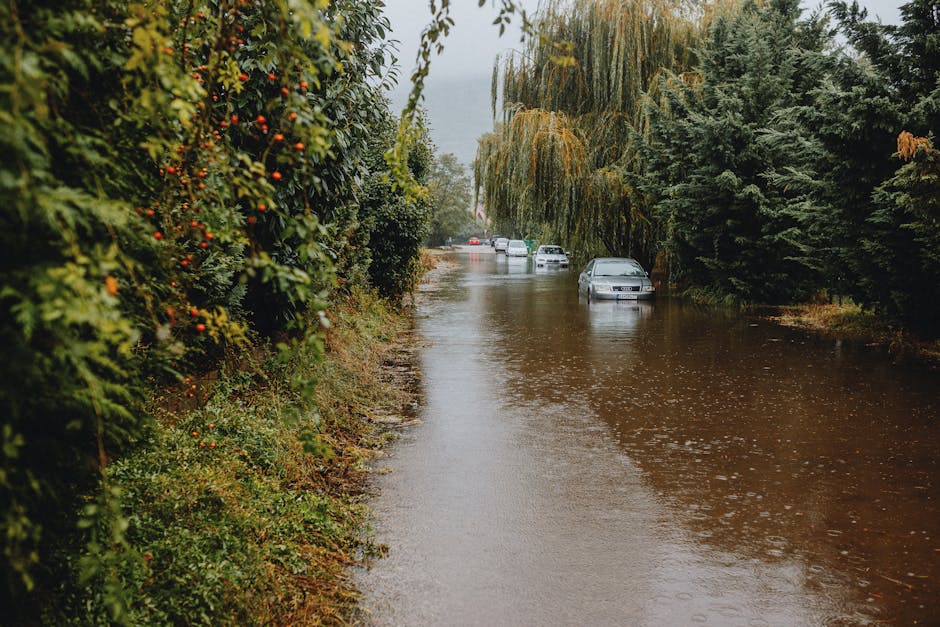
Flood risk & mapping
Your property’s flood risk is the single most influential factor in determining your premium. Think of it as your home’s “flood fingerprint” – entirely unique to your location.
FEMA flood zones play a significant role here. If your home sits in a high-risk Special Flood Hazard Area (Zone A or Zone V), you’ll typically face higher premiums than neighbors in moderate-to-low risk Zone X areas. The numbers tell the story – FEMA data shows Zone V homeowners pay around $2,324 annually with NFIP, while Zone X residents pay substantially less at approximately $674 per year.
But it’s not just about the zone designation. How close your home sits to water matters tremendously. Under Risk Rating 2.0, insurers measure this distance with remarkable precision. A home perched on a riverbank faces different risks than one a quarter-mile away, even within the same flood zone.
Your area’s flooding history also weighs heavily. Communities that have repeatedly flooded often see higher rates across the board, reflecting the heightened risk patterns insurers have observed over time.
Elevation might be the most powerful factor you can actually control. The higher your property sits above the expected flood level (known as base flood elevation), the lower your premium may be. This makes perfect sense – water flows downhill, after all.
Flood zones aren’t set in stone. FEMA periodically updates flood maps, which can shift your property into a different risk category. I’ve seen homeowners shocked when their property was remapped into a higher-risk zone, causing their premiums to jump dramatically. Thankfully, grandfathering provisions sometimes apply to ease this transition.
You can explore more about FEMA’s flood mapping at the National Flood Insurance Program website.
Property & policy choices
Beyond your home’s location, the physical characteristics of your property significantly impact your flood insurance costs.
The age and design of your home matter. Older homes built before current building codes were established often face higher premiums. Similarly, certain architectural features can either help or hurt your rates. For instance, homes with basements typically cost more to insure against floods than those without – for obvious reasons.
Building materials play their part too. Flood-resistant materials can sometimes result in lower premiums, particularly with private insurers who may have more flexibility in their rating systems.
The vertical profile of your home matters as well. Multi-story buildings often enjoy lower flood insurance rates because the risk is distributed across multiple floors, with living spaces and valuables potentially located above the likely flood level.
Your coverage choices naturally affect your premium too. Higher coverage limits mean higher premiums – that’s just insurance math. Similarly, deductible choices create a direct trade-off: selecting a higher deductible typically lowers your premium but increases what you’ll pay out-of-pocket after a flood.
As one of my colleagues often tells clients, “While a high deductible looks nice on your monthly bill, you don’t want to be scraping together thousands for that deductible after a flood because you wanted to save a few dollars each month.”
Contents coverage and optional add-ons like loss of use coverage (with private policies) will increase your costs but provide valuable protection when you need it most.
Discounts & ways to lower premiums
Don’t lose hope if your initial quote seems high – several strategies can help reduce your flood insurance costs.
Community participation matters more than most people realize. If your town or city participates in FEMA’s Community Rating System (CRS) by implementing floodplain management practices that exceed minimum requirements, you might qualify for premium discounts up to 45%. It’s essentially a reward for living in a community that takes flooding seriously.
Elevation certificates can be your best friend when seeking lower rates. These documents officially verify your building’s elevation relative to the base flood elevation and can sometimes help secure significantly lower premiums, particularly with NFIP policies. The upfront cost of obtaining one can pay for itself many times over.
Smart mitigation measures can make a substantial difference too. Elevating utilities like water heaters and electrical panels, installing proper flood vents, raising your entire structure, or filling in basements can all reduce your risk profile and your premium along with it. I recently worked with a Virginia Beach homeowner who saved nearly $400 annually after installing flood vents and providing an elevation certificate to their insurer.
Payment structure can even impact your bottom line. Some private insurers offer modest discounts for paying annually rather than monthly – a small but welcome savings opportunity.
For more tips on reducing your premium, check out our guide on how to get a flood insurance quote that works for your budget.
Smart Shopping Steps to Lower Your Premium
Given that flood insurance quotes differ for different companies in the private market, strategic shopping can lead to significant savings. Here’s how to approach the process:

Step-by-step to compare multiple quotes
Shopping for flood insurance doesn’t have to be overwhelming. Before diving in, gather all your property details including your address, year built, construction type, number of floors, and any elevation certificates you might have. This preparation will make the comparison process much smoother.
I always recommend starting with an NFIP quote as your baseline. This rate will be identical no matter which agent provides it – a helpful anchor point for your search. From there, explore what private insurers offer. You might be surprised at the variation!
When comparing quotes, accuracy is your best friend. Double-check that each company is working with the same information about your property. I’ve seen homeowners get excited about a seemingly great deal, only to find later that the quote was based on incorrect square footage or other details.
Look beyond just the premium price. A policy that saves you $300 annually might actually cost you thousands if it has critical coverage gaps. Compare coverage limits, deductibles, and additional features side by side. Sometimes paying a bit more provides substantially better protection.
Thankfully, the digital age has made this process much easier. Many insurers now offer instant online quoting tools that provide estimates in minutes rather than days. You can compare flood insurance quotes from the comfort of your couch!
When sticking with NFIP makes sense—when switching doesn’t
Despite the potential savings with private policies, sometimes the NFIP remains your best choice. If your mortgage lender specifically requires an NFIP policy because you’re in a high-risk zone, your options may be limited to NFIP coverage or private policies that meet specific equivalency requirements.
Properties with severe flood risk or multiple previous claims often face challenges in the private market. Private insurers may decline coverage entirely or charge rates so high that the NFIP becomes the more affordable option.
“I’ve had clients with homes in severe repetitive loss areas who simply couldn’t find private coverage at any price,” shares one flood insurance specialist. “The NFIP became their only viable option.”
If you benefit from grandfathered NFIP rates after a map change, be careful about switching. Once you leave the NFIP program, you permanently lose those grandfathered rates – even if you decide to return later.
Also worth noting: NFIP coverage is only available in communities that participate in the program by adopting floodplain management ordinances. The program’s dual mission includes both providing insurance and encouraging communities to implement regulations that reduce flood risk.
Leveraging private options for added protection and savings
Private flood insurance can offer remarkable advantages for many homeowners. If your home’s value exceeds the NFIP’s $250,000 building coverage limit (which is increasingly common in today’s real estate market), private insurance can provide that additional protection you need.
Many private policies shine with their specialized endorsements. Features like swimming pools, outdoor property, or additional structures often receive better coverage than under standard NFIP policies. One Virginia homeowner told me, “I was thrilled to find my gazebo and detached workshop could be fully covered under my private policy – something the NFIP couldn’t match.”
Bundling opportunities represent another advantage. Several private insurers offer meaningful discounts when you package your flood coverage with homeowners or auto insurance. These savings can add up quickly.
When disaster strikes, claims processing speed matters enormously. Private insurers frequently process claims faster than the NFIP, which can make a tremendous difference during widespread flooding events when you’re trying to rebuild your life.
The flexibility of deductible options with private policies allows you to tailor coverage to your financial situation. You might choose a higher deductible to lower premiums if you have emergency savings, or opt for a lower deductible if you prefer more predictable out-of-pocket costs.
A Florida homeowner recently shared her experience: “My premium increased dramatically through FEMA, so I decided to shop around. I found a private insurer online and was amazed when they saved me $1,200 off my renewal premium. The coverage was actually better too!”
At Strange Insurance, we understand how overwhelming this process can feel. Our access to quotes from over 30 companies ensures you’ll get comprehensive coverage options quickly, without having to contact multiple agencies yourself.
Frequently Asked Questions about Flood Insurance Quotes
Does flood insurance quote differ for different companies if I stay with NFIP?
No, it doesn’t – and that’s actually by design. When you’re shopping for NFIP coverage, you’ll get the exact same rate whether you call a big national insurance company or your local independent agent. This happens because NFIP flood insurance rates are set at the federal level and remain consistent across all 47+ insurance companies and thousands of independent agents that sell these policies.
Think of it like buying a postage stamp – the price is the same no matter which post office you visit. NFIP operates on this standardized pricing model using their Risk Rating 2.0 methodology. The only reason you might see different NFIP quotes would be if there were inconsistencies in the property information provided or if you selected different coverage options.
Can shopping around really cut my premium even in a high-risk zone?
Absolutely! This is where exploring private market options can really pay off, especially if you live in a high-risk flood zone. While NFIP rates are set in stone, private insurers march to the beat of their own drum, using proprietary risk models that might view your property’s flood risk quite differently than FEMA does.
Many homeowners in high-risk zones have finded savings of 20-40% by switching to private flood insurance. I recently helped a client in Virginia Beach cut their premium by nearly a third while actually improving their coverage limits. Just remember – if you have a federally-backed mortgage in a Special Flood Hazard Area, make sure any private policy you consider meets your lender’s requirements.
As one satisfied Houston homeowner shared: “Rocket Flood shopped the marketplace for me quickly and within 2 hours they saved me 35% on my flood insurance. They made the process quick and easy.”
How does FEMA’s Risk Rating 2.0 affect quotes I receive from different agents?
FEMA’s Risk Rating 2.0, rolled out in 2021, completely transformed how NFIP calculates premiums, but one thing remained unchanged – NFIP rates stay consistent across all providers. This new system takes a much more nuanced approach to assessing flood risk by considering:
- How frequently your area floods
- Multiple flood types (river overflow, storm surge, coastal erosion, heavy rainfall)
- How close your home sits to water
- Your property’s elevation
- What it would cost to rebuild your specific home
Under this new system, two seemingly identical houses on the same street might receive quite different NFIP quotes based on their individual risk profiles. However, those quotes will be identical regardless of which insurance agent or company provides them. It’s like getting your credit score – different banks might offer you different loan terms based on that score, but the score itself doesn’t change depending on who checks it.
This rating overhaul affects roughly 5 million policyholders nationwide. Some homeowners have seen welcome decreases in their premiums, while others face increases (though these are capped at 18% annually for most policies to prevent bill shock).
If you’re confused about how Risk Rating 2.0 might be affecting your flood insurance costs, we’d be happy to walk you through it at Strange Insurance. As an independent agency serving Virginia and North Carolina, we can help you understand both your NFIP options and potential private market alternatives that might better fit your needs and budget.
Conclusion
The answer to “does flood insurance quote differ for different companies?” isn’t a simple yes or no. It depends on which type of flood insurance you’re considering. NFIP quotes remain consistent no matter where you get them, while private market quotes can vary dramatically based on each company’s unique approach to risk assessment.
This dual system creates both challenges and opportunities for homeowners. While shopping around for NFIP coverage won’t lead to different prices, exploring private market alternatives could potentially save you hundreds or even thousands of dollars – or provide significantly better coverage custom to your specific situation.
When it comes to protecting your home from flood damage, here’s what you need to remember:
NFIP rates are set at the federal level and remain the same whether you get a quote from your local agent or a national insurance chain. The price is the price, period. Private flood insurance is a different story – quotes can vary dramatically for identical properties because each company uses their own risk models, coverage options, and pricing strategies.
The coverage differences between policies matter enormously. Higher limits, lower deductibles, and additional features like loss-of-use coverage will impact what you pay. Since FEMA introduced Risk Rating 2.0, NFIP pricing has become more personalized based on your specific property characteristics rather than just flood zone designations.
Don’t forget that taking steps to mitigate flood risk – like installing flood vents or elevating utilities – can help reduce your premiums with both NFIP and private policies. These investments often pay for themselves over time through lower insurance costs.
At Strange Insurance Agency, we understand flood insurance can be confusing. We’re here to help you steer both NFIP and private market options with confidence. As a concierge insurance agency serving Virginia, North Carolina, and beyond, we leverage our partnership with Goosehead Insurance to provide multiple quotes from over 30 carriers, ensuring you find the right coverage at a price that makes sense for your budget.
Don’t leave your flood protection to chance. Learn more about flood coverage or contact us today to explore your options and secure the protection your home deserves.