
Why Electricians Need Specialized Protection
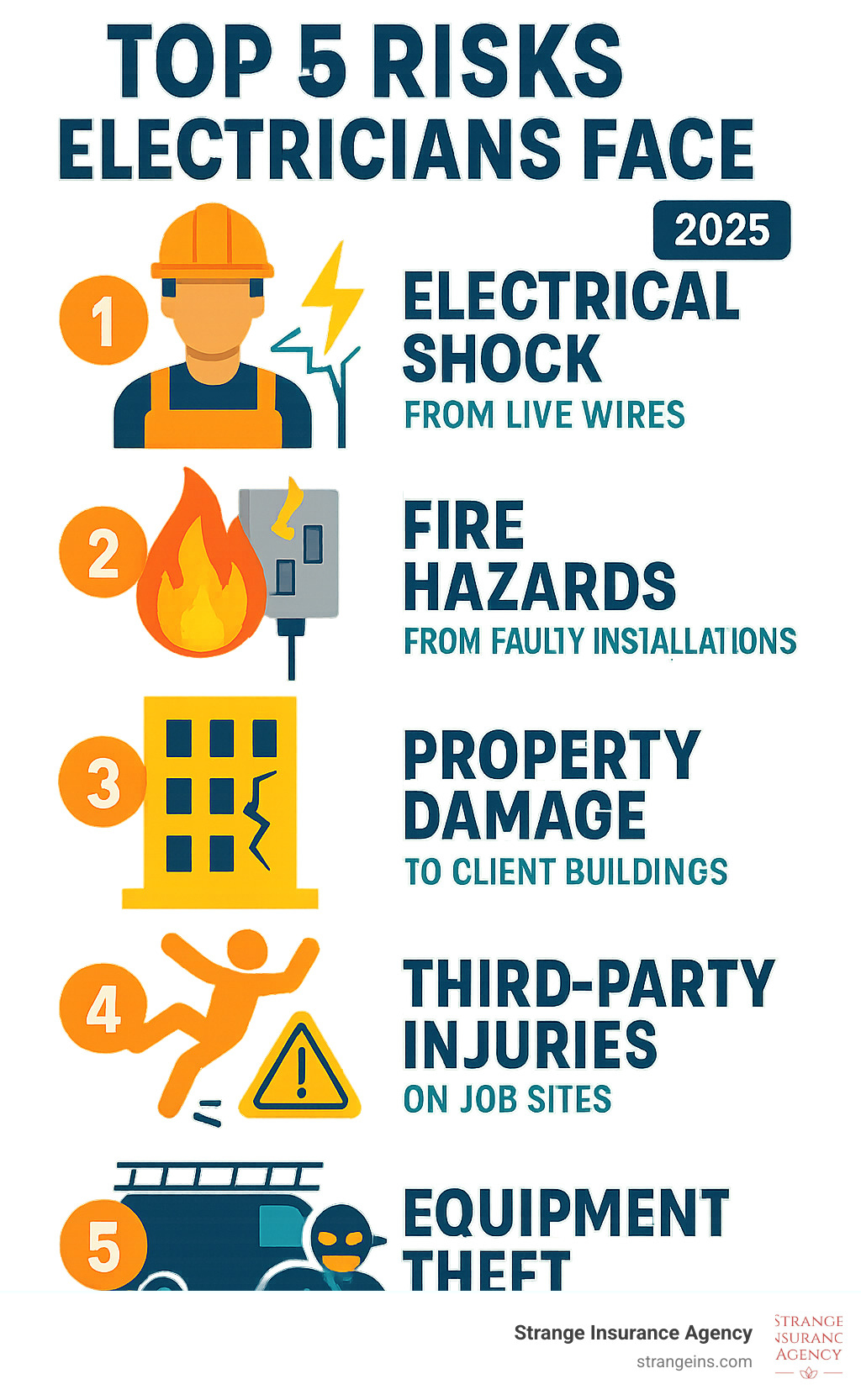
Electrical liability insurance protects contractors and electricians from financial losses due to third-party injuries, property damage, and lawsuits from their work. This coverage is essential because electrical work carries unique risks, from live wire accidents to fires caused by faulty installations.
Quick Answer for Electrical Liability Insurance:
- General Liability: Covers third-party injuries and property damage (e.g., client trips over toolbox).
- Professional Liability (E&O): Covers errors in electrical work and advice (e.g., incorrect wiring design).
- Completed Operations: Protects against claims after work is finished (e.g., fire from faulty wiring).
- Workers’ Compensation: Required by law in most states for employees.
- Commercial Auto: Covers business vehicles and equipment transport.
- Tools & Equipment: Protects expensive electrical tools and equipment.
Working with electricity means facing serious liability. A single mistake can cause fires, electrocution, or property damage worth thousands. Without proper insurance, one incident could destroy years of hard work and savings.
I’m Christian Strange, and with over 15 years in insurance and risk management, I’ve helped countless electrical contractors secure the coverage they need. At Strange Insurance Agency, I understand the unique challenges you face and work to find custom solutions that provide real peace of mind.
Simple guide to electrical liability insurance:
- liability insurance for professionals
- general liability insurance for independent contractors
- what does business liability insurance cover
Why Electrical Liability Insurance is Essential
As an electrician, you work with forces that can cause serious harm in an instant. That reality makes electrical liability insurance essential for protecting your business. The risks are significant: according to a study on job-related electrical injuries, an average of 125 electrical shock incidents occur annually. Many of the fires fire departments respond to also trace back to electrical issues.
Bodily injury claims can arise if a client gets an electrical shock or trips over your equipment. Property damage can occur if you accidentally damage electronics or if a faulty connection causes a fire after you’ve left. The financial impact can be devastating, as small businesses face $182 billion in lawsuit costs annually. Without proper coverage, a single claim could wipe out your savings.
Beyond financial protection, solid insurance coverage builds client trust and ensures business continuity. It shows you’re a professional who takes responsibility, which can be the deciding factor in winning contracts.
What Does Electrical Liability Insurance Cover?
Electrical liability insurance primarily refers to General Liability coverage custom for your trade. It’s a safety net for unexpected events on the job site, typically covering:
- Third-party injuries: Protects you if someone is hurt due to your work or equipment.
- Client property damage: Covers damage to a client’s belongings, like a broken fixture or water damage from a nicked pipe.
- Completed operations: Protects you from claims that arise after a job is finished, such as a fire caused by faulty wiring months later.
- Advertising injury: Covers claims related to your marketing efforts.
- Legal defense fees & medical payments: Helps with legal costs and minor injury payments without a full lawsuit.
For a comprehensive look at these protections, check out more on what business liability insurance covers.
The Importance of Electrical Liability Insurance for Licensing and Contracts
In many cases, you can’t legally operate without proper insurance. State licensing requirements often mandate specific coverages. This isn’t just red tape; it’s a recognition of the serious risks involved in electrical work.
Furthermore, client contracts and general contractors almost always require proof of insurance before you can start a job. This certificate of insurance shows you are financially responsible for your work. Having the right coverage isn’t just about meeting requirements—it’s about winning bids. Many clients won’t consider an uninsured contractor, so insurance demonstrates professionalism and gives them confidence in your work.
When you’re ready to secure your business with proper coverage, you can get a business insurance quote that meets all these essential requirements.
Core Insurance Coverages Every Electrician Needs
Just like a well-wired electrical panel needs multiple circuits to function properly, your electrical business needs several foundational policies working together to provide comprehensive protection. These aren’t optional extras – they’re the essential coverage that keeps your business operations running smoothly, no matter what challenges come your way.

General Liability vs. Professional Liability (E&O)
Many electricians get confused about the difference between General Liability and Professional Liability insurance. Think of it this way: one covers the physical world, the other covers your expertise. Both are crucial forms of electrical liability insurance, but they protect against completely different risks.
General Liability Insurance handles the tangible accidents that happen during your work. When a client trips over your extension cord and breaks their wrist, or when you accidentally drill through a water pipe and flood their basement, General Liability steps in. It covers bodily injuries to third parties, property damage you cause, and even advertising injuries if someone claims your marketing materials harmed their reputation.
Professional Liability Insurance, also called Errors & Omissions (E&O), protects against the financial consequences of your professional mistakes. This kicks in when your expertise falls short – like designing a circuit that can’t handle the load, giving incorrect advice about electrical codes, or making installation errors that cost your client money. It’s about negligence claims and professional slip-ups, not physical accidents.
Here’s how they differ in real situations:
| Coverage Type | General Liability | Professional Liability (E&O) |
|---|---|---|
| What it covers | Physical injuries and property damage to others | Financial losses from professional errors or advice |
| Electrician example | Client trips over your toolbox and gets injured | Incorrect wiring design causes system failure and lost revenue |
| When it applies | Accidents during work or on your premises | Claims about your professional services or expertise |
| Key benefit | Protects against common workplace accidents | Guards against malpractice and service failure claims |
Most electricians need both coverages because accidents happen in the physical world and professional mistakes can be costly. You can learn about Errors and Omissions Insurance to understand how this professional coverage works.
Workers’ Compensation for Your Team
The moment you hire your first employee, Workers’ Compensation insurance typically becomes a legal requirement. This isn’t just bureaucratic red tape – it’s a lifeline that protects both your team and your business when workplace injuries occur.
Electrical work is inherently dangerous. Arc flashes can cause severe burns, falls from ladders happen, and cuts from sharp tools are common. When one of your electricians gets hurt on the job, Workers’ Compensation covers their medical bills, pays a portion of their lost wages while they recover, and handles rehabilitation costs if needed.
But here’s the part many business owners don’t realize: this coverage also protects you from employee lawsuits. Without Workers’ Compensation, an injured employee could sue your business directly for medical costs, lost income, and pain and suffering. Those lawsuits can be devastating, even if you did nothing wrong.
State mandates vary, but most require coverage as soon as you have employees. Whether you’re operating in Virginia, North Carolina, or anywhere else, we help you steer these requirements and find coverage that fits your team size and budget. Check out Workers Compensation Insurance for Contractors to see how this essential protection works.
Commercial Auto Insurance
Your work vehicles are rolling toolboxes, carrying thousands of dollars worth of equipment to job sites every day. Yet many electricians make the dangerous assumption that their personal auto insurance will cover business use – it won’t.
Commercial Auto Insurance protects vehicles used for business purposes, whether you own the company truck or your employees use their personal vehicles for work. When you’re driving to a job site, transporting materials, or heading to pick up supplies, you’re conducting business. If an accident happens during these activities, your personal auto policy will likely deny the claim.
This coverage handles liability for injuries and property damage you cause in an accident, plus physical damage to your own business vehicles. Picture this: your van loaded with expensive electrical equipment gets rear-ended on the way to a commercial job. Commercial Auto Insurance would cover repairs to your vehicle, replace damaged tools and materials, and pay for injuries to other drivers involved.
The peace of mind is worth it. You work hard to build your electrical business – don’t let a vehicle accident wipe out years of progress. Learn more about Commercial Auto Insurance and how it protects your mobile operations.
Specialized Coverage for Unique Electrical Operations
As your electrical business grows, standard policies might not cover every scenario. Whether you’re installing fiber optics or working on large commercial projects, your insurance needs evolve. Specialized coverage is designed to fit these unique challenges, and at Strange Insurance Agency, we find policies that match your specific operations.

Tools & Equipment Insurance (Inland Marine)
Your tools are a significant investment and the key to your livelihood. Tools & Equipment Insurance, also called Inland Marine coverage, protects these valuable assets wherever your work takes you—to job sites, in your truck, or in transit. This policy covers tool theft, which is unfortunately common, as well as equipment damage from accidents. It can also include installation floaters to protect materials like electrical panels before they are installed.
When you’re ready to protect your livelihood, we can help you get a quote for tools & equipment that covers everything you need to keep working.
Commercial Umbrella Insurance
Catastrophic claims, like a fire causing millions in damage, can exceed the limits of your standard policies. Commercial Umbrella Insurance provides an extra layer of protection when your other policies, like General Liability, reach their limits. For example, if your policy has a $1 million limit but you face a $3 million lawsuit, this coverage helps pay the difference, protecting your business and personal assets. This high-asset protection is vital as your business takes on larger projects.
You can explore Commercial Umbrella Insurance options that fit your specific risk level and business size.
Cyber Liability Insurance
Even electricians face cyber threats. If you store customer data, use digital tools for invoicing, or work with smart home technology, you are exposed to cyber risks. A data breach could expose sensitive customer information, leading to costly lawsuits.
Cyber Liability Insurance helps cover costs from digital disasters. It can pay for data recovery, legal fees, and lost income if a cyber attack disrupts your operations. As technology becomes more integrated into electrical work, protecting your digital assets is as important as protecting your physical tools.
Understanding the Cost and How to Get a Quote
Understanding electrical liability insurance costs doesn’t have to be complicated. Your premiums are influenced by several straightforward factors, and knowing them helps you budget and find ways to save.

Key Factors That Affect Your Premium
Your insurance premium is customized to your business based on several key factors:
- Revenue and Number of Employees: Higher revenue and more employees generally mean more projects and greater exposure, which can increase premiums.
- Location: Operating in Virginia may have different rates than North Carolina, West Virginia, or Florida due to state-specific regulations and claim patterns.
- Claims History: A clean record can lead to lower rates, while a history of claims may increase costs.
- Type of Work: Residential service calls carry different risks than large-scale commercial or industrial projects.
- Policy Limits: Higher coverage limits provide more protection but also result in higher premiums.
How to Save Money on Your Premiums
There are several ways to keep your insurance costs reasonable without sacrificing protection:
- Bundle Policies: Combining General Liability and other coverages into a Business Owner’s Policy (BOP) often leads to discounts.
- Implement Safety Programs: Documented safety protocols and regular team training can lower your premiums.
- Choose Higher Deductibles: A higher deductible can significantly reduce your premium, but you’ll pay more out-of-pocket for a claim.
- Pay Annually: Most insurers offer a discount for paying your premium in one annual sum instead of monthly.
- Maintain a Clean Claims History: Safe, quality work is the best long-term strategy for lower insurance costs.
Ready to see how these factors apply to your business? You can get an instant quote to explore your options.
Information Needed for a Quote
To get an accurate quote for your electrical liability insurance, have the following information ready:
- Business Details: Your official business name, address, and years in business.
- Business Size: Your estimated annual revenue, number of employees, and total payroll.
- Operations: A description of your work (e.g., residential, commercial, industrial, solar).
- Desired Coverage: The policy limits you need, such as $1 million per occurrence for General Liability.
- Claims History: Information about any past claims on previous insurance policies.
With these details, we can efficiently compare options from our network of over 30 top-rated insurance companies to find the right coverage for your needs and budget.
Frequently Asked Questions about Electrician Insurance
As an electrician, you probably have questions about how electrical liability insurance really works in practice. After helping hundreds of electrical contractors over the years, I’ve noticed the same concerns come up again and again. Let me address the most common ones with straight answers.
How does completed operations coverage protect me after a job is done?
Here’s the thing about electrical work – problems don’t always show up right away. You might finish wiring a commercial building perfectly, pack up your tools, and get paid. But three months later, a fire breaks out due to what investigators claim was faulty wiring from your installation.
Completed operations coverage is your safety net for exactly these situations. It protects your business against claims of bodily injury or property damage that occur after you have finished a project and left the job site. Without this protection, you’d be personally responsible for defending yourself against these claims, even when the work was done correctly.
This coverage is automatically included as a key part of your General Liability Insurance policy. It ensures your liability doesn’t magically disappear just because you’ve moved on to your next project. Think of it as insurance that follows your completed work wherever it goes.
How do I get a certificate of insurance (COI)?
Almost every client or general contractor will ask for this before you start work. A certificate of insurance is simply a one-page document that proves you have active coverage and shows your policy limits.
The good news? Getting one is usually quick and easy. Once you have coverage with us, you can typically request a COI from your insurance provider through their online portal or mobile app – often available instantly. Many of our clients can generate these certificates themselves 24/7 without waiting for business hours.
We also help our electricians obtain and send these certificates directly to their clients when needed. It’s one less thing you have to worry about when you’re trying to land that next big project or meet a contractor’s deadline.
How does the claims process work?
Nobody wants to deal with a claim, but if something happens, knowing what to expect makes the whole process less stressful. Here’s how it typically works:
Contact your insurance provider immediately when an incident occurs – don’t wait to see if it becomes a problem. You’ll need to provide basic details about what happened: the date, time, location, and a clear description of the incident.
An adjuster gets assigned to your case within a day or two. This person becomes your main point of contact and will investigate what happened, assess any damages, and guide you through resolving the claim according to your policy terms. They handle the heavy lifting so you can focus on your business.
The key is reporting incidents quickly and honestly. Even if you’re not sure whether something is covered, it’s better to report it and let the insurance company make that determination. We’re here to help you through every step of the process, making sure nothing falls through the cracks and that you understand what’s happening at each stage.
Secure Your Business with the Right Coverage
Your electrical work powers the world around us – from the lights in family homes to the complex systems that keep businesses running. But with that essential service comes real responsibility and genuine risk. Electrical liability insurance isn’t just another business expense or regulatory checkbox; it’s your shield against the unexpected moments that could otherwise derail everything you’ve built.
Think about it this way: you’ve spent years perfecting your craft, building relationships with clients, and growing your reputation. One unexpected incident – a fire weeks after you’ve finished a job, an injury on a work site, or even a simple accident with expensive equipment – could put all of that at risk without proper protection.
At Strange Insurance Agency, we’ve worked with electricians across Virginia, North Carolina, West Virginia, and Florida long enough to know that your insurance needs are as unique as your business. Whether you’re a solo contractor handling residential service calls in Norfolk or running a team that tackles major commercial installations, we understand the specific challenges you face every day.
Here’s what makes us different: we don’t just sell you a policy and disappear. We can compare quotes from over 30 top-rated companies to find you the best coverage at the right price. We handle all the complex comparisons and paperwork, so you can spend your time doing what you do best – keeping the lights on for your clients.
The peace of mind that comes with comprehensive protection is invaluable. When you know you’re properly covered, you can focus on growing your business, taking on bigger projects, and building the future you want. Your clients will trust you more, general contractors will want to work with you, and you’ll sleep better knowing that one unexpected event won’t destroy years of hard work.
Ready to power up your protection? Get a comprehensive business insurance quote today and let us handle the complexities while you focus on what matters most – your business and your clients.