
Why House Insurance for Buy to Let Is Essential for Your Investment Success
House insurance for buy to let is a specialized policy that protects rental properties from damage, provides liability coverage, and covers lost rental income.
Key Components of Buy-to-Let Insurance:
- Buildings Coverage – Protects the property’s structure.
- Contents Coverage – Covers landlord-owned items like appliances.
- Liability Protection – Covers injuries and accidents on the property.
- Loss of Rental Income – Reimburses lost rent during repairs.
- Legal Expenses – Covers eviction and legal costs (optional).
Being a landlord comes with unique risks that standard homeowners insurance won’t cover. With over 54% of landlords experiencing property damage from tenants, the right protection is crucial. A single incident could devastate your investment returns.
Rental properties face different challenges than owner-occupied homes, including tenant-related damage, liability claims, and loss of rental income. These can quickly turn a profitable investment into a financial burden.
With over 15 years in insurance, I’m Christian Strange. I’ve helped countless investors use house insurance for buy to let to protect their rental income and build long-term wealth. The right coverage turns potential disasters into manageable business expenses.
Terms related to house insurance for buy to let:
- investment property insurance
- liability coverage for rental property
- average rental property insurance cost
What is Buy-to-Let Insurance and Why Do You Need It?
House insurance for buy to let is simply another name for landlord insurance. It’s a specialized policy for properties you own but don’t live in, protecting your investment from the unique risks of the rental business.
Rental properties face different challenges than your own home, including higher potential for property damage, liability claims, and lost income. While not legally required, most mortgage lenders demand this coverage to protect their investment in your non-owner-occupied property. In the insurance world, this is often called a Dwelling Fire policy—the industry term for insurance on properties where the owner doesn’t reside. At Strange Insurance Agency, we help investors across Virginia, North Carolina, and the U.S. find the right Investment Property Insurance for their needs.
The Core Purpose of Landlord Insurance
Landlord insurance is your financial safety net. It protects your property, shields you from liability, and ensures your rental income continues even when disaster strikes. For example, if a burst pipe makes your property unlivable, the right policy covers both the repairs and your lost rent, turning a potential financial crisis into a manageable event.
This protection lets you focus on building wealth through real estate. It’s the Best Way to Insure Rental Property for serious investors seeking peace of mind.
Key Differences: Why Standard Homeowners Insurance Isn’t Enough for a Buy-to-Let
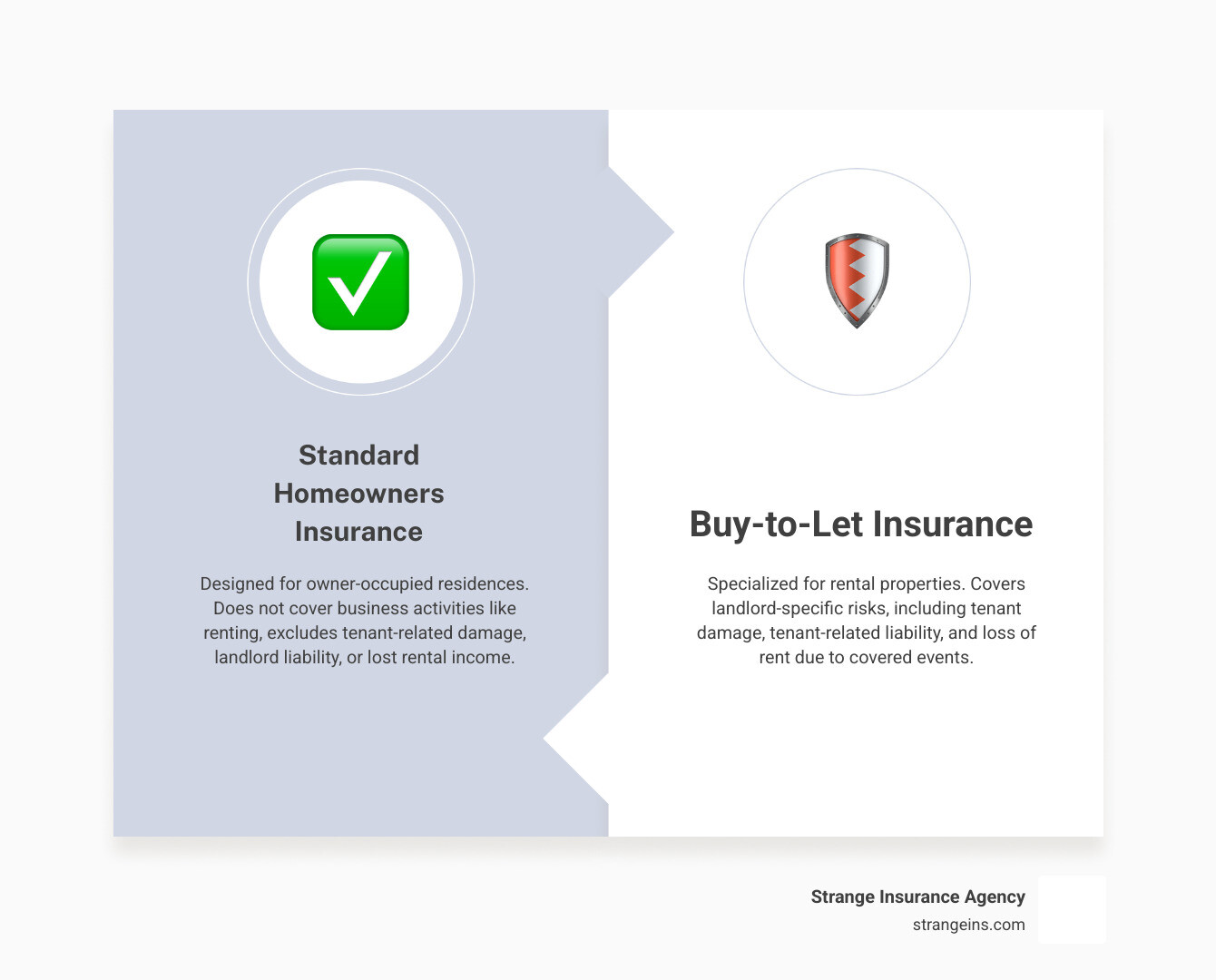
Many new landlords mistakenly believe their homeowners policy is sufficient. However, these policies are for owner-occupied homes and contain clauses that exclude coverage if you rent the property out. Filing a claim on a rental with a homeowners policy will likely lead to denial and cancellation.
Renting is a business activity with different risks, such as increased liability from tenants and their guests. Homeowners policies aren’t designed for these scenarios.
| Feature | Homeowners Insurance | Landlord Insurance |
|---|---|---|
| Occupancy | Owner-occupied only | Designed for tenant-occupied properties |
| Liability Coverage | Covers your personal liability | Covers landlord liability for rental activities |
| Personal Property | Covers your belongings | Covers landlord-owned items like appliances |
| Loss of Income | Covers your temporary housing costs | Covers lost rental income during repairs |
| Tenant Damage | Generally not covered | Often includes accidental tenant damage |
| Business Risks | Specifically excludes business activities | Built for rental business risks |
The differences are critical. Using the wrong coverage leaves you unprotected, which is why a Homeowners Insurance Policy for Rental Property is never recommended for a rental business.
Understanding Your Coverage: What Does House Insurance for Buy to Let Include?
House insurance for buy to let is a comprehensive package designed to shield your rental property investment. It addresses the unique risks of running a rental business, covering everything from the physical building to the income you rely on. Getting the details right is key to being protected when you need to file a claim. Let’s review what Insuring Investment Property typically includes.

Buildings and Structure Protection
The foundation of any landlord policy is protecting the physical structure. This is your first defense against disasters like fire, storms, or vandalism. It covers the foundation, walls, roof, and permanent fixtures and fittings like plumbing and wiring. It’s crucial to insure for the full rebuild cost, not just the market value, as construction costs can differ. Many quality policies offer buildings coverage up to $1 million. Learn more in our guide on Building Insurance for Buy to Let.
Landlord’s Contents Coverage
This coverage protects items you own inside the rental, not your tenant’s belongings. It’s vital for furnished properties, covering appliances, carpets, and curtains. Even in unfurnished units, it can cover items like maintenance equipment or window treatments. Most policies offer contents coverage up to $30,000. When considering the Best Home Insurance for Investment Property, be sure to inventory your assets on the property.
Essential Liability Protection
Liability is a major concern for landlords. This protection applies if someone is injured on your property and you’re found legally responsible, such as from a slip and fall or an accident caused by a broken stair. Quality landlord insurance typically includes liability coverage up to $5 million, which handles legal defense costs, medical payments, and damages. This peace of mind is invaluable. Our Liability for Rental Property guide has more details.
Loss of Rental Income
If a covered event like a fire makes your property uninhabitable, you lose rental income. Loss of rental income coverage (or fair rental value) reimburses you for this lost rent during the repair period. This doesn’t cover tenants who stop paying; it applies only when the property is physically unlivable due to a covered peril. With lost rent coverage up to $50,000, it provides crucial cash flow during a stressful time.
What is Typically NOT Covered?
Knowing exclusions is as important as knowing your coverage.
- Normal wear and tear: Gradual aging of the property isn’t covered.
- Tenant’s personal belongings: Tenants need their own renters insurance for their property.
- Pest infestations and most mold: These are typically considered maintenance issues.
- Earthquakes and flooding: These major perils require separate, specialized policies. For properties in at-risk areas, consider Flood Insurance for Investment Properties.
- Intentional tenant damage: Malicious acts may require an optional add-on for coverage.
- Non-payment of rent: This business risk requires specific rent guarantee insurance.
Decoding the Cost and Finding Savings
Understanding the cost of house insurance for buy to let is about understanding risk. The safer your property appears to insurers, the less you’ll pay. By knowing what they look for, you can find smart ways to lower your costs without sacrificing protection.

At Strange Insurance Agency, we help landlords secure competitive rates through our network of 30+ insurance companies. Let’s break down what drives your Average Rental Property Insurance Cost and how you can save.
Factors That Influence Your Premium
Insurers assess risk using several key factors to determine your premium:
- Property location: A major factor. Properties in high-risk zones (e.g., coastal Virginia, high-crime areas) cost more to insure.
- Building age and construction: Modern homes with updated systems and sturdy materials (brick vs. wood-frame) are typically cheaper to insure.
- Security features: Alarm systems, deadbolts, and sprinklers can earn you discounts by reducing the risk of theft, vandalism, or fire.
- Claims history: A history of frequent claims will increase your rates, while a clean record works in your favor.
- Tenant type: Some tenant types, like student housing, are considered higher risk.
- Coverage limits and deductible: Higher limits increase premiums, while a higher deductible lowers them.
How to Get the Best Value on House Insurance for Buy to Let
Getting great coverage at a fair price is achievable with these strategies:
- Increase your deductible: A higher deductible can significantly lower your premium. Just ensure you can afford the out-of-pocket cost.
- Bundle policies: Combining multiple rental properties or other policies often leads to discounts.
- Improve property security: Installing alarms or deadbolts can qualify you for savings.
- Maintain your property: Proactive maintenance prevents small issues from becoming large claims and shows insurers you’re a responsible owner.
- Build a no-claims history: Avoiding small claims can establish you as a low-risk client over time.
- Compare quotes: The most effective strategy is to shop around. Strange Insurance Agency does this for you, comparing options from over 30 top-rated companies to find the best value. When you’re ready for Buy to Let Buildings Insurance Quotes, we make it simple.
Tailoring Your Policy for Specific Rental Scenarios
House insurance for buy to let is flexible because no two rental properties are the same. Whether you manage a vacation rental, student housing, or have a property that’s temporarily empty, your insurance should match your unique risks. At Strange Insurance Agency, we help landlords from coastal Virginia to North Carolina find the Best Home Insurance for Investment Property that fits their specific situation.

Insurance for Different Tenancy Types
Your tenancy type dramatically changes your insurance needs:
- Short-term rentals: The high turnover of guests increases risk, often requiring specialized short-term rental or commercial insurance. Standard landlord policies may not provide coverage. For more, see this guide on insuring a vacation home.
- Long-term tenants: This is the standard scenario for most landlord policies, with predictable risks.
- Student housing: Insurers see this as higher risk, which may lead to higher premiums or require special endorsements.
- Houses in Multiple Occupation (HMOs): Renting rooms to unrelated tenants requires specialized coverage due to higher occupancy and complexity.
- Unoccupied properties: Most policies cover vacancy for up to 90 days. For longer periods, you’ll need specific vacant property coverage to avoid losing protection against risks like theft or water damage.
Popular Optional Coverages to Consider
Consider these add-ons for extra protection:
- Accidental damage: Covers mishaps like a tenant breaking a window while moving furniture.
- Malicious damage by tenants: Protects against intentional damage, which over 54% of landlords report experiencing.
- Rent guarantee insurance: Reimburses you if tenants stop paying rent and can cover eviction costs.
- Legal expenses coverage: Covers legal fees for landlord-tenant disputes.
- Home emergency assistance: Provides 24/7 access to professional help for urgent issues like a burst pipe.
- Umbrella Insurance: An Umbrella Insurance Policy for Rental Property offers extra liability protection beyond your standard policy limits, ideal for landlords with significant assets.
The Importance of Tenant’s Renters Insurance
Your landlord policy does not cover your tenant’s personal belongings. If a fire or theft occurs, their property is unprotected without their own renters insurance. Smart landlords require tenants to carry renters insurance in the lease. It protects their belongings and also includes liability coverage, which can shield you if their negligence causes damage or injury. It’s an affordable, win-win solution that clarifies responsibility and reduces disputes.
Frequently Asked Questions about House Insurance for Buy to Let
Here are answers to the most common questions landlords have about house insurance for buy to let.
Is Buy-to-Let Insurance a Legal Requirement?
No, it is not legally mandatory. However, if you have a mortgage, your lender will almost certainly require it to protect their financial interest. Even if you own the property outright, going without insurance is a major financial risk. A single fire or liability lawsuit could be devastating, wiping out your investment and other assets. The cost of coverage is minimal compared to the potential for catastrophic loss.
Does Landlord Insurance Cover Damage Caused by Tenants?
Generally, yes. House insurance for buy to let typically covers accidental damage caused by tenants, such as an accidental kitchen fire. However, malicious or intentional damage (e.g., a tenant punching holes in walls) is often excluded unless you have a specific optional add-on. Normal wear and tear is never covered by insurance; that’s a standard cost of doing business and is what security deposits are for. With over 54% of landlords experiencing tenant damage, understanding this distinction is crucial.
Does Landlord Insurance Cover Eviction Costs?
A standard policy does not cover the legal costs of eviction, which is considered a business risk. These expenses, which can run into thousands, would come out of your pocket. However, you can purchase optional coverage. A legal expenses add-on can cover these costs, and rent guarantee policies often bundle this protection with coverage for lost rent, offering a comprehensive solution for dealing with problematic tenants.
Secure Your Investment and Your Peace of Mind
Rental property ownership is a proven path to building wealth, but it comes with unique risks. House insurance for buy to let is not just an expense; it’s a strategic shield for your investment. The right coverage can be the difference between a profitable asset and a financial nightmare.
This guide has covered the essentials: the key differences from homeowners insurance, the core coverages that protect you, and the optional add-ons that tailor your policy to specific scenarios. Whether your property is in Norfolk, Virginia, or anywhere in North Carolina or Florida, the key is matching your policy to your risks.
Insurance shopping can be overwhelming. At Strange Insurance Agency, we act as your personal insurance concierge. We shop your policy with over 30 leading companies to find you comprehensive coverage at a competitive price, saving you time and hassle.
Our approach is simple: we handle the insurance so you can focus on growing your rental portfolio. Successful landlords are proactive, and having robust house insurance for buy to let coverage means you can rest easy knowing that accidents, damage, and liability claims won’t derail your financial goals.
Ready to give your rental property the protection it deserves? Get a quote for your commercial property insurance today, and let our team help you build an insurance strategy that secures your investment and your peace of mind.