
Understanding Virginia’s Home Insurance Landscape
How much is virginias home owner insurance varies significantly across the state. On average, Virginia homeowners can expect to pay between $1,445 and $2,513 annually, which is about 25% lower than the national average. However, your actual premium depends heavily on where you live, your home’s value, and several personal factors.
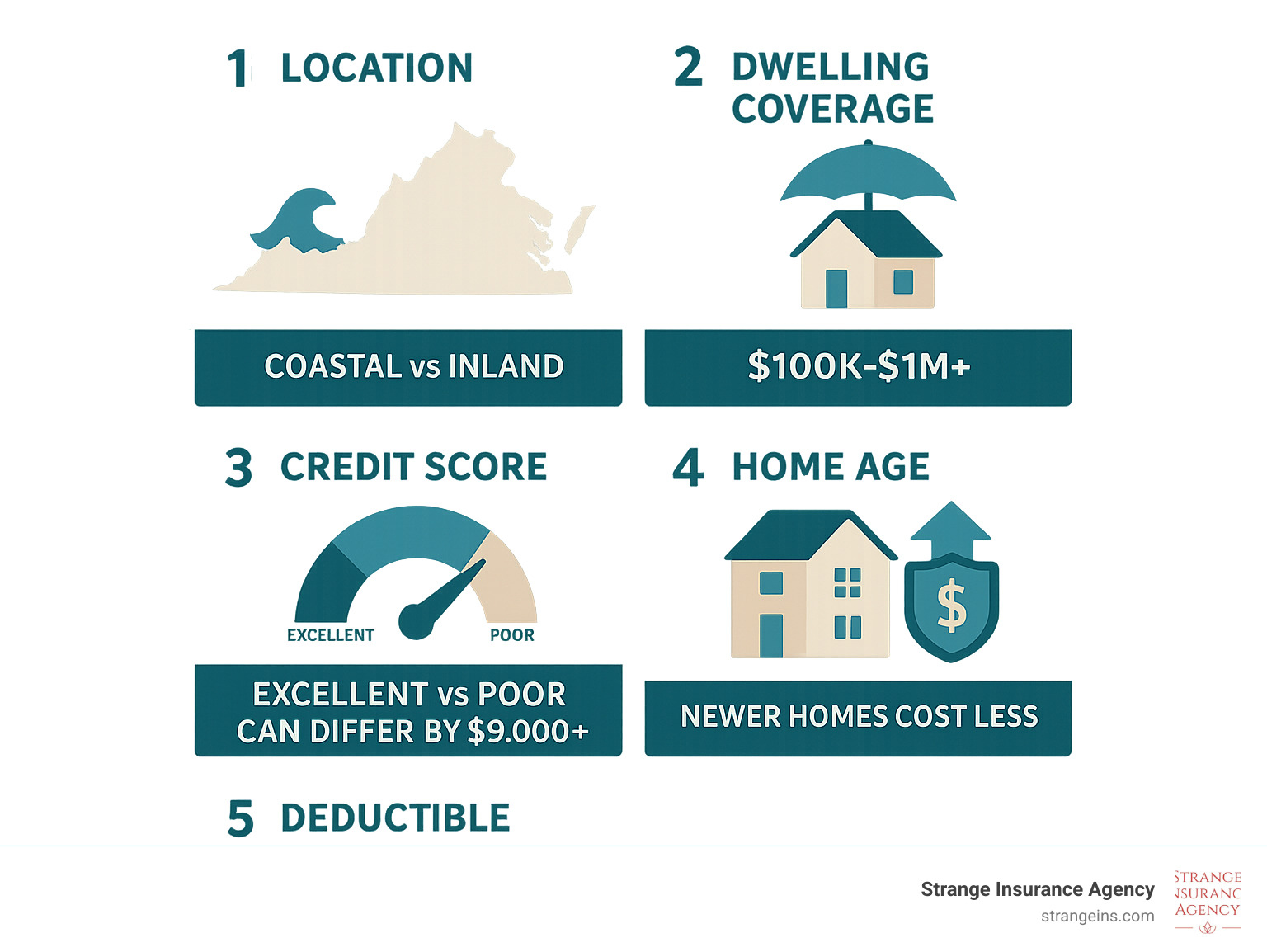
The difference between coastal and inland areas is dramatic. For example, Virginia Beach homeowners can pay nearly three times more than those in Winchester due to hurricane and flooding risks. Your credit score also plays a major role, with potential premium differences of over $9,000 based on creditworthiness alone.
As Christian Strange, I’ve spent over 15 years helping Virginia families steer insurance decisions. My experience in risk mitigation has shown me that understanding what drives these costs is the key to getting the right coverage at the best price. This guide will break down the factors that influence your rates and how you can find the most affordable protection for your home.
How Much is Virginias Home Owner Insurance on Average?
On average, the cost of homeowners insurance in Virginia is quite favorable, with annual premiums typically ranging from $1,445 to $2,513. This is often cited as being 25% lower than the national average, giving Virginia homeowners a significant advantage.
However, this “average” is just a starting point. The specific premium you pay can vary wildly based on the amount of dwelling coverage you need. For instance, a policy with $250,000 in dwelling coverage might average $2,513, which is actually 4% higher than the national average for that specific coverage level. This highlights how averages can be misleading without context. Our goal is to help you understand the nuances of how much is virginias home owner insurance so you can make an informed decision.
Virginia Home Insurance Rates by City
Just like the housing market, insurance costs are heavily influenced by location. Virginia’s diverse geography, from coastal cities to mountain towns, presents different risk profiles for insurers. This means that how much is virginias home owner insurance can change dramatically depending on your city.
Coastal areas face higher risks from hurricanes and windstorms, which translates to higher premiums. Inland areas generally experience lower exposure to the most damaging natural perils. Here’s how average annual premiums can vary across some of Virginia’s major cities for different dwelling coverage amounts:
| City | Average Annual Premium ($100K Dwelling) | Average Annual Premium ($250K Dwelling) |
|---|---|---|
| Arlington | $1,787 | $2,990 |
| Chesapeake | $1,538 | $2,796 |
| Norfolk | $1,637 | $3,007 |
| Richmond | $1,124 | $1,923 |
| Virginia Beach | $1,659 | $2,361 |
Note: These figures are averages and your actual premium may vary.
As you can see, coastal cities like Norfolk and Virginia Beach tend to have higher premiums. For instance, some data shows Virginia Beach can be the most expensive city at $2,793 per year for $300,000 in dwelling coverage, while Winchester can be as low as $1,031. This stark difference underscores the importance of your location’s risk profile. For more detailed insights, visit our page on Home Insurance Rates in Virginia.
How Dwelling Coverage Affects Your Premium
One of the most significant factors determining how much is virginias home owner insurance will cost is your dwelling coverage amount. This is the portion of your policy that protects the physical structure of your home and pays to rebuild it if it were destroyed.
Naturally, the more dwelling coverage you need, the higher your premium will be. Here’s how premiums can scale with different dwelling coverage amounts:
- $100,000 Dwelling Coverage: Average annual premium of around $1,570.
- $250,000 Dwelling Coverage: Average annual premium can be around $2,513.
- $500,000 Dwelling Coverage: Average annual premium can jump to $5,422.
- $1,000,000+ Dwelling Coverage: Premiums can range from $11,961 to over $46,000.
The average dwelling coverage in Virginia is $250,000, but it’s crucial to ensure your coverage reflects the replacement cost of your home, not its market value. We can help you determine the right amount to balance protection with affordability. To explore more, check out our insights on Homeowners Insurance Rates Virginia.
Key Factors That Influence Your Insurance Rate
Beyond location and dwelling coverage, several other elements play a crucial role in determining how much is virginias home owner insurance for your property. Understanding these factors can help you anticipate your premium and find ways to save.

- Your Credit Score: This is a major factor. In Virginia, the difference in annual premiums between excellent and poor credit can be as high as $9,010. Paying bills on time is one of the best ways to keep your insurance affordable.
- Home Age and Construction: Newer homes typically cost less to insure (around $983) than older homes ($1,840) due to modern plumbing, electrical, and roofing. Homes built with durable materials like brick may also receive lower rates.
- Roof Condition: Insurers pay close attention to your roof’s age and condition. A newer, well-maintained roof signals lower risk for expensive water damage claims.
- Your Claims History: A claims-free record for five or more years can lead to significant savings. Conversely, multiple recent claims can increase your premium by over $600 annually.
- Protective Devices: You can earn discounts by installing smoke detectors, fire and burglar alarms, sprinkler systems, and smart home monitoring devices.
- Property Location: Beyond the city, proximity to a fire hydrant or fire station can lower your rates. Being in a designated flood zone or an area with other geological risks will increase your premium.
- Weather Risks: Virginia’s weather patterns, including tropical cyclones, are a major consideration. Virginia’s severe weather history shows an average of over six disaster events annually from 2019 to 2023, which is why coastal areas see higher premiums.
We specialize in analyzing these variables to find the best rates. For more tips on reducing your premium, check out our guide to Cheap Home Insurance Virginia options.
Decoding Your Virginia Homeowners Policy
Understanding how much is virginias home owner insurance is about knowing what you’re getting for your money. A standard homeowners policy (typically an HO-3) is a package of six distinct coverages designed to protect your home.
What a Standard Policy Typically Covers
- Dwelling Coverage (Coverage A): This is the foundation of your policy, protecting the physical structure of your home, from the walls and roof to built-in appliances and attached structures like a garage.
- Other Structures Coverage (Coverage B): This covers detached structures on your property, like a shed, fence, or detached garage. It’s usually set at 10% of your dwelling coverage.
- Personal Property Coverage (Coverage C): This protects your belongings—furniture, electronics, clothing—from damage or theft. You can choose between Actual Cash Value (with depreciation) or Replacement Cost Value (pays for new items).
- Loss of Use Coverage (Coverage D): If a covered event makes your home unlivable, this pays for increased living expenses like hotel bills and restaurant meals during repairs.
- Personal Liability Coverage (Coverage E): This protects your assets by covering legal defense costs and settlements if someone is injured on your property or you damage someone else’s property.
- Medical Payments to Others (Coverage F): This provides limited coverage for medical expenses if a guest is injured on your property, regardless of fault.
Your standard policy typically covers perils like fire, lightning, wind, hail, theft, vandalism, falling objects, and accidental water damage from plumbing. For a deeper dive, visit our guide on Home Insurance Virginia.
Common Exclusions and Optional Add-Ons
It’s crucial to know what your policy doesn’t cover. Flood damage is the most common exclusion; it requires a separate policy through the National Flood Insurance Program or a private insurer. With only 3% of Virginians carrying flood insurance, many are exposed to significant risk, as The high cost of flood damage can be devastating.
Other standard exclusions include earthquake damage, sewer backup, and problems arising from poor maintenance. Fortunately, you can fill these gaps with optional add-ons (endorsements):
- Water Backup Protection: Covers damage from backed-up sewers or drains.
- Scheduled Personal Property: Provides broader, no-deductible coverage for high-value items like jewelry or art.
- Equipment Breakdown: Protects major home systems (HVAC, water heater) from mechanical failure.
- Guaranteed Replacement Cost: Provides an extra buffer (typically 20-25%) if rebuilding costs exceed your dwelling limit.
How to determine how much is virginias home owner insurance coverage you need
Getting the right coverage amount is key. Focus on replacement cost, not market value. Replacement cost is what it would take to rebuild your home from scratch at today’s prices for labor and materials. A professional appraiser can provide the most accurate estimate.
Create a home inventory by videoing or photographing your belongings to ensure you get full compensation after a loss. Also, be aware of the 80% rule: you must insure your home for at least 80% of its replacement cost to avoid claim penalties.
For liability coverage, we often recommend limits of $300,000 or $500,000, rather than the minimum $100,000, to better protect your assets. An umbrella policy can provide even more protection.
Smart Ways to Save on Your Virginia Home Insurance
Finding out how much is virginias home owner insurance will cost is just the start. The next step is finding ways to save without compromising on essential protection. There are plenty of smart strategies to lower your premiums.

One of the easiest and most significant discounts comes from bundling policies. Purchasing your home and auto insurance from the same provider can save you an average of 13%, or up to $403 per year. Another effective strategy is raising your deductible. Choosing a higher amount that you pay out-of-pocket (e.g., $1,000 instead of $500) will lower your annual premium. Just ensure it’s an amount you can comfortably afford.
Your home’s safety and condition also translate into savings. Insurers reward homeowners for reducing risk. Here are the top ways to maximize your discounts:
- Bundle your home and auto insurance policies.
- Choose a higher deductible you can afford.
- Install protective devices like smoke detectors, burglar alarms, and smart home leak detectors.
- Maintain a claims-free record for 3-5 years.
- Keep your credit score in excellent shape to qualify for the best rates.
- Update your roof with durable, impact-resistant materials.
- Ask about all available discounts, including those for new construction, customer loyalty, or professional memberships.
The key is to be proactive. We’re committed to finding every discount possible to make your home insurance affordable. For more ways to save, check out our guide on Home Insurance Quotes in Virginia.
Frequently Asked Questions about Virginia Home Insurance
We get a lot of questions about homeowners insurance in Virginia. Here are clear, straightforward answers to the most common ones.
Is homeowners insurance legally required in Virginia?
No, homeowners insurance is not legally required by the state of Virginia. However, if you have a mortgage, your lender will almost certainly require you to maintain a policy. Your home is the collateral for their loan, and they need to protect their investment. The mortgage agreement will specify the required coverage amount, and your lender will need to be listed on the policy. Even if you own your home outright, going without coverage is a significant financial risk.
What is the difference between replacement cost and actual cash value?
This distinction is crucial for your financial recovery after a claim.
- Replacement Cost (RCV) pays to repair or replace your damaged property with new items of similar quality, with no deduction for depreciation. If a fire destroys your five-year-old sofa, RCV gives you enough money to buy a comparable new one.
- Actual Cash Value (ACV) pays the replacement cost minus depreciation. For that same sofa, ACV would only give you what the five-year-old item was worth at the time of the loss, leaving you to cover the difference for a new one.
We almost always recommend RCV for both your dwelling and personal property. The small increase in premium is well worth the significant difference in payout.
How do I find out how much is virginias home owner insurance from different companies?
Shopping for insurance doesn’t have to be overwhelming. The key is to get multiple quotes, but ensure you’re comparing policies with the same coverage levels, limits, and deductibles. A lower premium might just mean less protection.
This is where an independent agency like ours makes your life easier. Instead of you calling dozens of companies, we do the heavy lifting. As an independent agency, we have access to quotes from over 30 top-rated insurance companies. We compare these options side-by-side, considering not just price but also each company’s reputation for paying claims and providing customer service.
This comprehensive approach helps you confidently determine how much is virginias home owner insurance will cost while ensuring you get coverage that truly protects your investment.
Conclusion: Finding the Right Protection for Your Virginia Home
Figuring out how much is virginias home owner insurance is a personal calculation. While Virginia’s average costs are favorable, your actual premium depends on your home’s location, value, your credit score, and the coverage you choose. A homeowner in Virginia Beach will have a very different rate than one in Winchester.
The key is to balance cost with comprehensive coverage. The cheapest policy isn’t a good deal if it leaves you with major gaps, like no protection against flood damage or sewer backups. You need a policy custom to your specific risks and budget.
That’s where we come in. At Strange Insurance Agency, we are a concierge insurance agency serving Virginia, North Carolina, and beyond. We eliminate the guesswork by pulling quotes from over 30 top-rated companies and presenting them to you side-by-side.
We don’t just find you a price; we find you the right protection. We’ll help you understand your options, maximize discounts, and build a policy that makes sense for your home and budget. We handle the heavy lifting so you can focus on what matters.
Ready to stop wondering and start getting real answers? Get a personalized homeowners insurance quote from Strange Insurance Agency today. Let’s ensure your home is protected.