
Introduction: Protecting Your Property Investment
Understanding the difference between landlord insurance vs homeowners insurance is vital. Many property owners don’t realize these policies cover very different things. Choosing the wrong one can leave your investment at serious risk.
Here’s the quick breakdown:
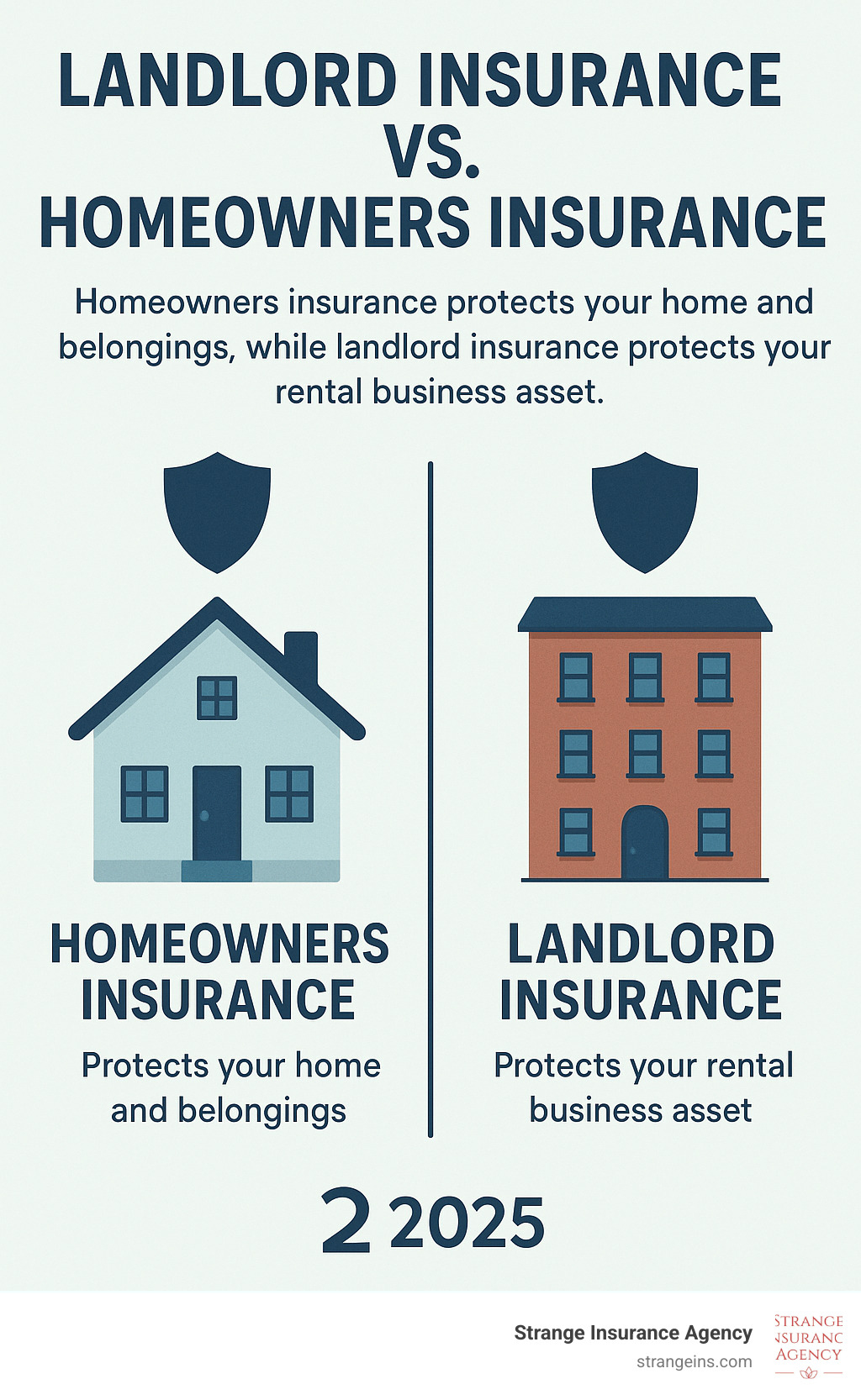
- Homeowners Insurance: This policy is for the home you live in. It protects your house, your personal belongings inside, and your liability as the homeowner.
- Landlord Insurance: This policy is for a property you rent out to others. It protects the building, your landlord-owned items (like appliances you provide), lost rent if the property is uninhabitable, and your liability as a landlord.
In short, homeowners insurance covers your home and your stuff when you live there. Landlord insurance covers your rental property and your business income when someone else lives there.
Ensuring you have the correct policy is the first step to truly protecting your property investment, whether it’s your family home or a rental unit.
With over 15 years in treasury management, business consulting, and insurance, I’m Christian Strange. My work with The Holistics Company and Strange Insurance Agency focuses on financial protection and risk mitigation, including expert guidance on landlord insurance vs homeowners insurance.
Landlord insurance vs homeowners insurance terms to remember:
- landlords insurance
- homeowners insurance policy for rental property
- liability coverage for rental property
Core Differences: Landlord Insurance vs Homeowners Insurance
Picture this: you’ve just bought a beautiful house. Whether you plan to live in it yourself or rent it out to tenants completely changes what kind of insurance protection you need. The difference between landlord insurance vs homeowners insurance isn’t just about labels – it’s about matching your coverage to your actual situation and risks.
Think of it like choosing between a family car and a commercial delivery truck. Both get you from point A to point B, but they’re built for entirely different purposes. Your insurance needs to match how you’re actually using your property.
Property Coverage: What’s Protected?
Both types of policies will protect the physical structure of your home – the walls, roof, and foundation that make up your dwelling. They’ll also cover other structures on your property, like that detached garage where you store your tools or the shed in the backyard.
But here’s where things get interesting. Homeowners insurance treats your house like your personal sanctuary. It covers all your belongings inside – your couch, your grandmother’s china, your kids’ toys scattered across the living room floor, even your laptop if it gets stolen while you’re at a coffee shop. Basically, if it belongs to you and your family, it’s likely covered.
Landlord insurance takes a completely different approach. Since you don’t live in the rental property, it only covers the things you own as the landlord. This includes appliances you provide for tenants (like the refrigerator, stove, or washer and dryer), maintenance equipment you use to keep the property in good shape, and any furnishings you supply.
Here’s the crucial part that catches many new landlords off guard: landlord insurance does not cover your tenant’s belongings. Not their furniture, not their electronics, not their clothes – nothing that belongs to them. If there’s a fire and your tenant loses everything, your landlord policy won’t pay a penny for their losses.
This is exactly why smart landlords require tenants to carry renters insurance. It protects the tenant’s stuff, and it protects you from awkward conversations about who’s responsible for what. A homeowners insurance policy for rental property simply won’t provide the right kind of coverage for this situation.
Liability Coverage: Who’s Protected from Lawsuits?
Nobody likes to think about accidents, but they happen. When they do, liability coverage becomes your financial lifeline. Both policies offer protection, but the scope changes dramatically based on who’s living in the property.
Homeowners insurance wraps a protective bubble around your personal life. If your neighbor’s kid slips on your icy driveway, if your dog bites someone at the park, or if you accidentally damage someone else’s property, your homeowners policy steps in. It covers you, your spouse, your children, and even your pets in various liability situations, whether they happen on your property or somewhere else entirely.
Landlord insurance shifts into business mode. When you rent out a property, you’re essentially running a small business, and that comes with different risks and responsibilities. Your landlord policy provides liability coverage specifically for incidents related to your rental activities.
Let’s say a tenant’s guest trips on a loose floorboard you should have fixed months ago. Or imagine the front steps collapse because they weren’t properly maintained. These are landlord responsibilities, and your landlord insurance vs homeowners insurance choice becomes critical here. A homeowners policy would likely deny these claims because they’re related to your rental business, not your personal life.
This specialized liability for rental property coverage is essential. Without it, you could be personally responsible for medical bills, legal fees, and settlements that could easily reach tens of thousands of dollars.
Loss of Use vs. Loss of Rent: Covering Uninhabitable Conditions
What happens when disaster strikes and your property becomes unlivable? Both policies recognize this problem, but they solve it in very different ways.
If your primary home is damaged by a covered event like a fire or tornado, homeowners insurance provides “Additional Living Expenses” (ALE) coverage. This helps pay for hotel rooms, restaurant meals, and other extra costs while you’re displaced from your home. The goal is keeping your family comfortable and maintaining your normal standard of living during repairs.
Landlord insurance approaches this from a business perspective. You don’t need a hotel room because you weren’t living in the rental property anyway. What you do need is your rental income to keep flowing. “Loss of rent” coverage steps in to replace the rental income you lose while the property is being repaired and your tenants can’t live there.
This distinction is huge for your financial planning. If you’re counting on that monthly rent check to cover the mortgage, property taxes, and other expenses, loss of rent coverage keeps you afloat during repairs. Without it, you could be stuck paying all the property expenses out of pocket while also paying for repairs – a financial double whammy that has forced some landlords to sell their properties.
| Feature | Homeowners Insurance | Landlord Insurance |
|---|---|---|
| Dwelling | Covers the structure | Covers the structure |
| Personal Property | Owner’s belongings (furniture, clothes, electronics) | Landlord’s property (appliances, maintenance equipment) |
| Liability | Personal liability for owner, family, pets | Business liability related to rental activities |
| Loss of Income | Additional Living Expenses (temporary housing, meals) | Loss of Rent (replacement of rental income) |
Understanding these core differences in landlord insurance vs homeowners insurance helps ensure you’re not caught off guard when you need your coverage most. The wrong policy type can leave you with denied claims and unexpected expenses that could have been easily avoided with the right protection from the start.
Choosing the Right Policy: Scenarios for Property Owners
Deciding between landlord insurance vs homeowners insurance isn’t always black and white. Life happens – maybe you’re moving and want to rent out your current home, or perhaps you’re thinking about hosting guests through short-term rentals. Each situation has its own insurance needs, and getting it wrong could leave you financially exposed.

The key is understanding when your property crosses the line from personal use to rental business. This shift changes everything about your insurance needs, and your current homeowners policy might not cover rental-related claims at all.
When You Need a Full Landlord Insurance Policy
If you’re not living in the property and tenants are calling it home, you almost certainly need a full landlord insurance policy. This isn’t negotiable – it’s essential protection for your investment.
Investment properties are the clearest example. When you buy a property specifically to generate rental income, you’re running a business. These non-owner-occupied properties with long-term lease agreements need specialized coverage that protects against tenant-related risks and ensures your rental income stream.
Maybe you’ve moved out and are renting your old home instead of selling it. The moment you hand over those keys to a tenant, your homeowners policy becomes inadequate. You’ll need to convert it to a landlord policy to maintain proper coverage. Many property owners make the mistake of keeping their old homeowners policy “temporarily” – but even one day of rental activity could void your coverage if a claim occurs.
Multi-unit buildings like duplexes, triplexes, or apartment buildings require landlord insurance that covers the entire structure and your liability as the owner of multiple rental units. The risks multiply with each additional unit, making proper coverage even more critical.
Even vacation homes that are frequently rented cross into rental business territory. If your beach house or mountain cabin generates regular rental income, it’s no longer just a personal vacation property – it’s an investment that needs landlord protection.
Our landlords insurance policies are specifically designed for these situations, covering the unique risks that come with tenant occupancy. Without proper coverage, you face claim denial risk that could cost you thousands – or even your entire investment.
When a Homeowners Policy Endorsement Might Suffice
Not every rental situation requires a complete policy overhaul. Sometimes, adding a home-sharing endorsement or policy rider to your existing homeowners insurance can provide adequate protection.
Occasional short-term rentals are the most common scenario where an endorsement might work. If you rent out your primary residence for just a few weekends a year – maybe during local festivals or special events – your homeowners insurer might offer a short-term rental rider. This adds limited coverage for risks associated with these infrequent rentals.
But here’s the catch: you must inform your insurer about this activity. Standard homeowners policies exclude business activities, and rental income counts as business. Trying to slip under the radar is a recipe for disaster if you ever need to file a claim.
Renting a room in your primary residence while you still live there is another gray area. Some homeowners policies provide coverage for this arrangement, while others require an endorsement. The frequency of turnover, whether you share common areas, and how you advertise the room all factor into your insurer’s decision.
Vacant properties present their own challenges. Whether you’re selling or between tenants, extended vacancy (often 30-60 days) can void both homeowners and landlord policies. You might need specific vacant home coverage during these periods.
The bottom line? Transparency is everything. When your property’s use changes, even temporarily, contact your insurance agent immediately. We can help you steer these situations and ensure you have the right coverage, whether that’s our comprehensive homeowners insurance with endorsements or a dedicated landlord policy.
Don’t gamble with your investment. The few dollars you might save by avoiding proper coverage pale in comparison to the financial devastation of a denied claim. For guidance on the best home insurance for rental properties, we’re here to help you make the right choice for your specific situation.
Understanding Landlord Policy Types and Costs

Cost Breakdown: Why landlord insurance vs homeowners insurance prices differ
Here’s something that catches many property owners off guard: landlord insurance vs homeowners insurance pricing isn’t even close. Landlord insurance typically costs about 25% more than standard homeowners insurance for the same property. Before you start grumbling about insurance companies, let me explain why this makes perfect sense.
The simple truth is that rental properties are riskier to insure. When you live in your own home, you notice that dripping faucet right away and fix it before it becomes a flood. You’re invested in maintaining your property because it’s your sanctuary. Tenants, while often wonderful people, don’t have that same emotional and financial stake in your property.
Think about it from the insurance company’s perspective. They see more claims from rental properties because small issues can snowball into big problems when they’re not caught early. That loose handrail might stay loose longer in a rental. The clogged gutter might not get the immediate attention it would in an owner-occupied home. Plus, there’s simply more foot traffic with tenants, their guests, and the general wear and tear that comes with people who didn’t choose the carpet or paint colors themselves.
Beyond the higher risk profile, landlord policies include specialized coverages that homeowners policies simply don’t offer. Loss of rent coverage and specific landlord liability protection are valuable additions that come with a cost, but they’re absolutely essential for protecting your investment income.
Several factors influence what you’ll pay for landlord insurance. Property location plays a huge role – our properties here in Virginia and North Carolina face different regional risks that directly impact premiums. A beachfront rental in the Outer Banks will cost more to insure than a mountain cabin in Asheville, and both will differ from a suburban rental in Richmond.
The age and condition of your property matters tremendously. That charming 1920s bungalow with original plumbing might have character, but it also has higher insurance costs. Construction type, your chosen coverage limits and deductibles, and your claim history as a landlord all factor into your final premium. The good news? Safety features like security systems, smoke detectors, and fire extinguishers can often earn you discounts that help offset some of the higher base costs.
For perspective on regional costs, you can explore our guide on How Much Does Virginia Home Insurance Cost? to better understand what you might expect to pay in our area.
Decoding Landlord Policies: DP-1, DP-2, and DP-3
Just like homeowners insurance comes in different flavors, landlord insurance offers three main policy types called Dwelling Property (DP) forms. Understanding these options is crucial because they vary dramatically in what they cover and how they pay out claims.
DP-1 Basic Form is the bare-bones option. It’s a named perils policy, which means it only covers damage from specific events listed in your policy – think fire, lightning, and internal explosion. The catch? It typically pays claims based on Actual Cash Value (ACV), which factors in depreciation. If your 10-year-old roof gets damaged, you get paid for a 10-year-old roof, not a brand new one. This option works for landlords managing older, lower-value properties who want minimal coverage at the lowest cost.
DP-2 Broad Form steps things up significantly. It’s still a named perils policy, but with a much more generous list of covered events. You get everything from DP-1 plus protection against falling objects, ice and snow damage, heating system ruptures, and sudden water discharge from plumbing. The real improvement? It typically pays dwelling claims based on Replacement Cost Value (RCV), meaning you get enough money to actually rebuild or repair with new materials.
DP-3 Special Form is the gold standard and what we typically recommend for most landlords. Instead of naming what’s covered, it’s an open perils policy that covers everything except what’s specifically excluded. Common exclusions include floods, earthquakes, and war, but if it’s not on the exclusion list, you’re covered. DP-3 policies almost always pay claims based on Replacement Cost Value (RCV), giving you the best financial protection for rebuilding.
The difference between Actual Cash Value and Replacement Cost Value can make or break your financial recovery after a claim. ACV leaves you potentially thousands short when it’s time to rebuild, while RCV ensures you can restore your property to its original condition.
When we help landlords choose the best building insurance for landlords, we usually steer them toward DP-3 policies if their budget allows. Yes, it costs more upfront, but the comprehensive coverage and replacement cost payouts provide the kind of protection that lets you sleep soundly at night, knowing your investment is truly protected.
Frequently Asked Questions about Property Insurance
We get a lot of questions about property insurance, especially when it comes to the nuances of landlord insurance vs homeowners insurance. Let’s tackle some of the most common ones we hear from property owners in Virginia, North Carolina, and across the U.S.
What are the risks of using homeowners insurance for a rental property?
This question keeps me up at night because I’ve seen too many property owners learn the hard way. Using homeowners insurance for a rental property isn’t just risky – it’s a financial disaster waiting to happen.
Here’s the brutal truth: a claim for damage or liability related to the rental activity could be denied, leaving you holding the bag for potentially tens of thousands of dollars. Your homeowners policy was written for your home where you live. The moment you start collecting rent, you’ve fundamentally changed the risk profile of that property.
Most homeowners policies have clear exclusions for “business pursuits” or “rental activities.” So when that tenant’s cooking fire spreads, or when their guest slips on your front steps, your insurance company will likely say, “Sorry, this is a rental business claim, and we don’t cover that.”
But here’s where it gets worse. Your insurer might cancel your policy for misrepresentation of risk, leaving you completely uninsured. Think about that for a moment – no coverage at all, and now you’re trying to find new insurance after a cancellation, which is both difficult and expensive.
I’ve seen landlords face six-figure liability lawsuits with zero insurance coverage because they thought their homeowners policy would protect them. It’s simply not worth the gamble when proper landlord coverage is available.
Does landlord insurance cover my tenant’s personal belongings?
No. Landlord insurance covers the building and items you own that service the rental. This is one of the biggest misconceptions we encounter, and it’s crucial to get this right.
Your landlord policy protects the structure of your rental property and any personal property you own within it – things like the refrigerator you provide, the washer and dryer, or the lawnmower you use for maintenance. But your tenant’s couch, their electronics, their clothing, their family photos? Those aren’t your responsibility to insure.
Tenants are responsible for their own possessions and should be encouraged or required by the lease to purchase renters insurance. This isn’t just good advice – it’s essential protection for everyone involved. When tenants have their own renters insurance, they can’t come after you claiming you should have covered their belongings when a pipe bursts and ruins their furniture.
We always recommend that landlords require renters insurance as part of their lease agreement. It’s inexpensive for tenants (often just $10-20 per month), and it protects both of you from awkward disputes about who’s responsible for what.
How does a lease agreement impact my insurance and liability?
Your lease agreement isn’t just paperwork – it’s one of your most powerful risk management tools. A strong lease agreement can reduce your liability by outlining tenant responsibilities, such as property upkeep and requiring them to carry renters insurance.
Think of your lease as your first line of defense. When it clearly states that tenants must keep walkways clear of ice, report maintenance issues promptly, and maintain renters insurance, you’re creating a legal framework that protects you. If something goes wrong and you end up in court or dealing with an insurance claim, that lease becomes crucial evidence showing you acted responsibly as a landlord.
This creates a clear legal framework and can be a factor in your favor during a claim. For example, if a tenant’s guest gets injured because the tenant failed to follow lease requirements about property maintenance, your liability exposure is significantly reduced.
The lease also helps define how the property can be used, preventing activities that might void your insurance coverage. No unauthorized businesses, no subletting without approval, no dangerous activities – all of this should be spelled out clearly.
At Strange Insurance Agency, we work with landlords to ensure their insurance coverage aligns with their lease agreements. It’s all about creating layers of protection that work together to safeguard your investment.
Securing Your Investment with the Right Coverage
When it comes to protecting your property investment, understanding landlord insurance vs homeowners insurance isn’t just helpful—it’s essential. Think of it as the difference between wearing a raincoat in a drizzle versus a full wetsuit in a hurricane. Both offer protection, but the wrong choice can leave you soaked.
Throughout this guide, we’ve walked through the key differences: how dwelling coverage protects your building while personal property coverage varies dramatically depending on who lives there, how liability protection shifts from personal to business-focused risks, and why loss of rent coverage keeps money flowing when your property can’t house tenants.
The bottom line? Using homeowners insurance for a rental property is like trying to fix a leaky roof with a band-aid. It might seem like it’ll work, but when the next storm hits, you’ll wish you’d invested in the right solution from the start.
Proactive risk management goes beyond just having the right policy. Smart landlords combine proper insurance with thorough tenant screening to find reliable renters, regular property maintenance to prevent small problems from becoming big headaches, and clear lease agreements that outline everyone’s responsibilities. It’s like building a fortress around your investment—multiple layers of protection working together.
At Strange Insurance Agency, we’ve seen too many property owners learn these lessons the hard way. That’s why we take the time to understand your specific situation, whether you’re managing a single rental or building a portfolio of investment properties. We work with over 30 insurance companies to find coverage that fits your needs and budget, not the other way around.
Your property investment represents years of hard work and financial planning. Don’t let a simple insurance mistake put all of that at risk. Whether you need traditional landlord coverage or are exploring options like commercial property insurance for larger investments, we’re here to guide you through every step.
The right coverage isn’t just about protecting what you own today—it’s about securing what you’re building for tomorrow.