
Why Landlord Insurance is Essential for Property Owners
Landlords insurance is a specialized type of property insurance designed to protect rental property owners from financial losses that standard homeowners insurance won’t cover. Here’s what you need to know:
Key Coverage Areas:
- Property damage to the rental structure from fire, storms, and other covered perils
- Liability protection for injuries that occur on your rental property
- Loss of rental income when your property becomes uninhabitable due to covered damage
- Landlord’s personal property like appliances and maintenance equipment
What It Doesn’t Cover:
- Tenant’s personal belongings (they need renters insurance)
- Normal wear and tear
- Intentional damage by tenants
Average Cost: $40-$80 per month, typically 15-20% more than standard homeowners insurance
As a rental property owner, you face unique risks that regular homeowners don’t encounter. Tenants may be less careful with your property than they would be with their own. Your property might sit vacant between tenants. And if someone gets injured on your rental property, you could face significant liability claims.
The good news? Landlords insurance provides comprehensive protection specifically designed for these rental property risks. It covers everything from fire damage and liability claims to lost rental income when your property needs repairs after a covered loss.
I’m Christian Strange, and with over 15 years of experience in insurance and risk management, I’ve helped countless property owners protect their rental investments with proper landlords insurance coverage. My expertise in financial risk mitigation has shown me how the right insurance policy can mean the difference between a minor setback and a devastating financial loss for landlords.
Simple landlords insurance word guide:
- best building insurance for landlords
- liability insurance for real estate investors
- is cost of insurance deductible on investment property
Understanding Your Coverage: What Landlord Insurance Protects

Think of landlords insurance as your financial safety net – a comprehensive policy that protects your rental property investment from the unexpected. Unlike regular homeowners insurance that covers where you live, this specialized coverage is designed specifically for properties you rent to others.
Most policies come in two flavors: named perils coverage (which lists specific events that are covered) and all-risk coverage (which covers everything except what’s specifically excluded). For most landlords, all-risk policies offer the broadest protection and give you better peace of mind.
What a Standard Policy Covers
Every solid landlords insurance policy starts with four essential coverage areas that work together to protect your investment.
Property damage coverage is the foundation of your policy – it protects the actual building structure. When a fierce windstorm rips shingles off your roof and rain pours into the property, or when a kitchen fire spreads through the walls, this coverage steps in to help repair or rebuild your rental. It covers damage from fire, windstorms, hail, lightning, and other covered perils. Basically, it protects all the bricks, boards, and everything else that makes up your building.
Liability coverage for rental property is absolutely crucial because it protects you when someone gets hurt on your property. Picture this: a visitor slips on your icy sidewalk and breaks their ankle, then decides to sue you for medical bills and lost wages. This coverage handles your legal defense costs and any settlement or judgment if you’re found responsible for slip and fall accidents, bodily injury claims, or other lawsuits. We typically recommend at least $1 million in coverage, though $2 million provides even better protection.
Your landlord’s personal property coverage protects items you own at the rental property. While your tenants need their own renters insurance for their stuff, you likely have appliances like refrigerators and washers, plus maintenance equipment like lawnmowers or snow blowers. This coverage protects these landlord-owned items from damage or theft.
Loss of rental income coverage is a real lifesaver when disaster strikes. If a covered event like a fire or burst pipe makes your property uninhabitable, your tenants have to move out temporarily – and you lose your rental income. This coverage replaces that lost rent based on the fair rental value while your property is being repaired, helping you maintain cash flow during a stressful time of tenant displacement.
Optional Coverages to Improve Your Policy
While standard coverage handles the basics, our climate here in Virginia, North Carolina, and surrounding areas often calls for additional protection. These optional add-ons can save you from major financial headaches.
Sewer backup coverage protects you from one of the messiest disasters imaginable. When heavy rains overwhelm the municipal sewer system, wastewater can back up into your property’s basement or lower levels. It’s gross, it’s expensive to clean up, and standard policies don’t cover it. Adding this protection typically costs an extra $150 – $300 per year – a small price for avoiding a very smelly and costly disaster.
Overland water coverage handles a different type of water problem. This covers damage when freshwater flooding from heavy rain, melting snow, or overflowing streams enters your property at ground level. It’s different from regular flood insurance and fills an important gap in protection. Expect to pay an additional $100 – $400 per year for this coverage, which is especially valuable for properties in areas prone to surface water runoff.
Flood insurance for investment properties requires a separate policy since standard landlords insurance excludes flood damage. Given that many areas in our region face flood risks, especially coastal properties, this separate coverage through the National Flood Insurance Program or private insurers is often essential.
Earthquake insurance isn’t common in our area, but it’s worth considering if your property sits in a seismically active zone. Standard policies exclude earthquake damage, and if you add this coverage, be prepared for higher deductibles – earthquake insurance deductibles typically range from 2% to 20% of damages.
Rent guarantee insurance offers protection when tenants simply stop paying rent, which is different from losing rental income due to property damage. This specialized coverage helps when tenants default on their payments and can also cover eviction costs. It typically costs 5 – 7% of the yearly rent payments, making it a significant but potentially worthwhile investment for landlords who want maximum protection.
An umbrella insurance policy for rental property provides an extra layer of liability protection above your standard policy limits. If you own multiple properties or have significant assets to protect, this additional coverage acts like a financial safety net when lawsuits exceed your primary policy limits.
The Essentials of a Landlords Insurance Policy

Understanding the specifics of your landlords insurance policy, from how it differs from your home insurance to how much it costs and what properties it covers, is key to making informed decisions and protecting your investment.
The Difference Between Landlords Insurance and Homeowners Insurance
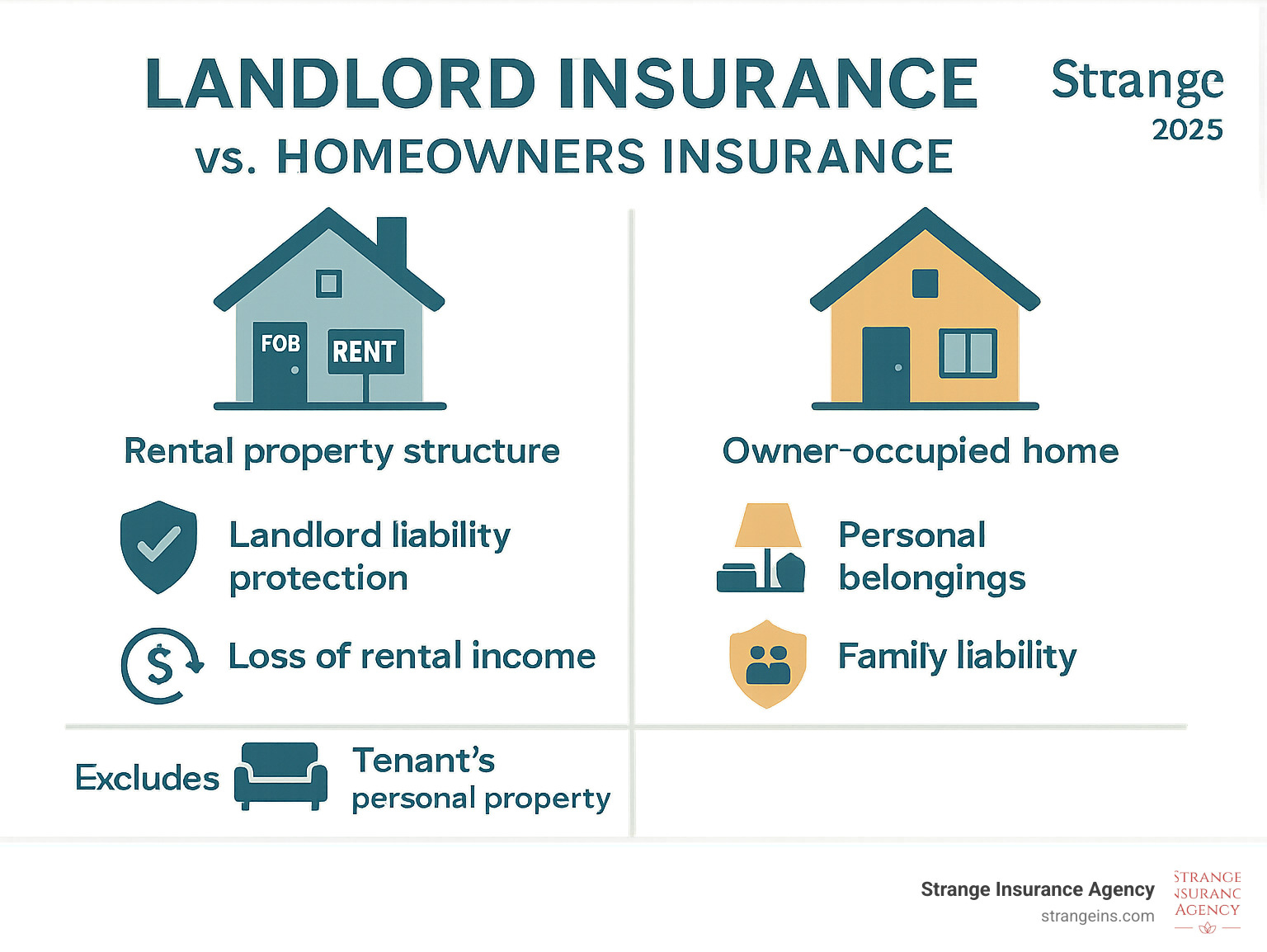
This is one of the most common questions we get, and it’s a critical distinction. Many property owners mistakenly believe their standard homeowners policy will cover a property they rent out. Let’s clear that up with a little table:
| Feature | Homeowners Insurance | Landlords Insurance |
|---|---|---|
| Primary Use | Owner-occupied dwelling (where you live) | Rental property (where tenants live) |
| Property Coverage | Structure, personal belongings (your stuff) | Structure, landlord’s belongings (appliances, tools) |
| Liability Focus | Personal liability for homeowner and family | Property owner’s liability for rental premises |
| Loss of Income | Not applicable for primary residence | Covers lost rental income due to covered perils |
| Tenant Belongings | Not covered | Not covered (tenants need renters insurance) |
| Maintenance | Covers sudden, accidental damage | Covers sudden, accidental damage; excludes wear and tear |
As you can see, home insurance is designed for your private primary residence and personal possessions, providing liability for you and your family. Landlords insurance, on the other hand, covers damage or loss at rental properties, including the dwelling, attached structures, landlord-owned contents, liability from owning the property, and loss of rental income following an insured event. Trying to use your Homeowners Insurance Policy for Rental Property will likely lead to a denied claim because the risk profile is completely different.
How Much Does Landlords Insurance Cost?
“How much does it cost?” is usually the first question on a landlord’s mind, and it’s a good one! The premium for your landlords insurance policy isn’t a one-size-fits-all number. It’s influenced by several factors, including:
- Property Location: Areas with higher crime rates, severe weather risks (like hurricanes in Florida or coastal Virginia), or prone to natural disasters will typically have higher premiums.
- Building Type and Age: Older homes may be more expensive to insure due to outdated systems (plumbing, electrical) or construction materials. Newer, well-maintained properties often qualify for lower rates.
- Claims History: A history of previous claims, whether yours or the property’s, can increase your premium.
- Coverage Limits and Deductibles: Higher coverage limits mean higher premiums. Conversely, choosing a higher deductible (the amount you pay out-of-pocket before insurance kicks in) can lower your premium.
- Number of Units: Multi-unit properties may have different pricing structures than single-family homes.
- Occupancy Type: Student rentals or short-term rentals might have different rates due to perceived higher risk.
On average, landlords insurance typically costs about 15-20% more than regular home insurance. For a basic policy, you can expect to pay between $40-$80 per month, which translates to $1,000 – $1,500 a year for many landlords. Of course, this can vary widely based on the factors above and the specific coverages you choose. For a more precise estimate, check out our guide on Average Rental Property Insurance Cost.
We’re all about smart savings! Here are a few ways you might reduce your premium:
- Bundling Policies: Many providers offer discounts if you bundle your landlords insurance with your personal home and auto insurance. Bundling home and auto insurance could mean up to 20% savings!
- Increase Your Deductible: If you’re comfortable paying more out-of-pocket for a claim, a higher deductible will lower your monthly or annual premium.
- Improve Security: Installing security systems, deadbolt locks, or even a burglar alarm can sometimes lead to discounts.
- Maintain Your Property: A well-maintained property with updated systems can signal lower risk to insurers.
- Claims-Free History: Avoiding small, easily manageable claims can help keep your premiums lower over time.
What Property Types Are Covered?
One of the beauties of landlords insurance is its versatility. It can protect a wide array of residential rental properties, ensuring your specific investment is covered. We can help you find coverage for:
- Single-detached homes
- Semi-detached homes
- Condominiums/stratas
- Apartments
- Rooming houses
- Duplexes and flats
- Townhouses
- Cottages
Essentially, if it’s a residential property you own and rent out to others, we can likely find a suitable Investment Property Insurance policy for it.
A special note on short-term rentals: While these can be lucrative, they present unique risks that standard landlords insurance policies may not cover. Frequent turnover, higher potential for accidental damage, and the commercial nature of the operation mean you’ll need specialized coverage. Short-term rental coverage generally costs an additional $20 – $50 per month, but it’s essential for protecting your investment and ensuring you’re properly covered for the specific risks of this rental model.
Navigating Risks: Your Responsibilities as a Landlord

Being a landlord isn’t just about collecting rent; it’s also about managing risks and fulfilling certain responsibilities. Understanding these aspects, particularly concerning tenant actions and legal obligations, is crucial for smooth operations and effective insurance protection.
Does Landlord Insurance Cover Tenant-Caused Damage?
This is a tricky one, and the answer is, “it depends.”
- Accidental Damage: Yes, in many cases, if the damage is unintentional and caused by an insured peril, your landlords insurance may cover it. For instance, if a tenant accidentally starts a kitchen fire, your policy would likely cover the repair costs to the structure. Similarly, if a burst pipe (caused by a covered peril, not tenant negligence) damages the property, it would typically be covered.
- Intentional Damage (Vandalism): This is where it gets complicated. Most landlords insurance policies explicitly exclude intentional damage caused by a tenant. So, if a tenant punches a hole in the wall out of anger, that’s usually not covered. However, some policies offer an optional “malicious damage by tenant” endorsement that can provide coverage for such acts. It’s vital to review your policy or speak with us to understand if you have this specific protection.
- Wear and Tear Exclusion: Your policy will not cover normal wear and tear. This includes things like fading paint, worn-out carpets, or minor scuffs on walls that happen naturally over time with occupancy. This is considered a cost of doing business and falls under property maintenance, not insurable damage.
The Importance of Renters’ Insurance
While your landlords insurance protects your property, it absolutely does not cover your tenant’s personal belongings or their liability. This is why we strongly encourage (and often recommend requiring) tenants to purchase renters’ insurance.
- Tenant’s Personal Property: If a fire or flood occurs, your tenant’s furniture, electronics, clothing, and other possessions are not covered by your policy. Renters’ insurance provides coverage for their belongings against theft, fire, and other perils.
- Tenant’s Liability: Renters’ insurance also includes liability coverage for the tenant. If your tenant accidentally causes damage to your property (e.g., leaves a bathtub overflowing, causing water damage) or if a guest is injured in their unit, their renters’ insurance can cover the costs. This protects both the tenant and, indirectly, you from potential disputes or claims against your own policy.
- Why it Protects the Landlord: When tenants have their own insurance, it reduces the likelihood of them seeking compensation from you for their lost belongings or liability, which can prevent disputes and potentially keep your claims history clear. Renters insurance costs between $12 – $20 on average per month, making it a very affordable and worthwhile investment for tenants. We highly recommend making it a condition of your lease agreement. You can even provide them with Information on why tenants need insurance to help them understand its value.
Common Claims and Legal Considerations
Understanding common claim scenarios can highlight the importance of your landlords insurance and proactive risk management.
- Slips and Falls: A tenant slips and falls on a snow/ice-covered walkway, fracturing an ankle. Or a visitor trips on a damaged floorboard. These are prime examples of liability claims.
- Water Damage: A burst water pipe, a leaky roof, or a municipal sewer backup during a heavy rainstorm flooding a building’s basement with raw sewage. Water damage is a frequent and costly claim.
- Fire: An accidental kitchen fire, an electrical fire, or a fire caused by a tenant can lead to extensive property damage and loss of rental income.
- Wind Damage: A severe windstorm tearing shingles off a roof, leading to rain damage inside the building. This is common in many of our service areas, from Virginia to Florida.
Beyond claims, landlords must be diligent about legal requirements. While landlords insurance is not federally mandated in the U.S., mortgage lenders almost always require it to protect their investment in your property. Furthermore, you must Familiarize yourself with local landlord-tenant laws in your specific state (Virginia, North Carolina, West Virginia, Florida) and municipality. These laws govern everything from lease agreements to eviction processes and property maintenance standards. Having a Have a detailed rental agreement that clearly outlines responsibilities, rules, and insurance requirements for tenants is paramount.
Frequently Asked Questions about Landlord Insurance
We know you have questions about landlords insurance, and we’re here to provide clear, straightforward answers. After helping countless property owners in Virginia, North Carolina, and beyond, these are the questions that come up most often in our conversations.
Is landlord insurance a legal requirement in the U.S.?
Here’s the simple answer: No, there’s no federal law requiring landlords insurance. Unlike car insurance, which most states mandate, landlords insurance isn’t legally required at the federal level.
But here’s where it gets interesting – and important for your wallet.
Your mortgage lender will almost certainly require it. If you have a loan on your rental property, your lender wants to protect their investment. They’re not going to let you skip insurance on a property they’ve helped finance. It’s written right into most mortgage agreements.
Some states and local areas have their own rules about property safety and liability that don’t explicitly say “buy insurance,” but they strongly suggest you’ll need comprehensive coverage to meet their requirements and protect yourself legally.
Even if nobody required it, we’d still recommend landlords insurance every single time. Think of it this way: you wouldn’t drive without car insurance, even if it wasn’t legally required, right? Your rental property represents a significant investment, and the risks you face as a landlord are real and potentially expensive.
What is the difference between “loss of rental income” and “rent guarantee” coverage?
This is a great question because these two coverages sound similar but protect you from completely different headaches.
Loss of rental income (sometimes called “fair rental value”) is typically included in most landlords insurance policies or easily added as a standard option. This coverage steps in when your property becomes uninhabitable due to a covered event like a fire, storm damage, or burst pipe. Let’s say a kitchen fire forces your tenants to move out while you spend three months repairing smoke and fire damage. This coverage reimburses you for those three months of lost rent while your property sits empty during repairs.
Rent guarantee insurance is a specialized, optional coverage that’s often purchased separately. This protects you when your tenant simply stops paying rent, even though your property is perfectly fine and habitable. Maybe your tenant loses their job, or they just decide to skip town without paying. This coverage can also help with legal fees if you need to evict a non-paying tenant. As we mentioned earlier, this specialized coverage typically costs about 5-7% of your yearly rent.
Think of it this way: Loss of rental income protects you when your property can’t be rented due to damage. Rent guarantee protects you when your tenant won’t pay rent.
Can I deduct the cost of my landlord insurance on my taxes?
Yes, in most cases you can! This is actually one of the nice benefits of owning rental property. The IRS typically considers your landlords insurance premiums a legitimate business expense, which means you can deduct the cost from your rental income when you file your taxes.
This deduction can add up to real savings, especially when you consider that insurance premiums for rental properties can run $1,000-$1,500 per year or more. Every dollar you can deduct reduces your taxable income.
But here’s our standard disclaimer: Tax laws can be complex and change over time. We always recommend talking with a qualified tax professional or accountant who can look at your specific situation and make sure you’re claiming all the deductions you’re entitled to. They’ll know the current rules and can help you steer any gray areas.
For more detailed information about tax deductibility, check out our guide on Is Cost of Insurance Deductible on Investment Property? to learn more about this valuable benefit.
Conclusion: Secure Your Investment with the Right Protection
Owning rental property is one of the smartest ways to build wealth, whether you’re managing a cozy single-family home in Virginia Beach, a duplex in Raleigh, or a beach house rental in Florida. But as we’ve covered throughout this guide, your investment comes with risks that go far beyond what a regular homeowners policy can handle.
Landlords insurance isn’t just another expense on your books – it’s your financial safety net. Think of it as the difference between a tenant’s kitchen fire being a manageable repair job versus a catastrophic loss that could wipe out years of rental income. The right coverage protects your property structure, shields you from liability claims, and keeps your rental income flowing even when the unexpected happens.
The key takeaways we’ve explored show just how essential proper coverage really is. Custom coverage that fits your specific property type and location makes all the difference. A beach rental in coastal North Carolina needs different protection than a student rental near Virginia Tech. Proactive risk management – like requiring tenants to carry renters insurance and maintaining detailed lease agreements – works hand-in-hand with your insurance to minimize your exposure.
Your rental property represents years of hard work and smart financial planning. Protecting that asset with comprehensive landlords insurance gives you the peace of mind to focus on what you do best: being a successful property owner.
Here’s where Strange Insurance Agency makes the difference. As your concierge insurance agency, we don’t just hand you a single quote and send you on your way. We shop multiple quotes from over 30 leading companies to find coverage that’s precisely custom to your property, your tenants, and your budget. Our expert guidance helps Virginia and North Carolina landlords steer the complexities of rental property insurance, ensuring you get the protection you need without paying for coverage you don’t.
Don’t leave your valuable investment exposed to the unexpected. Your rental property deserves protection that’s as solid as your business plan.
Get a comprehensive commercial property insurance quote today.