
Why Vacation Rental Owners Need Specialized Protection
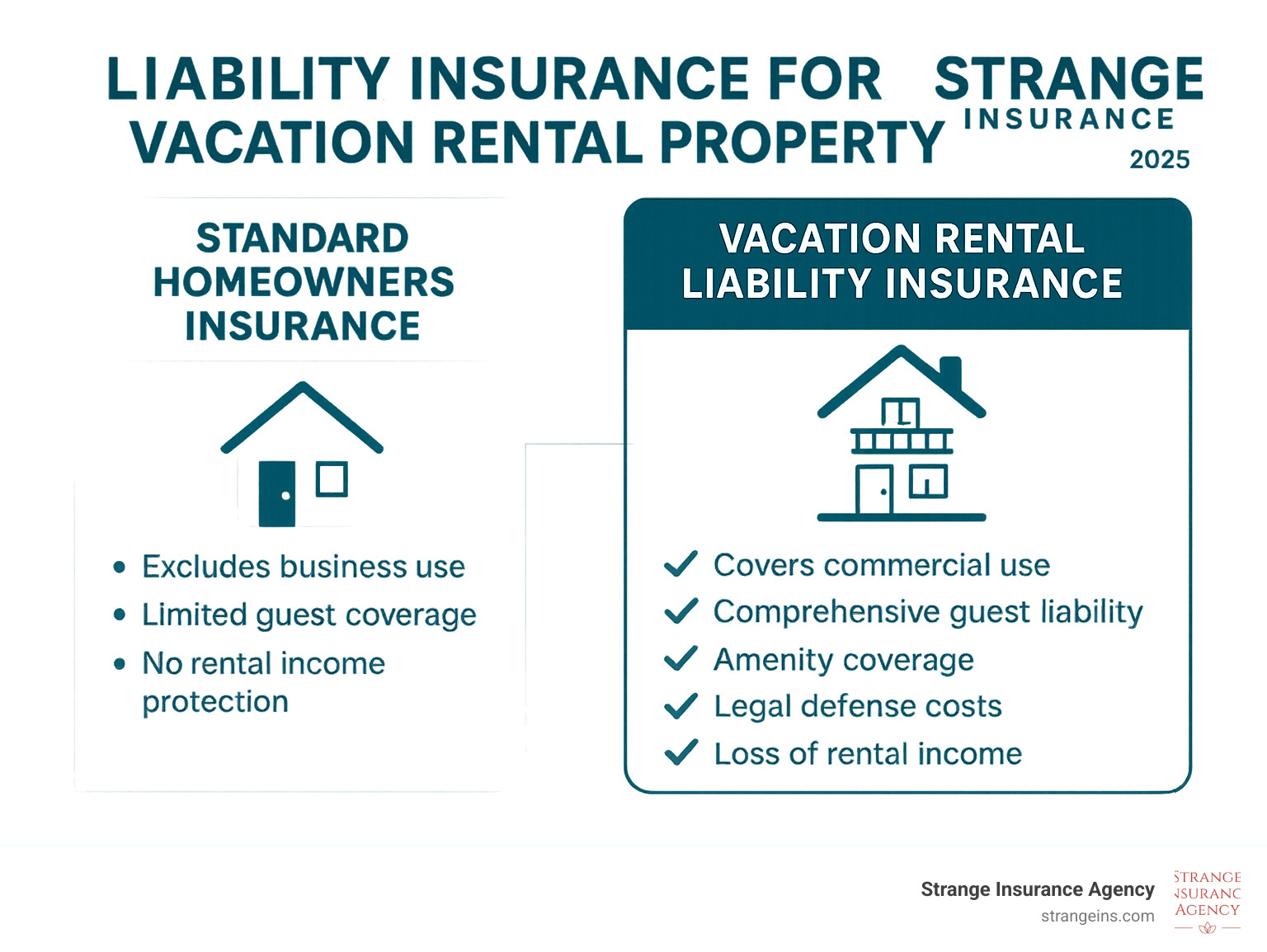
Liability insurance for vacation rental property is essential because standard homeowners policies typically exclude coverage when you rent your home for money. The moment you accept payment from guests, your property becomes a commercial enterprise subject to hospitality laws and significantly higher liability risks.
Quick Coverage Overview:
- Guest Injuries: Slip-and-fall accidents, burns, cuts requiring medical attention
- Property Damage: Guest causes damage to neighbor’s property (water overflow, fire)
- Amenity Liability: Injuries involving pools, hot tubs, bicycles, or other rental features
- Legal Defense: Attorney fees and court costs for lawsuits
- Medical Payments: Immediate medical expenses regardless of fault
The vacation rental industry has exploded from just 200,000 properties a decade ago to over 2 million today. As one hospitality expert notes, “Once you allow guests to book your property on Airbnb, you have crossed into hospitality law.” This shift means you’re no longer just a homeowner – you’re running a business that faces unique risks standard insurance won’t cover.
When a guest trips down your stairs or leaves a bathtub running that floods the unit below, you could face thousands in medical bills or property damage claims. Without proper coverage, these incidents can threaten your personal assets and investment.
I’m Christian Strange, and with over 15 years of experience in insurance and risk management, I’ve helped countless property owners steer the complexities of liability insurance for vacation rental property. My expertise in financial risk mitigation ensures you get the protection you need without overpaying for coverage you don’t.
Common liability insurance for vacation rental property vocab:
- umbrella insurance policy for rental property
- investment property insurance
- average rental property insurance cost
Why Your Standard Insurance Falls Short

Here’s the uncomfortable truth: most vacation rental owners find their existing insurance offers little to no protection only after filing a claim. I’ve seen countless property owners face this harsh reality when their “comprehensive” coverage suddenly has more holes than Swiss cheese.
The root problem is simple but serious. When you start accepting payment from guests, your property transforms from a personal residence into a commercial business. Insurance companies don’t just notice this shift – they treat these activities completely differently.
The “Business Activity” Exclusion Clause
Your standard homeowners insurance was designed for owner-occupied properties, while landlord policies work best for long-term tenant situations. Neither adequately covers the unique world of short-term rentals where paying guests stay for days or weeks.
The moment you accept that first booking payment, you’ve crossed into what insurance companies consider a commercial enterprise. This isn’t just insurance jargon – it has real legal implications under hospitality law.
Once you’re operating under these regulations, you face liability exposures similar to hotels and bed-and-breakfasts. The difference? Those businesses carry commercial-grade insurance protection that most vacation rental owners don’t even know exists.
When claims get denied, it’s usually because of business use exclusions buried in your policy’s fine print. These exclusions aren’t accidents – they’re intentional boundaries that separate personal coverage from commercial protection.
Gaps in Common Policy Types
The coverage gaps between different policy types become crystal clear when you need them most:
| Coverage Type | Homeowners Insurance | Landlord Insurance | Specialized Vacation Rental Insurance |
|---|---|---|---|
| Guest Injuries | Limited/Excluded | Limited | Comprehensive Coverage |
| Guest-Caused Property Damage | Often Excluded | Limited | Full Coverage |
| Loss of Rental Income | Not Covered | Basic Coverage | Actual Loss Sustained |
| Theft by Guest | Excluded | Limited | Covered |
| Amenity Liability (Pools, Hot Tubs) | Basic | Basic | Improved Coverage |
| Legal Defense Costs | Limited | Limited | Full Coverage |
Personal liability coverage under standard policies rarely extends to business activities. This means if a guest slips on your deck or gets injured using your hot tub, you might find yourself personally responsible for medical bills and legal fees.
According to industry experts, you may need business coverage specifically designed for rental properties. A standard Homeowners Insurance Policy for Rental Property often falls short, and even Landlord Insurance may not provide adequate protection for short-term rentals.
The Umbrella Policy Misconception
Many property owners think adding an umbrella policy will solve their coverage problems. Unfortunately, this approach has a fatal flaw that catches people off guard.
Umbrella policies are “follow form” policies, meaning they only extend coverage that already exists in your underlying policy. If your base homeowners or landlord policy excludes business activities, your Umbrella Insurance Policy for Rental Property won’t provide coverage either.
Think of it like building a house. If you have no base coverage (no foundation), you can’t build a second story (umbrella coverage). The umbrella only amplifies existing protection – it doesn’t create new coverage where exclusions exist.
This misconception has cost property owners thousands of dollars in uncovered claims. They paid for umbrella coverage thinking they were protected, only to find their liability insurance for vacation rental property had gaps that no umbrella could fill.
Understanding Your Options for Liability Insurance for Vacation Rental Property
The vacation-rental segment sits at the crossroads of residential living and the broader hospitality industry. Because of this hybrid nature, owners often need a mix of coverages traditionally found in both home and business policies. Depending on your risk tolerance and how frequently you rent, choices typically include:
- Endorsing an existing homeowners policy (limited, short-term solution)
- Switching to a landlord policy with short-stay endorsements
- Purchasing a purpose-built vacation-rental policy that bundles property, liability, and income protection
Later in this guide, we compare these options side-by-side so you can decide which structure best aligns with your budget, booking volume, and amenity mix.
How to Choose the Right Coverage for Your Property

Choosing the right liability insurance for vacation rental property isn’t a one-size-fits-all decision. After helping hundreds of vacation rental owners across Virginia, North Carolina, West Virginia, and Florida, I’ve learned that the best coverage depends on your unique situation. Let me walk you through what matters most.
Key Factors to Consider
Your property’s location plays a huge role in determining your insurance needs. If you own a coastal property, you’re dealing with hurricane season and potential storm surge – risks that mountain cabin owners never face. Meanwhile, those beautiful mountain retreats might worry about wildfire exposure or guests unfamiliar with rural roads and wildlife.
Urban rentals present different challenges than rural properties. City guests might be more likely to call for help when something goes wrong, while rural guests might attempt DIY fixes that create bigger problems. Local regulations also vary significantly – some cities require specific liability limits or additional coverage types.
The amenities you offer dramatically impact your risk profile. A swimming pool or hot tub transforms your liability exposure because they’re what insurance folks call “attractive nuisances.” Guests are drawn to them, but they also represent significant injury risks. Fire pits, outdoor kitchens, and entertainment areas create additional hazards that standard policies might not adequately cover.
Don’t forget about recreational equipment either. Those bikes, kayaks, or golf carts you provide extend your risk beyond your property lines. If a guest gets hurt using your equipment off-site, you could still face liability claims.
Your rental frequency and guest demographics also matter. Properties rented year-round need different coverage than seasonal rentals. Family-oriented properties typically have different risk patterns than properties that attract party groups. Corporate guests generally present lower liability risks than vacation travelers who might be more likely to take risks or drink more than usual.
When it comes to liability limits, most policies start at $1 million, with $2 million options available. Here’s the reality: a serious injury claim can easily exceed $1 million when you factor in medical costs, lost wages, and legal fees. I typically recommend the higher limit for properties with pools, multi-story layouts, or unique amenities that attract thrill-seeking guests.
For a detailed breakdown of how these factors affect your costs, check out our guide on Average Rental Property Insurance Cost.
Understanding Your Policy’s Fine Print
Insurance policies aren’t exactly bedtime reading, but understanding a few key terms can save you thousands down the road. Let’s start with coverage forms. Named perils policies only cover specifically listed risks like fire, wind, or hail. All-risk or special form policies cover everything except what’s specifically excluded. The broadest coverage is exclusions-based, where everything is covered unless explicitly excluded.
For vacation rentals, I almost always recommend all-risk or exclusions-based coverage. Why? Because guests can be creative in ways you never imagined. I’ve seen claims for everything from guests trying to dry wet clothes in the oven to accidents involving furniture being moved to create a dance floor.
Pay close attention to your vacancy clause. This ensures you have coverage during those gaps between guests when your property sits empty. Many standard policies reduce or eliminate coverage after 30 days of vacancy, which could leave you exposed during slow seasons.
Property entrustment coverage is crucial but often overlooked. This covers damage intentionally caused by guests – something that’s typically excluded from standard policies. Without it, you’re on your own when guests decide to redecorate with permanent markers or punch holes in walls.
Make sure your policy includes business revenue protection that covers “actual loss sustained” rather than just “fair market value.” This distinction becomes important when you’re dealing with peak season bookings or special events that generate higher-than-average income.
Watch out for sub-limits that cap coverage for specific types of damage. A policy might offer $500,000 in property coverage but limit theft claims to $5,000. For vacation rentals where guests have access to everything, this could be problematic.
Replacement cost coverage ensures you can rebuild with modern materials and meet current building codes. Actual cash value coverage depreciates your claim, leaving you short when it’s time to repair or replace damaged items.
Common exclusions include flood and earthquake, which typically require separate policies. Normal wear and tear isn’t covered, and mechanical breakdown usually requires specific coverage. Understanding these exclusions helps you make informed decisions about additional coverage you might need.
For comprehensive protection that addresses these specific vacation rental needs, explore our Liability for Rental Property options designed specifically for short-term rental operators.
Frequently Asked Questions about Vacation Rental Liability
What is the single biggest liability risk for a vacation rental owner?
Guest injuries top the list of liability risks for vacation rental owners, with slip-and-fall accidents being the most common and expensive claims. These incidents can happen anywhere on your property – from wet bathroom floors after a shower to uneven walkways leading to your front door.
What makes guest injuries particularly concerning is that they often occur when people are in unfamiliar surroundings. Your guests don’t know that the third step creaks or that the bathroom floor gets slippery when wet. They’re exploring, relaxing, and not necessarily watching for hazards they’d notice in their own homes.
The financial impact can be staggering. A single serious injury can result in medical bills exceeding $100,000, plus lost wages, pain and suffering damages, and legal fees that can easily push total costs into the hundreds of thousands. Without proper liability insurance for vacation rental property, these costs come directly from your personal assets and could threaten your financial security.
The liability exposure extends beyond just incidents on your physical property. If you provide amenities like bicycles, kayaks, or other recreational equipment that guests use off-site, you can still face liability for injuries or damage they cause while using your equipment elsewhere.
Does liability insurance cover damage or theft by a guest?
This question highlights one of the most important differences between standard insurance and specialized vacation rental coverage. While liability insurance for vacation rental property protects against injuries to others, the property portion of a comprehensive vacation rental policy should specifically address guest-caused damage and theft.
Standard policies often exclude this coverage entirely. Most homeowners and landlord policies have “property entrustment” exclusions that specifically deny coverage for damage caused by people you’ve intentionally allowed on your property. This means if a guest punches a hole in your wall, steals your television, or causes malicious damage, you’re on your own.
Specialized vacation rental policies eliminate this exclusion. They provide coverage for intentional damage and vandalism by guests, theft of your property by guests, and malicious acts that standard policies exclude. The best policies offer this coverage with no sub-limits, meaning you won’t face artificial caps on how much the insurance company will pay for guest-caused damage.
This coverage becomes particularly valuable when you consider that guest-caused damage can range from accidental spills that stain carpets to intentional destruction that requires major repairs. Having proper coverage means you can focus on running your business rather than worrying about whether difficult guests will cost you thousands in repairs.
Do I need more liability coverage if I have a pool or hot tub?
Absolutely yes. Amenities like pools, hot tubs, trampolines, or fire pits are considered “attractive nuisances” that significantly increase your liability risk. These features can lead to serious injuries, and courts often hold property owners to higher standards of care when these amenities are involved.
Water features present particular challenges because accidents can happen quickly and result in severe injuries or drowning. Even if you post safety rules and provide safety equipment, you’re still liable for incidents that occur. Insurance companies recognize this increased risk, which is why you need to ensure your policy specifically covers pool and spa liability without exclusions.
Consider these coverage improvements for water features: Verify that your policy covers both supervised and unsupervised use of pools and hot tubs. Make sure coverage extends to pool equipment and maintenance areas where guests might be injured. Most importantly, consider increasing your liability limits from $1 million to $2 million, as serious pool accidents can result in claims that exceed standard coverage limits.
Other high-risk amenities include trampolines and playground equipment, fire pits and outdoor cooking areas, boats or water sports equipment, and bicycles or recreational vehicles. The key is ensuring your liability insurance for vacation rental property doesn’t have exclusions for these specific amenities and that your liability limits are adequate for the increased exposure they create.
These amenities are often what make your property attractive to guests and command higher rental rates. With proper insurance coverage, you can offer these features confidently while protecting your investment and personal assets.
Conclusion
Your vacation rental investment deserves protection that goes beyond basic homeowners coverage. The reality is that liability insurance for vacation rental property isn’t just a nice-to-have – it’s essential for protecting both your investment and your personal assets from the unique risks that come with hosting paying guests.
We’ve seen too many property owners learn the hard way that their standard insurance falls short when they need it most. A single guest injury or property damage claim can easily exceed $100,000, and without proper coverage, these costs come directly from your pocket. That’s a risk no successful vacation rental owner should take.
The good news is that specialized insurance solutions have evolved to meet these challenges head-on. From comprehensive guest injury protection to coverage for intentional damage and theft, the right policy ensures you can focus on creating great guest experiences rather than worrying about potential disasters.
At Strange Insurance Agency, we’ve helped hundreds of vacation rental owners throughout Virginia, North Carolina, West Virginia, and Florida find the right protection for their properties. Our partnership with multiple carriers means we can compare options and find coverage that fits both your specific risks and your budget.
The vacation rental industry moves fast, and your insurance needs to keep up. Whether you’re managing a beachfront condo or a mountain cabin, having an insurance professional who understands your unique challenges makes all the difference. We know the questions to ask, the coverage gaps to avoid, and the endorsements that actually matter for your business.
Don’t let inadequate insurance coverage become the weak link in your vacation rental business. The peace of mind that comes with proper liability insurance for vacation rental property is invaluable – and it’s more affordable than you might think.
Get a quote for your commercial property insurance today and find how the right coverage can protect your investment while supporting your business growth.
In the vacation rental world, it’s not a matter of if you’ll face a liability situation – it’s when. Make sure you’re ready with coverage that actually works when you need it most.