
Mobile home insurance West Virginia is crucial for protecting your investment and providing peace of mind. If you own a mobile home in West Virginia, you’re at more risk than with traditional homes due to factors like construction style and vulnerability to natural disasters. Ensuring you have the right coverage can prevent financial ruin in case of incidents like fire, windstorms, or theft.
Key Points:
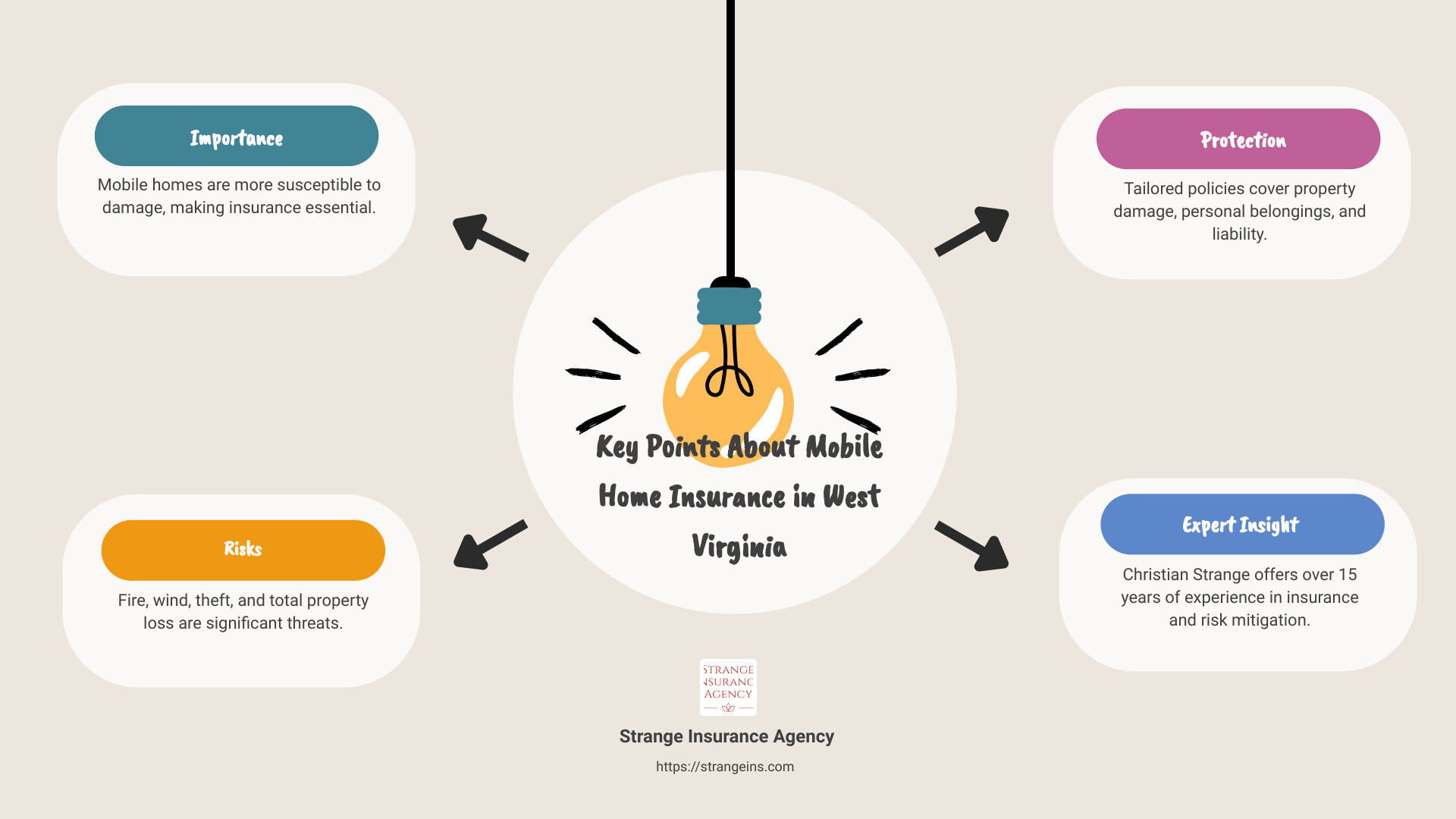
- Importance: Mobile homes are more susceptible to damage, making insurance essential.
- Risks: Fire, wind, theft, and total property loss are significant threats.
- Protection: Custom policies cover property damage, personal belongings, and liability.
I’m Christian Strange, and with over 15 years of experience in insurance and risk mitigation, I’m dedicated to helping you find the right mobile home insurance West Virginia to protect your home and finances.
Why Mobile Home Insurance is Essential
Mobile homes, also known as manufactured homes, face unique risks that make mobile home insurance in West Virginia a necessity. Here’s why:
Risks Involved
Mobile homes are more prone to damage from natural disasters like fires, windstorms, and hail. Their construction style often makes them more vulnerable compared to traditional homes. Unlike brick-and-mortar houses, mobile homes can sustain severe damage even from moderate weather events.
Example: A hailstorm in 2020 caused significant damage to roofs and siding in a mobile home park in West Virginia. Without proper insurance, many homeowners faced out-of-pocket expenses for repairs.
Construction Style
The construction of mobile homes makes them unique. They’re typically built in a factory and then transported to their location. This process can make them more susceptible to damage during transit and setup.
Fact: According to the Insurance Information Institute, mobile homes are built on a chassis and often have less structural integrity compared to traditional homes. This makes them more vulnerable to high winds and other natural forces.
Natural Disasters
West Virginia’s diverse climate—humid summers and cold winters—poses additional risks. Mobile homes are particularly susceptible to damage from natural disasters such as:
- Fires: Due to their construction materials, mobile homes can catch and spread fire more quickly.
- Windstorms: Mobile homes are often less stable in high winds, increasing the risk of tipping or structural damage.
- Flooding: Mobile homes located in flood-prone areas are at high risk unless they have specific flood coverage.
Total Property Loss
One of the most significant risks for mobile home owners is the potential for total property loss. Because mobile homes are smaller, a single event like a fire can destroy the entire home and all its contents.
Case Study: In 2019, a mobile home in Charleston, WV, was completely destroyed by a fast-moving fire. The owners had comprehensive mobile home insurance, which covered the cost of rebuilding and replacing their belongings.
Quote: “Mobile homes are at a higher risk of total loss due to their construction and size. Comprehensive insurance can be a lifesaver,” says Insurance Expert.
In summary, mobile home insurance in West Virginia is essential due to the unique risks associated with their construction style, susceptibility to natural disasters, and the potential for total property loss.
Types of Mobile Home Insurance Coverage
Mobile home insurance in West Virginia offers several types of coverage to protect your home and belongings. Let’s break down the key components:
Property Damage Coverage
Property damage coverage protects the physical structure of your mobile home, including detached structures like sheds and garages, as well as attached structures like porches. This coverage is essential because mobile homes are particularly vulnerable to natural disasters such as fires, tornadoes, and lightning.
Example: A hailstorm damages your roof. Property damage coverage would pay for the repairs.

Personal Property Coverage
Personal property coverage protects your personal belongings inside the mobile home. This includes appliances, furniture, and other personal items. Coverage typically extends to risks like burglary, fires, tornadoes, and lightning.
Case Study: After a burglary, a West Virginia homeowner had their stolen electronics and furniture replaced thanks to their personal property coverage.
Liability Coverage
Liability coverage helps cover legal costs and medical bills if someone is injured on your property. This can include dog bites, slips and falls, and other injuries. Without this coverage, you could face significant out-of-pocket expenses.
Quote: “Liability coverage can protect you from financial ruin if someone sues you for an injury that happens on your property,” says Insurance Expert.
Additional Coverage Options
You can customize your policy with additional coverage options to suit your needs. These may include:
- Moving damage: Covers your home during transportation.
- Optional extras: Protects high-value items like jewelry or electronics.
- Custom policies: Custom to your specific needs.
Example: A mobile home owner added coverage for moving damage when relocating their home, ensuring protection during transit.

Mobile home insurance in West Virginia is designed to provide comprehensive protection for both your home and your peace of mind.
Next, we’ll explore the differences between mobile, manufactured, and modular homes.
Differences Between Mobile, Manufactured, and Modular Homes
When it comes to mobile home insurance in West Virginia, understanding the differences between mobile, manufactured, and modular homes is crucial. These differences impact construction, foundation, insurance needs, and classification.
Mobile Homes
Mobile homes are factory-built homes constructed before June 15, 1976. They are built with lighter materials and transported to a site where they are anchored to the ground.
- Construction: Factory-built with lighter materials.
- Foundation: Ground anchors for stability.
- Classification: Pre-1976 homes.
- Insurance Needs: Mobile homes require specialized insurance due to their unique construction and anchoring method.
Manufactured Homes
Manufactured homes are similar to mobile homes but are built after June 15, 1976. These homes adhere to stricter HUD standards and are generally placed on a more permanent foundation.
- Construction: Factory-built to higher standards.
- Foundation: Typically a permanent foundation.
- Classification: Post-1976 homes.
- Insurance Needs: Like mobile homes, manufactured homes need specialized insurance, but their improved construction can influence coverage options and costs.
Modular Homes
Modular homes are different from both mobile and manufactured homes. They are built in sections at a factory and then assembled on-site, much like traditional homes.
- Construction: Pre-fabricated sections assembled on-site.
- Foundation: Built on a permanent foundation.
- Classification: Treated like traditional site-built homes.
- Insurance Needs: Modular homes are generally insured with traditional homeowners insurance due to their construction and foundation.
Understanding these distinctions helps in choosing the right mobile home insurance West Virginia residents need. Each type of home has unique insurance requirements, so it’s important to know which category your home falls into.
Next, we’ll look at the average cost of mobile home insurance in West Virginia.
Average Cost of Mobile Home Insurance in West Virginia
Factors Influencing Cost
Several factors influence the cost of mobile home insurance in West Virginia:
- Home Value: The higher the value of your home, the more it will cost to insure.
- Location: Areas prone to natural disasters like windstorms or floods typically have higher premiums.
- Coverage Level: The amount of coverage you choose impacts your premium. Higher coverage means higher premiums.
- Deductible Amount: A higher deductible generally results in a lower premium. However, you will pay more out-of-pocket if you need to file a claim.
Typical Coverage Amounts
When considering coverage amounts, most West Virginia homeowners opt for:
- Single-Section Homes: A minimum of $30,000 worth of coverage.
- Double-Section Homes: A minimum of $45,000 worth of coverage.
However, these are just starting points. You should consider whether these amounts would be sufficient to rebuild your home in the event of a total loss.
Liability Coverage is another crucial component. It covers legal costs, medical bills, and other expenses if someone gets injured on your property. Many homeowners start with $100,000 in liability coverage, but higher amounts can offer better protection.
Deductibles also play a role. If you choose a higher deductible, your monthly premium will be lower, but you’ll need to pay more out-of-pocket for any claims.
Understanding these factors helps you tailor a policy that fits your budget and coverage needs.
Next, we will answer some frequently asked questions about mobile home insurance in West Virginia.
Frequently Asked Questions about Mobile Home Insurance in West Virginia
Why is it harder to insure a manufactured home?
Manufactured homes are built with lighter materials and are often anchored to the ground rather than built on a permanent foundation. This makes them more susceptible to wind damage and other weather-related risks. Additionally, the construction style of these homes means they can suffer more extensive damage from events like fires or tornadoes.
Standard homeowners insurance policies are typically insufficient for these unique risks, requiring specialized mobile home insurance policies to provide adequate coverage.
Which homeowners policy is used for mobile homeowners?
Mobile homeowners need a specific type of policy known as a mobile home insurance policy. This policy covers:
- Perils such as fire, theft, and natural disasters.
- Additional structures on the property like sheds and garages.
- Personal belongings including furniture and appliances.
This specialized policy ensures that the unique risks associated with mobile homes are adequately covered.
How much is house insurance in WV?
The average cost of mobile home insurance in West Virginia varies based on several factors, including the value of the home, its location, and the level of coverage chosen. According to research, the cost typically ranges between $300 and $1,000 annually.
For example, NerdWallet reports that the average cost of homeowners insurance in West Virginia is around $1,200 per year. However, mobile home insurance can be less or more expensive depending on the specific circumstances.
It’s important to compare quotes from different insurance providers to find the best rate for your needs.
By understanding these key points, you can make informed decisions about your mobile home insurance in West Virginia.
Conclusion
In summary, mobile home insurance in West Virginia is essential for protecting your investment. Mobile homes face unique risks, such as increased vulnerability to natural disasters and total property loss due to their construction style.
Coverage options like property damage, personal property, and liability insurance provide comprehensive protection. Additional coverage options can further tailor the policy to your specific needs, ensuring you are well-covered in any situation.
At Strange Insurance Agency, we understand the complexities involved in insuring mobile homes. We are committed to helping you find the right coverage that fits your needs and budget.
Don’t wait until it’s too late. Ensure your mobile home and your finances are protected. Contact us today to get a personalized quote and start your journey toward peace of mind.
For any questions or to speak with an agent, reach out to us. We’re here to help you steer mobile home insurance with ease and confidence.