
Why Property and Liability Insurance Are Essential for Smart Investors
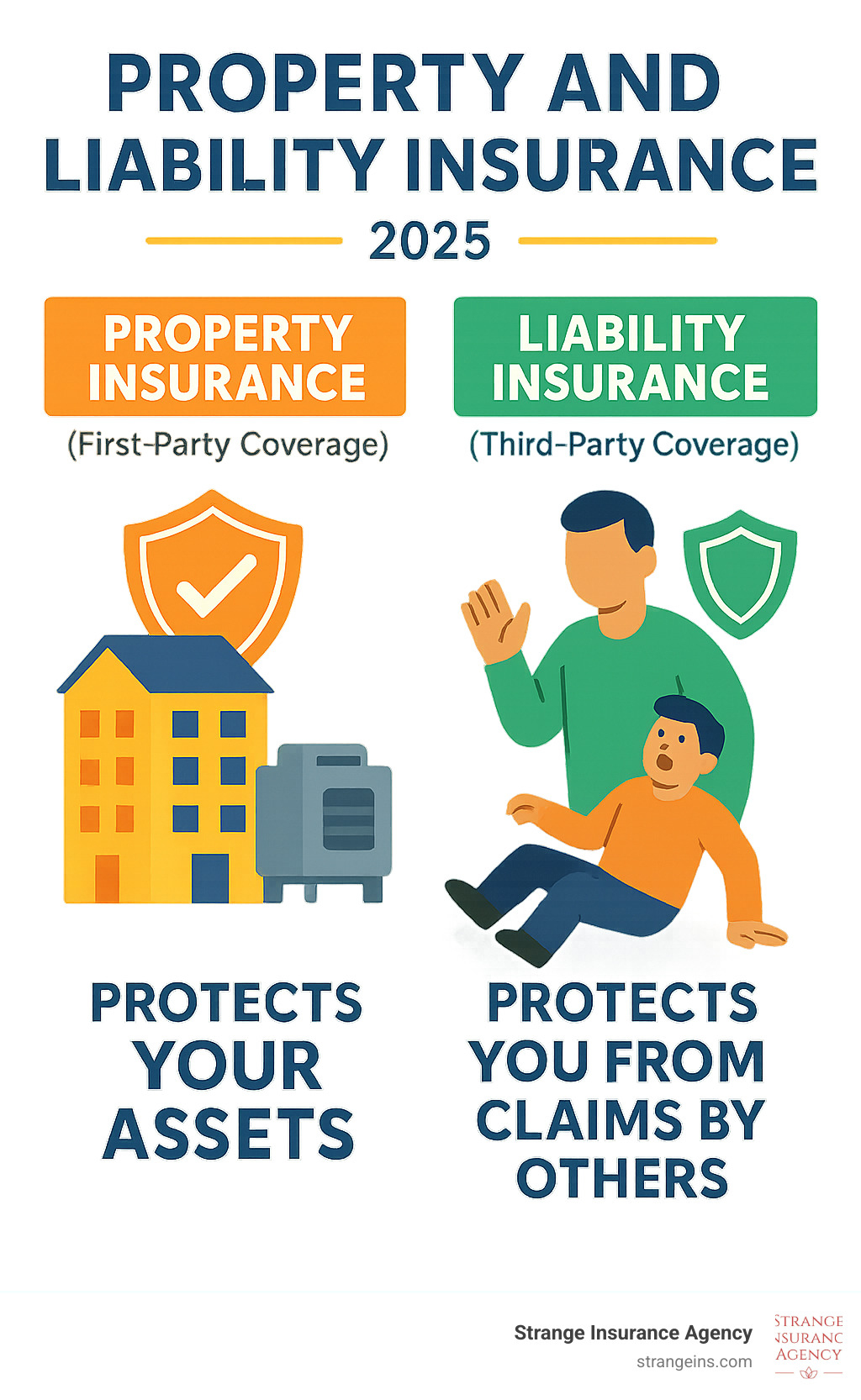
Property and liability insurance are two distinct types of coverage that protect your investments from different risks. Here’s the key difference:
Property Insurance (First-Party Coverage):
- Protects YOUR assets (buildings, equipment, inventory)
- Covers direct physical damage to your property
- Pays for repair or replacement costs
Liability Insurance (Third-Party Coverage):
- Protects you from claims made by OTHERS
- Covers legal responsibility for injuries or damage you cause
- Pays for lawsuits, settlements, and legal defense costs
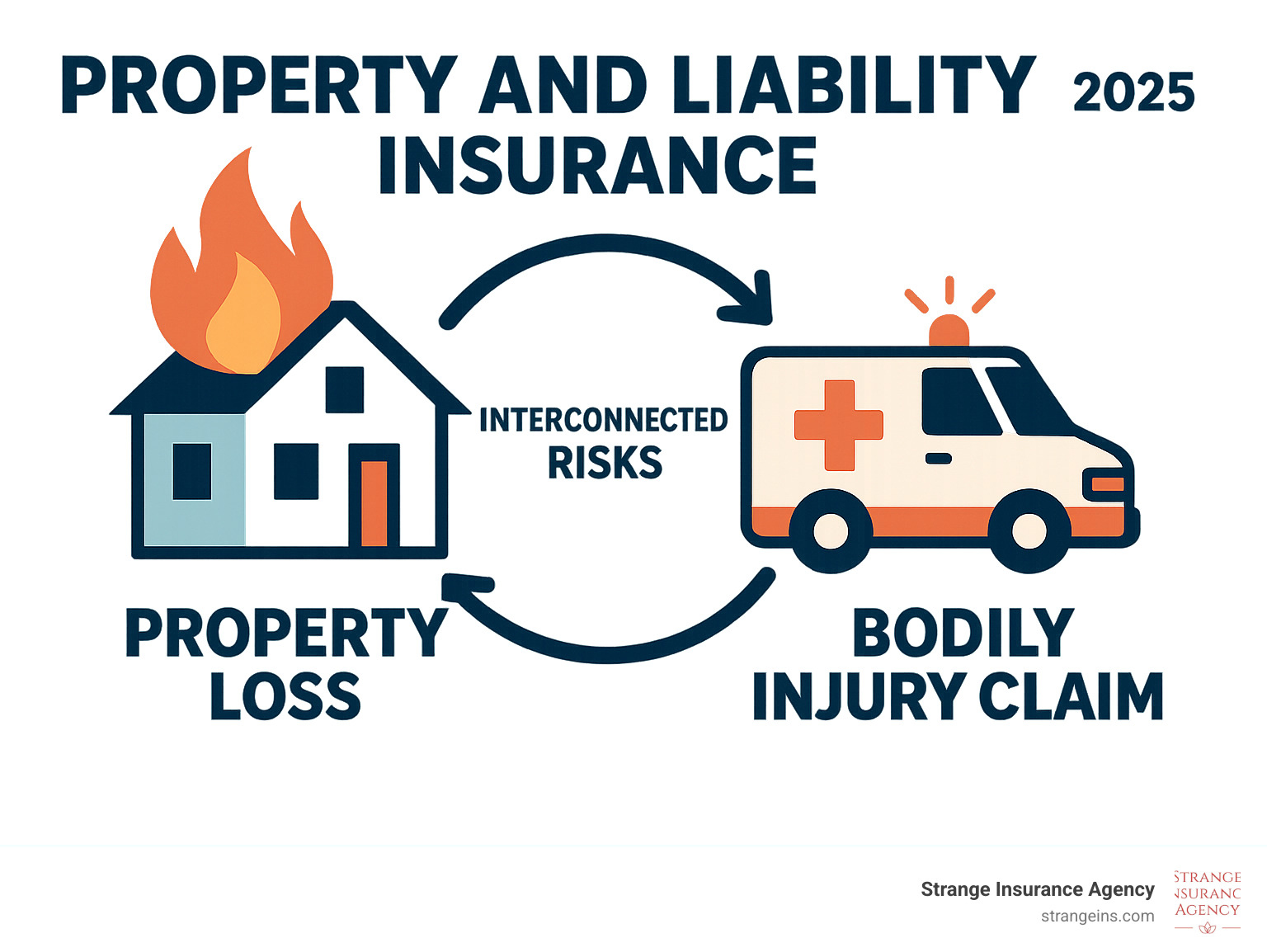
As a real estate investor, risks can attack your wealth from two directions. A fire might destroy your building (a property loss) and injure a tenant (a liability claim). Industry data shows the average fire claim is $35,000, while wind and hail damage averages $26,000. These figures don’t even include the potential liability when someone is hurt on your property.
Many investors mistakenly think these coverages are interchangeable. Property insurance covers what happens TO your assets, while liability insurance covers what your assets or business activities do to others. Without both, you leave dangerous gaps in your protection.
I’m Christian Strange. With over 15 years in treasury management, business consulting, and insurance, I’ve helped countless investors understand how property and liability insurance create comprehensive asset protection. My expertise shows that successful investors understand—and properly insure against—both types of risk.
Essential property and liability insurance terms:
- liability coverage for rental property
- investment property insurance
- umbrella insurance policy for rental property
The Fundamental Difference: First-Party vs. Third-Party Coverage
Understanding property and liability insurance starts with one concept: who gets protected. Simply put, property insurance protects you and your stuff, while liability insurance protects everyone else from you.
This distinction is the foundation of smart risk management. Property insurance is first-party coverage because you claim on your own policy for your own assets. Liability insurance is third-party coverage because it activates when someone else files a claim against you.
Here’s how these two types of coverage stack up:
| Feature | Property Insurance | Liability Insurance |
|---|---|---|
| Who is Covered? | You (the policyholder/business owner) | Third parties (customers, tenants, visitors, public) |
| What is Covered? | Your assets (buildings, equipment, inventory, income) | Your legal obligation for damages/injuries to others |
| Type of Claim | First-party (you claim against your own policy) | Third-party (someone else claims against your policy) |
| Simple Example | A fire damages your rental property. | A tenant slips and falls on your property. |
Understanding Business Property Insurance (First-Party)
Think of business property insurance as a bodyguard for everything you own. This first-party coverage activates when your tangible assets—buildings, equipment, inventory, or business income—take a hit.
For example, if you own a rental property in Richmond and a kitchen fire destroys half the building, your property insurance covers the financial loss from repairing or rebuilding it. It also protects business contents like appliances, furniture, and landscaping.
The beauty of first-party coverage is its simplicity. When disaster strikes your property, your insurer pays you (minus your deductible). It’s straightforward protection for your investments.
For real estate investors, this coverage is essential. You’ll want to dive deeper into Insuring Investment Property to understand all the nuances. The U.S. Chamber of Commerce also offers a comprehensive Guide to Property Insurance for Businesses that covers the fundamentals every investor should know.
Understanding Business Liability Insurance (Third-Party)
Business liability insurance is your third-party coverage. It protects you when your business operations hurt someone or damage their property, which can get expensive.
Imagine a prospective tenant visits your Charlotte rental property, slips on a wet floor, and breaks their wrist. You’re now facing a lawsuit for bodily injury. Or if a contractor damages a neighbor’s fence while working on your property—that’s property damage to others. Your liability insurance handles these claims.
The financial stakes are enormous. Legal defense costs alone can be tens of thousands, even if you win. Settlements or judgments can wipe out years of rental income.
This is why understanding Liability Insurance for Real Estate Investors is survival. The coverage extends beyond bodily injury and property damage to include personal and advertising injury claims like slander or libel.
Crucially, liability insurance covers your legal defense costs, settlements, and judgments, often with limits in the millions. To get a complete picture of what this protection includes, check out Liability Insurance Cover.
The bottom line? Property and liability insurance are complementary shields. Miss either one, and you’re vulnerable to financial disaster.
A Deep Dive into Commercial Property Insurance for Investors
As a real estate investor, your tangible assets are the backbone of your portfolio. Commercial property insurance safeguards these assets from many perils and is more comprehensive than you might think.

What Assets and Losses Are Specifically Covered?
Commercial property insurance typically covers the physical structure of your building(s), whether it’s a multi-family unit in North Carolina or a commercial space in Virginia. It also extends to business contents, such as:
- Inventory: Goods held for sale or lease.
- Furniture and Fixtures: Desks, chairs, shelving, etc.
- Equipment: Tools, machinery, and computers.
Coverage for business contents often extends within a 100-foot radius of the property, protecting items like outdoor signs.
Beyond physical damage, a critical component is Business Interruption (or Business Income and Extra Expense coverage). It’s a lifesaver if a covered peril makes your property uninhabitable, helping cover:
- Lost Income: Replaces income your business would have earned.
- Extra Expenses: Covers costs to minimize the shutdown, like temporary relocation.
Business income coverage often has a waiting period (typically 24-72 hours) before it kicks in, so emergency reserves are wise.
For rental properties, having the right Commercial Rental Property Insurance and understanding Building and Contents Insurance for Landlords is essential.
Valuation Methods: Replacement Cost vs. Actual Cash Value (ACV)
When insuring your property, you’ll encounter two valuation methods: Replacement Cost (RC) and Actual Cash Value (ACV). This choice impacts your premium and claim payout.
- Replacement Cost (RC): Pays to replace your property with new materials of similar quality, without deducting for depreciation. It has a higher premium but ensures you can fully restore your property. This is often the preferred choice for investors.
- Actual Cash Value (ACV): Pays the replacement cost minus depreciation (wear and tear, age). ACV policies have lower premiums but can leave a large gap between the payout and the actual repair cost. For example, an ACV policy would only pay the depreciated value of a 20-year-old roof, not the cost of a new one.
Making the right choice depends on your risk tolerance. For more insights, check our guide on the Best Building Insurance for Landlords.
The Coinsurance Clause: A Trap for the Unwary Investor
A little-known but costly part of many commercial property insurance policies is the coinsurance clause. It requires you to insure your property for a specific percentage of its value (often 80%). Failing to meet this can result in a penalty on a partial loss claim.
For example, your building is valued at $1,000,000 with an 80% coinsurance clause. You must insure it for at least $800,000. If you only insure it for $500,000 and have a $160,000 loss, your payout will be reduced.
The formula is: (Amount of Insurance Carried / Amount of Insurance Required) x Amount of Loss = Payout
($500,000 / $800,000) x $160,000 = $100,000
You would only receive $100,000, leaving you with a $60,000 out-of-pocket expense. This underinsurance penalty is a trap for unwary investors. Ensuring adequate coverage is key to avoiding these reductions. Explore more about Commercial Property Insurance.
Navigating the Complexities of Business Liability Insurance
While property insurance protects your assets, liability insurance is your defense against the financial fallout from claims by others. It can get complex and costly without adequate protection.
Think of it as a legal bodyguard. It steps in when someone gets hurt on your property or claims your business caused harm. Without it, your personal assets are on the line.
What Claims and Legal Expenses Does Liability Insurance Cover?
Business liability insurance, or Commercial General Liability (CGL), covers a wide range of situations that could devastate your finances. As a real estate investor, you might face:
Bodily injury claims: If a prospective tenant visits your Norfolk property, slips on a wet floor, and breaks their wrist, your policy would cover their medical bills and lost wages. These slip and fall incidents are common and can lead to large settlements.
Property damage claims: If your maintenance crew accidentally breaks a tenant’s expensive artwork or a tree on your property falls on a neighbor’s car, your liability coverage handles the repair costs.
Personal and advertising injury: This protects you from claims of slander, libel, or copyright infringement. If you accidentally use a copyrighted photo in a rental listing, this coverage has your back.
Crucially, liability insurance covers legal defense costs, settlements, and judgments even if a claim is baseless. Legal fees can easily run into the tens of thousands. Defending a frivolous lawsuit without coverage could be financially ruinous.
For a comprehensive understanding, see our guide on What Does Business Liability Insurance Cover.
Common Liability Limits and Why They Matter
When shopping for liability insurance, you’ll see two critical numbers: the per occurrence limit and the aggregate limit. Understanding these ensures you have enough protection.
The per occurrence limit is the maximum your policy pays for a single incident. The aggregate limit is the total maximum your policy pays over the entire year.
Most small businesses and investors start with $1 million per occurrence and $2 million aggregate limits. A million dollars can disappear quickly in a serious claim. A severe slip and fall could easily exceed $1 million after medical bills, lost wages, and pain and suffering.
Assessing your risk means choosing limits that protect your total net worth. If you’re worth $3 million but only carry $1 million in liability coverage, you’re self-insuring the difference—a risky gamble.
Higher liability limits are surprisingly affordable. Increasing coverage from $1 million to $2 million might only cost a few hundred dollars more per year, a small price for protecting your net worth.
Learn more about General Liability Insurance and explore our in-depth resource on General Liability Coverage Basics.
Critical Exclusions in Property and Liability Insurance Policies
Even robust property and liability insurance policies have limits. Understanding what your policy doesn’t cover is as important as knowing what it does. These gaps, or exclusions, can catch investors off guard.
Exclusions define the boundaries of your protection, clarifying which risks require separate coverage or additional premiums.

What Your Property Policy Typically Won’t Cover
Standard commercial property policies are comprehensive but don’t cover everything. Common exclusions can create significant gaps in your protection.
- Flood damage is almost always excluded. This is critical for properties in coastal areas like Norfolk, VA, or Florida. You’ll need separate flood insurance.
- Earthquake damage is also typically excluded and requires a separate policy or endorsement.
- Sewer backup can cause thousands in damage and usually requires a separate rider.
- Wear and tear is not covered. Insurance is for sudden, accidental losses, not gradual deterioration.
- Employee theft requires separate fidelity bond coverage.
- Intentional damage you cause is never covered.
Most of these gaps can be filled with separate policies or riders. We help investors Compare Flood Insurance Quotes and find comprehensive Home and Flood Insurance Quotes.
What Your Liability Policy Typically Won’t Cover
Liability insurance has its own boundaries. These exclusions define what’s covered versus what requires additional policies.
- Professional mistakes or negligence fall under Errors And Omissions Insurance, not general liability.
- Employee injuries are covered by Workers Compensation Insurance, which is required in most states if you have employees.
- Auto accidents involving business vehicles require Commercial Auto Insurance.
- Intentional acts are not covered. Insurance protects against accidents, not deliberate harm.
- Criminal prosecution is not covered. Liability policies handle civil claims for monetary damages, not criminal charges.
Understanding these exclusions is a roadmap for building a complete protection strategy by identifying where you might need additional coverage.
The Investor’s Playbook: Combining Property and Liability Insurance for Full Protection
Now that we’ve explored property and liability insurance, let’s talk strategy. For smart investors, these policies work together to create a fortress around your real estate investments.
The Synergy: Why Every Investor Needs Both Coverages
Real estate risks are often interconnected, creating a domino effect that can devastate your finances if you’re missing either property or liability insurance. A single event can trigger both types of claims.
Consider this: A fire breaks out in your Virginia rental property. Your property insurance covers the cost to rebuild. But during the fire, a tenant is injured, and smoke damages your neighbor’s property. Now you’re facing injury and property damage claims from others.
That’s where your liability insurance becomes a financial lifeline, covering medical expenses, legal fees, and settlements. Without both coverages, you might rebuild your property only to have a lawsuit wipe out your wealth. Data on the most costly claims shows these interconnected risks are common. This holistic approach is essential for preventing financial ruin.
The All-in-One Solution: The Business Owner’s Policy (BOP)
For many small to mid-sized real estate investors, a Business Owner’s Policy (BOP) is an ideal solution. A BOP bundles general liability and commercial property coverage into a single, convenient policy.
This bundled approach typically costs less than buying separate policies and streamlines your insurance management. With one policy and one renewal date, it simplifies things for busy investors managing properties across Virginia, North Carolina, West Virginia, and Florida.
While not every business qualifies, a BOP is often the perfect fit for most real estate investors, especially those building their portfolios. It provides comprehensive property and liability insurance without overcomplicating things. Learn more about the Businessowners Policy Or BOP and explore coverage details in our comprehensive Business Owners Policy Guide.
Going Beyond the Basics with Umbrella Insurance
What if a catastrophic lawsuit exceeds your policy limits? This is where Commercial Umbrella Insurance becomes your ultimate safety net.
An umbrella policy provides excess liability coverage that kicks in when your primary general liability, commercial auto, or employer’s liability policies are exhausted. It adds an extra layer of protection, typically from $1 million to $5 million or more.
Umbrella coverage is highly cost-effective, offering millions in additional protection for a fraction of the cost of increasing primary limits. For investors with high-value portfolios or significant exposure in places like Norfolk, Charlotte, or Miami, this extra protection provides unparalleled peace of mind.
It protects your entire net worth from devastating claims that could destroy your financial future. Find out how this affordable protection can safeguard your investments with What Is Umbrella Liability Insurance and Commercial Umbrella Insurance.
Conclusion
Protecting your real estate portfolio means mitigating the unforeseen risks that can turn a valuable asset into a liability. This guide has shown how property and liability insurance are the two essential pillars of a robust asset protection strategy for any investor.
Remember: property insurance shields your physical assets from direct damage, while liability insurance is your armor against claims from others. They are not interchangeable; they are complementary protections. A single event, like a fire that damages your building and injures a tenant, requires both coverages to fully protect you.
The key takeaway is that understanding your policy’s specifics—from valuation methods and coinsurance clauses to critical exclusions—is paramount. Too many investors find coverage gaps only after a claim, when it’s too late.
Whether you’re managing properties in Norfolk, VA, or expanding across North Carolina, West Virginia, and Florida, you need both property and liability insurance working in harmony.
At Strange Insurance Agency, we understand the challenges real estate investors face. As a concierge insurance agency, we steer this complexity for you. We take the time to understand your situation and provide multiple quotes from over 30 carriers, ensuring you get comprehensive, custom coverage.
Our goal is to find coverage as smart as your investment portfolio. We handle the heavy lifting of comparing options and identifying gaps so you can focus on growing your investments.
Don’t leave your financial future to chance. Protect your investments today by exploring your Commercial Property Insurance options and ensuring your coverage is as smart as your portfolio.