
Understanding Your Flood Insurance Costs
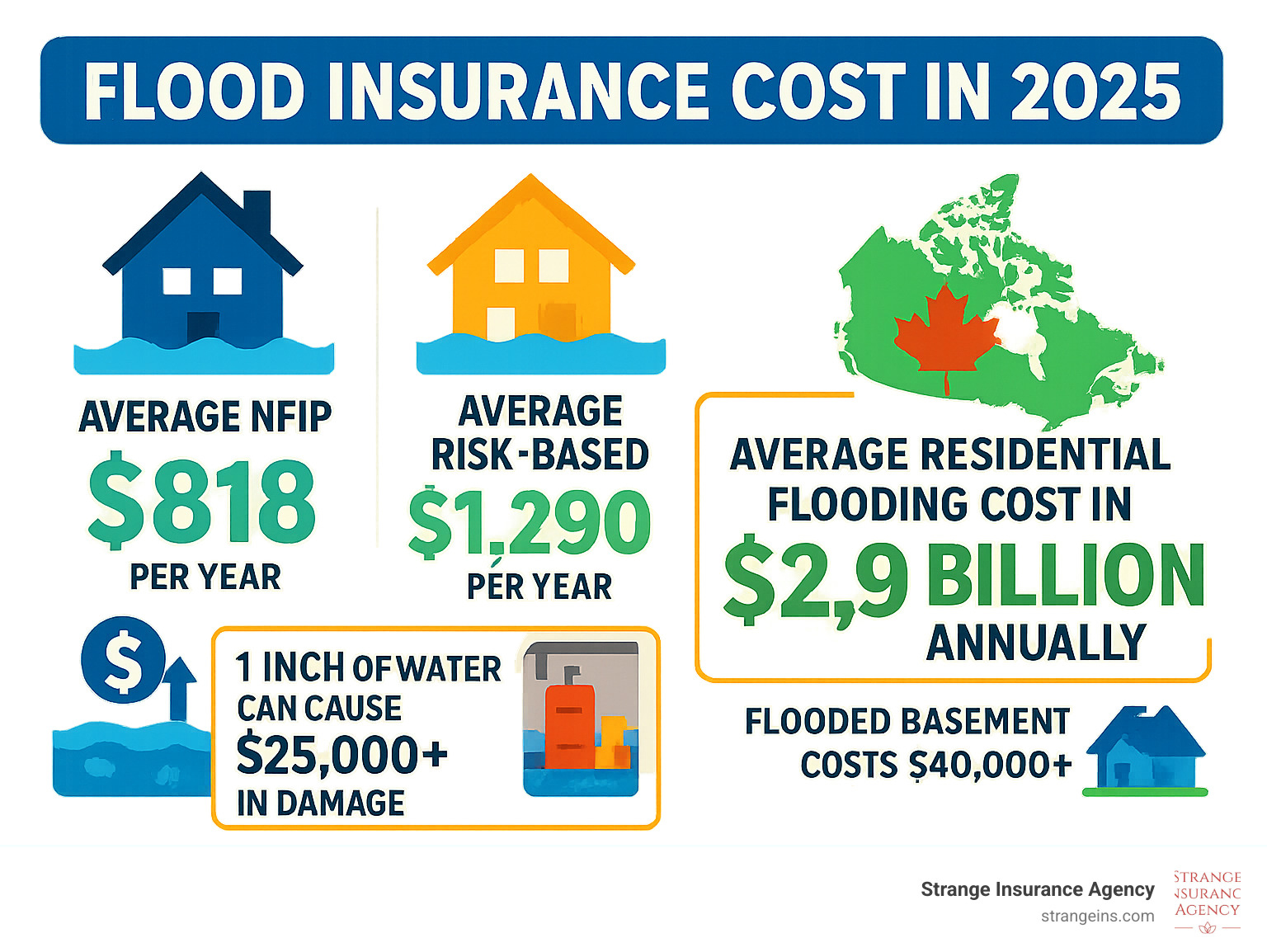
The flood insurance cost varies widely based on your property’s location and specific risk factors. Since standard home insurance doesn’t cover flood damage, a separate policy is crucial for financial protection. Just one inch of floodwater can cause over $25,000 in damage, making flood insurance a vital safeguard.
Here’s a quick look at average annual costs:
- Average NFIP flood insurance in the U.S.: $818
- Average risk-based flood insurance in the U.S.: $1,290
- Average annual cost in Canada: A national low-cost program is targeted for April 1, 2025, as access has been limited for high-risk households.
I’m Christian Strange, and with over 15 years in insurance and business consulting, I’ve seen how critical proper flood coverage is. At Strange Insurance Agency, my goal is to simplify these solutions to ensure you’re protected from the financial devastation a flood can cause.
Quick look at flood insurance cost:
- private flood insurance companies
- how to get a flood insurance quote
- does flood insurance quote differ for different companies
Why You Can’t Afford to Ignore Flooding
Flooding is the most common and expensive natural disaster in the U.S., caused by everything from heavy rainfall and snowmelt to overwhelmed urban drainage. It’s a widespread risk that many homeowners underestimate.
What is flood insurance and why is it crucial?
Flood insurance is a specific policy that covers physical damage to your property and possessions from external water sources like heavy rain, overflowing rivers, or storm surges. It’s a crucial financial safety net. The costs of flood damage are staggering: just one inch of water can cause over $25,000 in damage, and the average cost to repair a flooded basement exceeds $40,000. Without insurance, these costs come directly out of your pocket.
Flood risks are also increasing. According to the Department of Homeland Security, 90% of U.S. natural disasters involve flooding. https://www.dhs.gov/archive/natural-disasters#:~:text=Flood,floods%20and%20their%20cascading%20consequences/. Climate change is bringing heavier rainfall and more intense storms, meaning your property’s flood risk may be higher than you think. For residents in Virginia, North Carolina, West Virginia, and Florida, where weather patterns can be severe, flood insurance is a vital step toward financial security.
Does standard homeowners insurance cover flood damage?
This is a common and costly misconception: no, standard homeowners insurance almost certainly does not cover flood damage.
Your homeowners policy covers water damage that starts inside your home, like a burst pipe or overflowing appliance. However, it specifically excludes damage from overland flooding—water that comes from outside and affects a large area. This includes surface water from heavy rain, river overflow, or storm surges.
Furthermore, damage from a backed-up sewer or drain is also typically excluded from both standard homeowners and flood insurance policies. This requires a separate water-backup endorsement on your homeowners policy.
This critical gap in coverage leaves you exposed to the most common natural disaster. A dedicated flood insurance policy is the only way to ensure you’re truly protected.
Want to dive deeper into how homeowners and flood policies work together? Check out our guide on Homeowners and Flood Insurance Quotes.
What Determines Your Flood Insurance Cost?

Your flood insurance cost is based on an assessment of your property’s specific risk. Key factors include your property’s location, flood risk, building materials, number of floors, and the amount of coverage you select.
Understanding the average flood insurance cost
The average cost of an NFIP policy in the U.S. is $818 per year, but your rate can vary significantly. For example, average annual premiums as of March 2025 were:
- Florida: $865
- North Carolina: $833
- Virginia: $726
- West Virginia: $1,563
Properties in high-risk Special Flood Hazard Areas (SFHAs) face higher premiums. However, with about 40% of flood claims coming from low-to-moderate risk areas, insurance is a smart investment for everyone. Costs also differ between NFIP policies and those from private insurers, which can sometimes offer more competitive rates or higher coverage limits.
How the National Flood Insurance Program (NFIP) sets rates
FEMA’s Risk Rating 2.0, fully implemented in 2023, has modernized how flood insurance cost is calculated. Instead of relying primarily on broad flood zones, it uses property-specific variables for more equitable pricing. Key factors include:
- Likelihood and type of flooding (river, coastal, rainfall)
- Building characteristics (foundation type, first-floor height)
- Distance from water sources
- Replacement Cost Value (RCV) of the home
- Prior claims history
The goal is to align rates more closely with a property’s unique risk. While some premiums may increase (capped annually for most), others may decrease. This makes pricing more transparent and reflective of true risk.
You can dig deeper into FEMA’s methodology with their guide to risk rating: FEMA’s guide to risk rating.
NFIP vs. Private Flood Insurance: Choosing Your Coverage
When buying flood insurance, you have two main options: the government-backed National Flood Insurance Program (NFIP) or the expanding private market. While the NFIP has historically dominated, nearly 80 private insurers now offer policies, giving you more choices to find the right flood insurance cost and coverage.

Key differences in coverage and cost
NFIP and private flood insurance differ in coverage limits, flexibility, and waiting periods.
- Dwelling Coverage: The NFIP caps building coverage at $250,000. Private insurers often offer much higher limits, from $500,000 to over $4 million, which is crucial for higher-value homes.
- Contents Coverage: The NFIP limit for personal belongings is $100,000. Private policies can offer up to $500,000 or more.
- Waiting Period: NFIP policies typically have a 30-day waiting period. Private insurers often have shorter waits, sometimes just 10-14 days.
- Additional Living Expenses (ALE): If a flood makes your home uninhabitable, the NFIP does not cover temporary housing costs. Many private policies include ALE coverage, which is a major benefit.
- Basement Coverage: NFIP coverage for basements is very limited, covering structural elements and essential equipment but not finished spaces or personal items. Some private policies offer broader basement coverage.
- Policy Customization: Private policies are often more flexible, allowing endorsements for detached structures (sheds, pools) or debris removal beyond standard limits.
For those in our service areas like Florida, Virginia, and North Carolina, the higher limits and flexibility of private insurance can be a significant advantage. Learn more about Private Flood Insurance Companies.
What’s covered… and what’s not?
Understanding your policy’s specifics is as important as its flood insurance cost.
What’s typically covered?
Flood insurance generally covers direct physical damage to your home and belongings from flooding. For your building, this includes the foundation, electrical and plumbing systems, central air, furnaces, water heaters, and built-in appliances. Permanently installed carpeting and detached garages (up to a limit) are also covered. For your contents, this includes furniture, clothing, electronics, portable appliances, and washers/dryers. Valuables like artwork may have specific limits (e.g., $2,500 on NFIP policies).
What’s typically NOT covered?
Common exclusions include property outside the insured building, such as decks, patios, fences, pools, and septic systems. Vehicles are not covered (this falls under auto insurance). NFIP policies also exclude temporary living expenses, cash, and valuable papers. Damage from moisture, mildew, or mold that could have been prevented is often excluded, as is damage from sewer backups, which requires a separate endorsement on a homeowners policy.
How to Lower Your Flood Insurance Bill

Practical steps to reduce your flood insurance cost
Here are some effective ways to reduce your home’s flood risk and your premium:
- Increase your deductible: Choosing a higher deductible (from $1,000 to $10,000 with NFIP) will lower your annual premium.
- Install flood vents: These allow floodwaters to flow through enclosed foundations, reducing pressure and potentially earning a discount.
- Lift utilities: Raising electrical panels, HVAC systems, and water heaters above the base flood elevation protects them and can lower rates.
- Obtain an Elevation Certificate (EC): While no longer required by NFIP for rating, an EC can still lead to a lower premium if it proves your home is higher than FEMA’s data suggests.
- Consider structural changes: Elevating your entire home or, for new construction, building without a basement can dramatically reduce your premium.
We can help you explore these options and provide a Cheap Flood Insurance Quote that reflects your mitigation efforts.
Community-wide mitigation efforts
Your community’s actions can also lower your flood insurance cost. FEMA’s Community Rating System (CRS) rewards communities that exceed minimum NFIP requirements with flood insurance discounts for their residents. Activities like enforcing higher building standards or preserving open space can earn credits that translate into premium discounts of up to 45% for all policyholders in that community. This program provides powerful incentives for flood resilience measures, benefiting everyone.
Frequently Asked Questions about Flood Insurance
It’s normal to have questions about flood insurance. Here are clear, simple answers to some of the most common ones.
Can renters get flood insurance?
Yes, absolutely. Your landlord’s insurance covers the building, but not your personal belongings. Renters can and should purchase a contents-only flood insurance policy to protect their furniture, electronics, and other valuables. The NFIP offers contents-only coverage up to $100,000, providing a crucial financial safety net to help you replace your items after a flood.
What is the typical waiting period for a policy to start?
Flood insurance policies have a waiting period. For the NFIP, there is typically a 30-day wait from the purchase date until coverage begins. This prevents people from buying a policy just before a storm hits. There are exceptions, such as when insurance is required for a new mortgage. Private insurers may offer shorter waiting periods, often 10 to 14 days. The key takeaway is to plan ahead and not wait until a storm is approaching.
Is flood insurance required for my home?
Flood insurance is legally required if your home is in a high-risk flood zone (a Special Flood Hazard Area, or SFHA) and you have a mortgage from a federally regulated lender. This applies to FHA, VA, and conventional loans.
However, even if it’s not required, it is strongly recommended. Over one-third of flood claims come from outside high-risk zones. With the potential for a single inch of water to cause $25,000 in damage, the financial risk of being uninsured is immense for any homeowner. A policy provides invaluable peace of mind, knowing you have a path to recovery.
You can check your property’s flood risk on the FEMA Flood Map Service Center. Even if you’re in a low-risk zone, it’s worth discussing your options with us.
Secure Your Property Before the Waters Rise
We’ve seen that standard homeowners insurance doesn’t cover flooding, and that flood insurance cost is a small price to pay compared to the potential for financial devastation. Flooding is a risk everywhere, not just in coastal areas or designated flood zones. Climate change is increasing this risk for communities across the country.
Your homeowners policy has a critical blind spot for flood damage. With just one inch of water causing over $25,000 in damage, relying on it alone is a major gamble. The good news is that you have options, from NFIP policies to flexible private insurance, and you can take steps to lower your premium by making your home more resilient.
At Strange Insurance Agency, we specialize in helping families and businesses steer these choices. We work with over 30 insurance companies to find you the best coverage at competitive rates. Whether you’re in Virginia, North Carolina, West Virginia, Florida, or elsewhere in the U.S., we’re here to simplify the process.
Don’t wait for a weather alert. The typical 30-day waiting period means the time to act is now.