
Why Finding the Best Flood Insurance Rates Matters More Than Ever
Best flood insurance rates can save you thousands while protecting your most valuable asset. Here’s what you need to know right away:
Quick Rate Comparison:
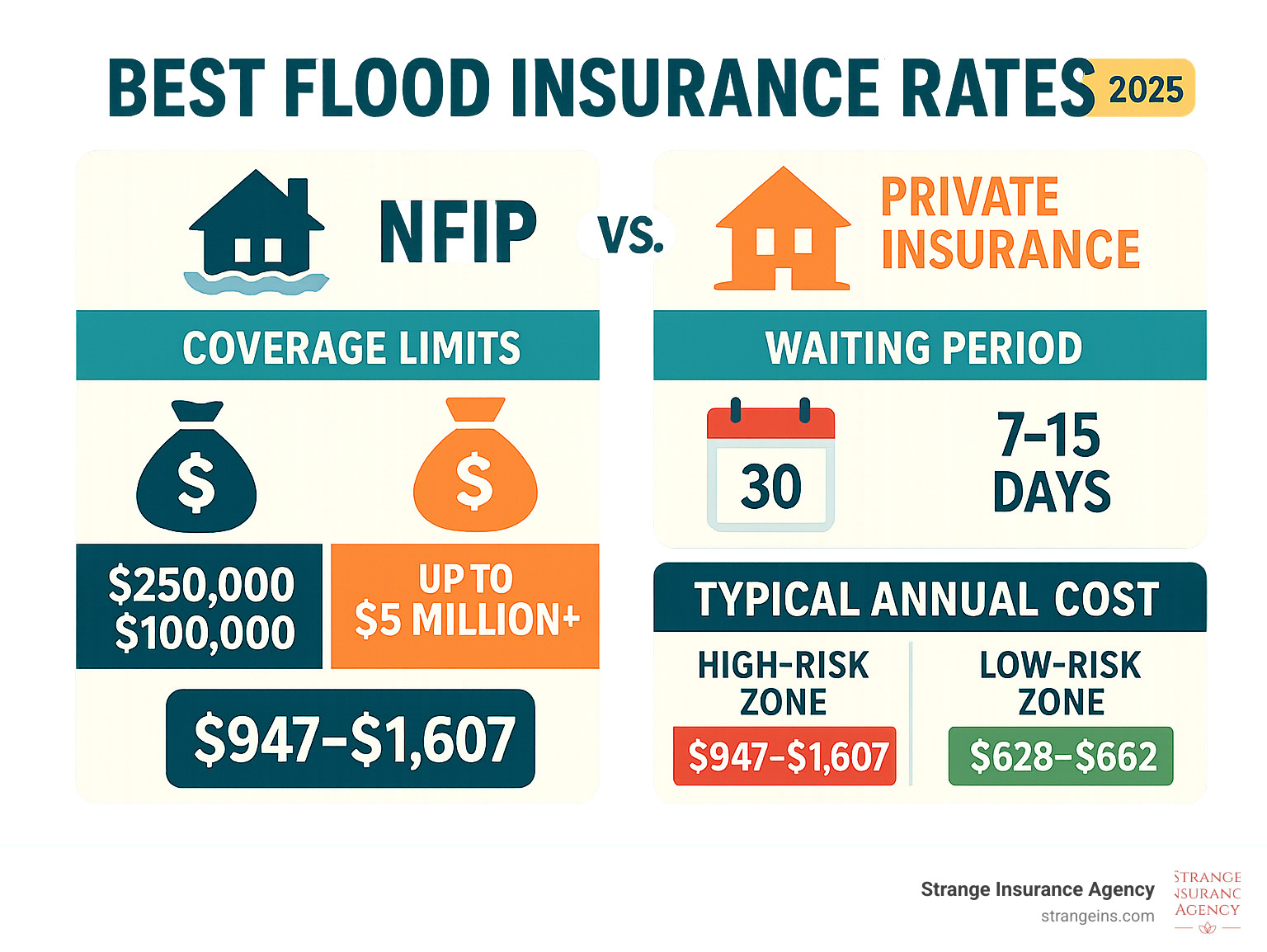
- NFIP Average: $786-$888 annually ($74/month)
- Private Insurance: Often 20-50% less than NFIP
- High-Risk Zones: $947-$1,607 annually
- Low-Risk Zones: $628-$662 annually
Key Rate Factors:
- Flood zone designation (A, V, X, etc.)
- Property elevation and distance to water
- Building characteristics and foundation type
- Coverage limits and deductible choices
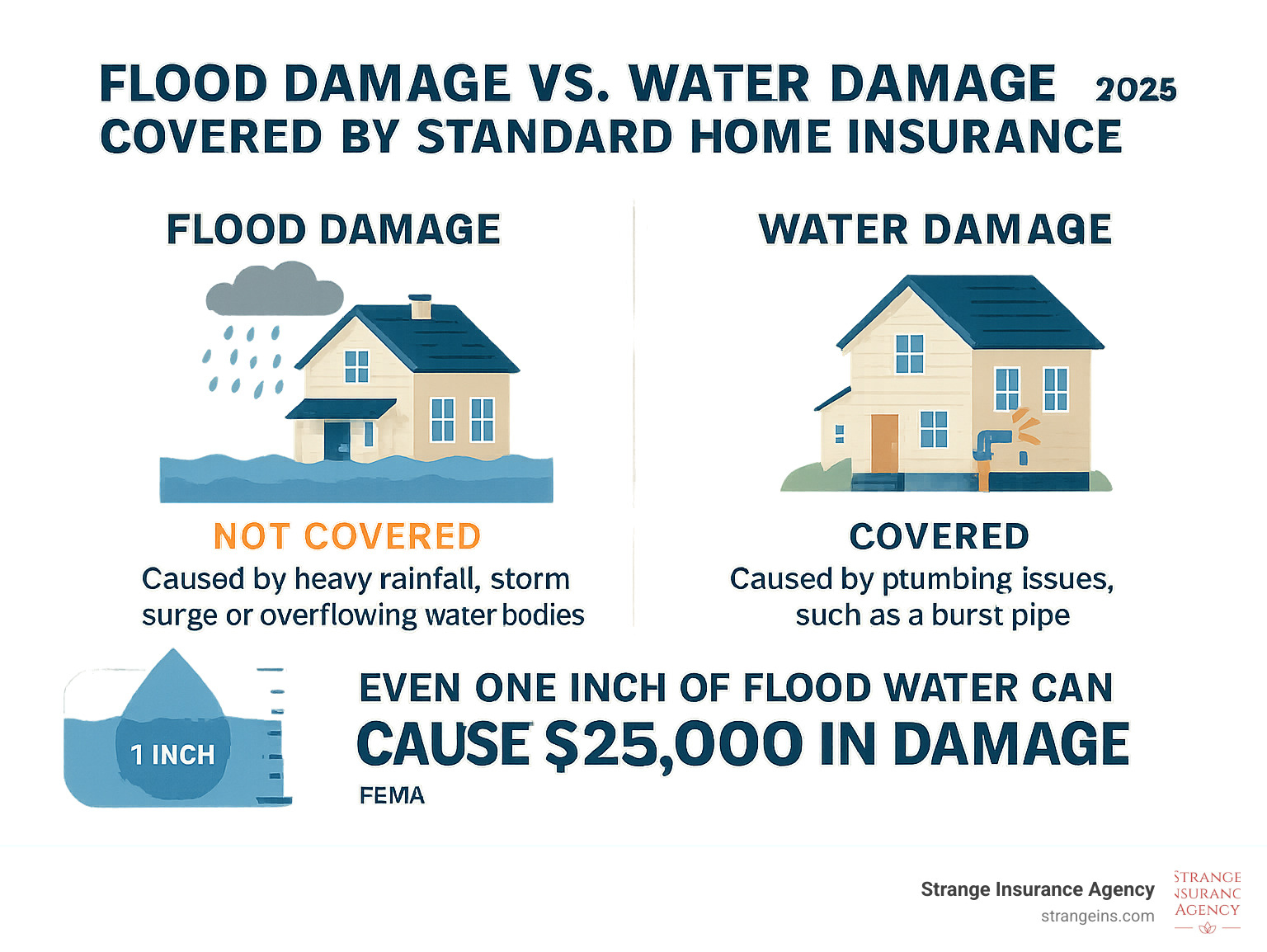
Even one inch of flood water can cause $25,000 in damage, according to FEMA. Yet standard homeowners insurance doesn’t cover flooding at all. This leaves millions of homeowners vulnerable to devastating financial losses.
The flood insurance landscape has changed dramatically. Where FEMA’s National Flood Insurance Program once dominated, private insurers now offer competitive alternatives with higher coverage limits and often lower premiums. Over 20% of flood claims come from so-called “low or moderate risk zones,” meaning no property is truly safe.
Understanding your options is crucial. NFIP policies cap dwelling coverage at $250,000 and contents at $100,000, while private policies can offer $5 million or more. Private insurers also provide shorter waiting periods (7-15 days versus 30 days) and additional coverages like basement contents and temporary living expenses.
I’m Christian Strange, and with over 15 years of experience in treasury management and insurance, I’ve helped countless clients steer the complexities of finding the best flood insurance rates for their unique situations. At Strange Insurance Agency, I leverage relationships with over 30 carriers to ensure you get comprehensive coverage at competitive prices.
Best flood insurance rates vocab explained:
- Private flood insurance companies
- compare flood insurance quotes
- does flood insurance quote differ for different companies
Understanding the Basics of Flood Insurance

Here’s something that surprises many homeowners: your standard homeowners insurance doesn’t cover flood damage. Not even a little bit. If a pipe bursts in your bathroom, you’re covered. But if water comes from outside your home—whether it’s from a hurricane, flash flood, or even just overwhelming rainfall—you’re on your own without separate flood insurance.
This exclusion isn’t some fine-print gotcha. It’s a deliberate design choice that affects millions of homeowners who don’t realize they’re vulnerable. The flood damage costs can be staggering. FEMA estimates that just one inch of water in your home can cause $25,000 in damage. That’s not a typo—one inch.
The importance of coverage becomes crystal clear when you consider that over 20% of claims come from low-risk zones. These are areas that FEMA maps show as having minimal flood risk, yet they still experience significant flooding. Mother Nature doesn’t always follow the maps.
Why You Can’t Afford to Skip Flood Insurance
Even one inch of water can turn your life upside down. We’re talking about replacing flooring, drywall, insulation, electrical systems, and appliances. The repair bills add up fast, and without flood insurance, every penny comes out of your pocket.
The financial protection aspect is obvious, but there are practical considerations too. Many mortgage requirements mandate flood insurance if you’re in a high-risk zone. Your lender isn’t being difficult—they’re protecting their investment. If you don’t maintain coverage, they can force-place a policy that’s typically more expensive and offers less protection.
Beyond the financial safety net, flood insurance provides genuine peace of mind. You can sleep better during storm season knowing your biggest investment is protected. When neighbors are stressed about potential flooding, you can focus on keeping your family safe instead of worrying about financial ruin.
For a complete picture of how flood and homeowners insurance work together, check out our guide on Home and Flood Insurance Quotes.
What Determines Flood Insurance Costs?
Several factors influence your flood insurance premium, and understanding them can help you secure the best flood insurance rates for your situation.
FEMA flood zones are the starting point. You can look up your property using FEMA’s Flood Map Service Center to see exactly where you stand. High-risk zones like A and V typically see premiums from $947 to $1,607 annually, while moderate-to-low risk zones (B, C, and X) average $628 to $662 yearly.
Property elevation matters tremendously. If your home sits higher than the Base Flood Elevation—the level water is expected to reach during a major flood—you’ll typically pay less. It’s simple physics: higher ground means lower risk.
Building characteristics play a big role too. Your foundation type affects your rates significantly. A home on stilts will cost less to insure than one with a basement. The number of floors, construction materials, and age of your home all factor into the equation.
Proximity to water sources is another key element. Homes within 1,000 feet of rivers, lakes, or coastlines almost always face higher premiums. The closer you are to water, the higher your risk.
Your home’s replacement cost value (RCV) also influences rates. This isn’t your home’s market value—it’s what it would cost to rebuild from scratch. Higher replacement costs generally mean higher premiums.
Case Study: Pooler, GA costs illustrate how these factors work in real life. In this growing community near Savannah, flood insurance ranges from $600 to over $3,500 annually. Neighborhoods like Tappan Zee Drive and Godley Station face higher rates due to their proximity to wetlands and the Little Ogeechee River. It’s a perfect example of how location and geography directly impact your costs, even within the same city.
Finding the Best Flood Insurance Rates: NFIP vs. Private Options

When you’re hunting for the best flood insurance rates, you’re choosing between two different approaches: the government-run National Flood Insurance Program (NFIP) and the competitive private market. The landscape has changed dramatically, and understanding the differences in policy comparison factors like coverage limits, waiting periods, and flexibility can save you thousands while securing better coverage.
The National Flood Insurance Program (NFIP)
Managed by FEMA, the government-backed NFIP has been the backbone of flood insurance since 1968. It operates on standardized rates, meaning you’ll pay the same premium for the same risk, regardless of the agent.
The coverage has strict limits: $250,000 for dwelling coverage and $100,000 for contents. For many homeowners, especially in today’s market, these limits may not be enough to cover a total loss. Another key feature is the 30-day waiting period; you can’t buy coverage at the last minute when a storm is approaching.
The NFIP’s pricing model, Risk Rating 2.0, now bases costs on your specific property’s risk factors, like distance to water and foundation type, rather than just broad flood zones. This has led to premium changes for many, but annual increases are capped at 18% to prevent rate shock. Learn more about what RR 2.0 means for you to understand how these changes might affect your situation.
The Rise of Private Flood Insurance
Private flood insurance has emerged as a serious challenger to the NFIP, often benefiting homeowners with better options and pricing.
The most obvious advantage is higher coverage limits. Private policies can start at $500,000 and go up to $5 million or more, which is essential for higher-value homes. They also include optional coverages that NFIP doesn’t offer, like protection for basement contents and living expenses if you have to move out during repairs.
Private policies also feature shorter waiting periods, typically just 7 to 15 days. In the private market, competitive pricing often leads to real savings, with rates frequently 20-50% below NFIP. This is possible because private insurers use modern technology to assess your specific risk more accurately.
Lender acceptance used to be a concern, but most A-rated private insurers are now widely accepted by mortgage lenders. When you’re ready to explore your options, our team can help you Compare Flood Insurance Quotes from both NFIP and private carriers.
| Feature | NFIP | Private Insurance |
|---|---|---|
| Coverage Limits | $250K dwelling / $100K contents | Typically $500K+ dwelling / Higher contents limits |
| Waiting Period | 30 days | Often 7-15 days, sometimes none |
| Additional Coverages | Very limited | Basement contents, living expenses, pool coverage, more |
| Pricing | Standardized government rates | Market-competitive, often 20-50% lower |
The bottom line? Both options have their place, and the right choice depends on your specific situation, property value, and coverage needs. That’s exactly why we work with over 30 carriers—to make sure you get the protection that fits your life, not just what’s available from a single source.
Actionable Strategies to Lower Your Flood Insurance Premiums

Here’s the good news: securing the best flood insurance rates doesn’t have to be a passive waiting game. You have real power to lower your premiums through smart decisions and strategic improvements to your home. Think of it as an investment that pays dividends twice – once by making your home safer, and again by reducing your annual insurance costs.
The key is being proactive rather than reactive. Many homeowners wait until they’re facing a claim to think about flood protection. But the smart money is on taking action before you need it. These strategies can lead to substantial long-term savings while giving you greater peace of mind.
Home Modifications and Mitigation
When insurance companies look at your property, they’re essentially asking one question: “How likely is this home to flood, and how bad could the damage be?” Every improvement you make that answers those questions favorably can translate into lower premiums.
Elevating your home is the gold standard of flood mitigation. When you lift your house on stilts, piers, or columns, you’re literally putting distance between your living space and potential floodwaters. Insurance companies love this because it dramatically reduces their risk. Research shows that adding flood-proofing features like elevation can slash your premiums by up to 25%. Yes, it’s a significant upfront investment, but the combination of premium savings and damage prevention often makes it worthwhile.
Installing flood vents might sound technical, but the concept is beautifully simple. If you have enclosed areas below your lowest floor – like a crawlspace or enclosed foundation – these engineered vents allow floodwaters to flow through rather than building up pressure against your walls. It’s like giving the water a designated path so it doesn’t have to create its own destructive route.
Moving utilities above your Base Flood Elevation is another smart move that insurers reward. When your HVAC system, water heater, and electrical panels are safely liftd, you’re protecting expensive equipment while showing your insurance company that you understand flood risk management. It’s a win-win that often results in premium discounts.
Don’t overlook simpler improvements either. Improving lot grading so water flows away from your foundation is basic but effective. A properly sloped yard channels surface water away from your home instead of letting it pool where it can cause problems. For homes with basements, sump pumps provide an active defense against water accumulation during heavy rains.
If you’re building from scratch, you have an incredible opportunity to incorporate flood-resistant design from day one. This approach often yields immediate and substantial savings on your flood insurance. For detailed guidance on this topic, check out our resource on Flood Insurance for New Construction.
How to Get the Best Flood Insurance Rates Through Policy Choices
Beyond physical improvements to your home, smart policy decisions can significantly impact what you pay for flood insurance. These choices require no construction work – just thoughtful consideration of your coverage needs and risk tolerance.
Choosing higher deductibles is one of the most straightforward ways to reduce your annual premium. Just like with car insurance, accepting a higher out-of-pocket cost when you file a claim typically means paying less throughout the year. The key is finding that sweet spot where your deductible is high enough to meaningfully reduce your premium but not so high that it would create financial hardship during a claim.
Reviewing coverage amounts annually ensures you’re not paying for more protection than you need – or dangerously little. Your home’s value and your belongings change over time. Maybe you’ve renovated and need more dwelling coverage, or perhaps you’ve downsized and can reduce your contents coverage. Getting this balance right means you’re fully protected without overpaying.
Bundling policies can sometimes open up discounts, especially with private insurers who offer both flood and standard homeowners coverage. While flood insurance is always a separate policy, some insurers reward customers who bring them multiple lines of business.
Shopping the market annually might be the most important habit you can develop for securing the best flood insurance rates. The flood insurance landscape changes constantly, especially with new private insurers entering the market and offering competitive rates. What was your best option last year might not be this year. We always recommend getting fresh quotes before each renewal – you might be surprised by what’s available.
Understanding how premiums work can also help you make better decisions. If you’re curious about the basics of flood insurance pricing, our guide on Are Flood Insurance Premiums Quoted Annual or Monthly? provides helpful insights into how these costs are structured.
The bottom line is this: finding great flood insurance rates isn’t just about luck or location. It’s about making informed choices, both for your property and your policy. Every improvement you make and every smart policy decision brings you closer to optimal protection at the best possible price.
A Quick Look at Flood Insurance in Canada

While we help American homeowners find the best flood insurance rates, it’s insightful to see how our neighbors in Canada handle flood protection. Their experience highlights the importance of having robust flood protection systems in place, like the options available in the U.S.
How the Canadian System Differs
In Canada, standard home insurance policies also exclude flood damage from external sources. To get coverage, homeowners must purchase an “overland water endorsement” as an add-on to their policy. This covers flooding from overflowing rivers or heavy rainfall.
The cost for this endorsement typically ranges from $100 to $300 per year, but can rise to $500 to $1,000 annually in high-risk areas. Driven by the rising impact of severe weather, the Canadian government is developing its first National Flood Insurance Program to make coverage more accessible.
This move underscores the value of the established NFIP and private insurance market in the U.S. It’s a reminder of why we’re so passionate about helping Americans steer their options to secure proper flood coverage before they need it.
Frequently Asked Questions about Flood Insurance Rates
We hear the same questions from homeowners week after week, and honestly, we love answering them. Understanding flood insurance can feel overwhelming, but once you know the basics, it all makes sense. Let’s tackle the most common concerns we encounter.
How do I know if I need flood insurance?
Here’s the short answer: you probably do need it, even if you think you don’t.
If your lender requires it, that decision is made for you. When your property sits in a high-risk zone (A or V), your mortgage company will absolutely require flood insurance as a condition of your loan. These zones indicate a 1% or greater annual chance of flooding each year, which might not sound like much, but it adds up to a 26% chance over a 30-year mortgage.
But here’s where it gets interesting. Even if you’re in moderate-to-low risk zones (B, C, X), you’re not off the hook. Those “low risk” labels can be misleading. Statistic we mentioned earlier? Over 20% of all flood insurance claims come from these supposedly safer areas. Heavy rainfall, poor drainage, or storms hundreds of miles away can still send water rushing into your home.
Our professional recommendation is simple: every homeowner should consider flood insurance. The peace of mind alone is worth it, and the best flood insurance rates are often more affordable than people expect. You can easily check your property’s flood zone designation using FEMA’s online mapping tool to get started.
What is the typical waiting period for a flood policy to take effect?
This is crucial to understand because you can’t just buy flood insurance when you see storm clouds gathering. There’s always a waiting period built in to prevent people from gaming the system.
NFIP policies have a 30-day waiting period, which is standard across the board. Your coverage kicks in exactly 30 days after you purchase the policy, not a day sooner. This might seem inconvenient, but it’s designed to ensure the program remains financially stable.
Private insurance waiting periods are often shorter, typically running 7 to 15 days. This can be a real advantage if you need coverage more quickly, especially during busy real estate seasons.
There are exceptions for mortgage closings where the waiting period might be waived or shortened, but don’t count on this. The best strategy is to plan ahead and get your flood insurance sorted well before you think you’ll need it.
Does my standard homeowners insurance policy cover any type of flooding?
This question breaks our hearts because the answer often surprises people, usually at the worst possible time.
No, standard homeowners policies exclude flood damage completely. This exclusion is ironclad and universal across the industry. Your homeowners insurance treats flooding like it doesn’t exist, which leaves a massive gap in your protection.
Your policy does cover internal water damage from things like burst pipes, leaking water heaters, or your washing machine going haywire. If the water originates inside your home from a covered peril, you’re typically protected.
But if water comes from outside your home and moves upward from the ground, you need a separate flood insurance policy. This includes river overflow, storm surge, flash floods, and even surface water that accumulates from heavy rainfall and seeps into your basement.
The distinction might seem technical, but it’s absolutely critical. Your dishwasher flooding your kitchen? That’s covered by homeowners insurance. The nearby creek flooding your basement? That requires flood insurance. To understand how these policies work together and get comprehensive protection, check out our guide on Homeowners and Flood Insurance Quotes.
Let Us Find the Best Flood Insurance Rate for You
Figuring out flood insurance can feel like trying to solve a puzzle with half the pieces missing. Between FEMA’s Risk Rating 2.0 changes, weighing NFIP policies against private market options, and understanding coverage limits versus waiting periods, it’s enough to make anyone’s head spin. That’s exactly why we exist at Strange Insurance Agency – to turn this complicated process into something simple and straightforward for you.
Think of us as your personal flood insurance guides. We’re a concierge insurance agency based in Virginia and North Carolina, but we help homeowners across the United States find the best flood insurance rates available. Whether you’re in Florida dealing with hurricane season or in West Virginia worried about river flooding, we’ve got you covered.
Here’s what makes us different: we leverage a powerful, modern platform that gives us access to shop your rates across more than 30 top-rated carriers. Instead of getting stuck with just one quote from one company, we compare multiple options side by side. It’s like having a personal shopper for insurance – we do the legwork so you don’t have to.
Our process is refreshingly simple. We start by understanding your property’s unique situation. Is your home liftd? What flood zone are you in? What’s your budget? Then we tap into our extensive network to find the most competitive rates that actually fit your needs. We believe in clear explanations, not insurance jargon that leaves you more confused than when you started.
The stakes are too high to wing it. With flood damage averaging $25,000 for just one inch of water, leaving your home unprotected isn’t really an option. But you also shouldn’t have to pay more than necessary for quality coverage. That’s where our expertise comes in – we make sure you get comprehensive protection at a price that makes sense.
We’re committed to giving you the peace of mind that comes with knowing you’ve made the right choice. Your home is likely your biggest investment, and protecting it shouldn’t be a source of stress or confusion.
Ready to see what we can find for you? Get your personalized flood insurance quote today! Let’s get your property protected with the coverage it deserves.