
Why Restaurant Liability Insurance Cost Matters for Your Business
The restaurant liability insurance cost is one of the most important financial numbers you’ll track as an owner. Most establishments invest about $1,000–$10,000 per year, with the typical full-package landing close to $4,000. A single claim—whether a slip-and-fall, foodborne illness, or kitchen fire—can wipe out far more than that in minutes, so the right policy is non-negotiable.
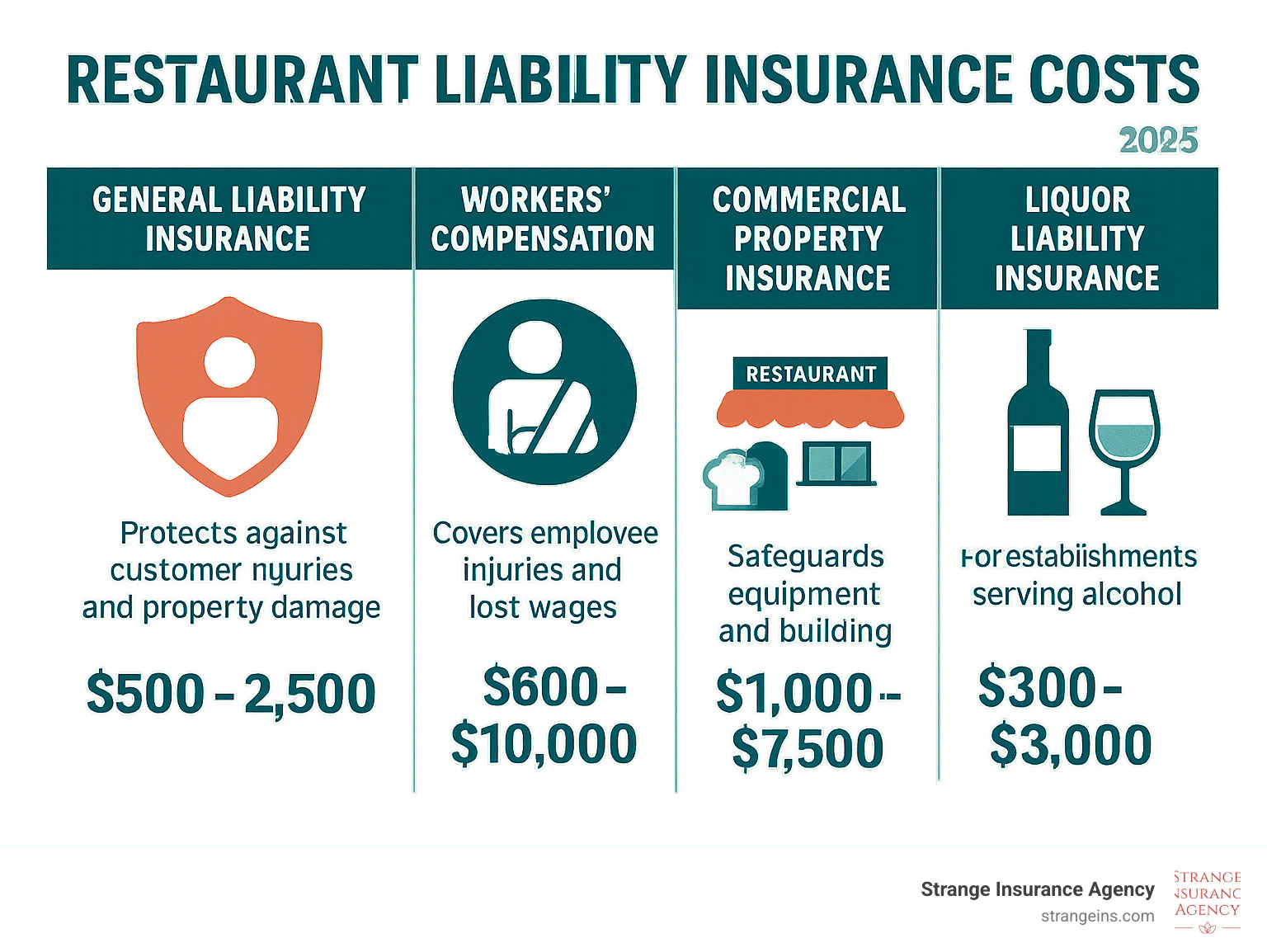
Average annual premiums at a glance:
- General Liability: $500–$2,500 (avg. $900)
- Workers’ Compensation: $600–$10,000 (avg. $1,500)
- Liquor Liability: $300–$3,000 (avg. $600)
- Business Owner’s Policy (BOP): $1,100–$10,500 (avg. $2,160)
Running a restaurant already means thin margins, unpredictable costs, and long hours. Insurance keeps unexpected disasters from derailing everything you’ve built, giving you the freedom to focus on memorable meals and happy guests.
In this guide we’ll cover:
- The essential coverages every restaurant should carry
- Realistic premium ranges and what drives them
- Simple, proven ways to trim costs without leaving dangerous gaps
I’m Christian Strange. For 15+ years I’ve helped restaurateurs secure solid coverage—quickly and affordably—through Strange Insurance Agency’s network of 30+ carriers. Let’s dive in and make sure you’re protected at the right price.
The Essential Ingredients: Types of Insurance Your Restaurant Needs
Think of insurance like a recipe: miss an ingredient and the whole dish can flop. Here are the basics you’ll almost certainly need—and why.
Commercial General Liability (CGL)
Slip-and-fall protection, customer injuries, property damage. It’s the foundation of any restaurant program.
Product Liability (usually included in CGL)
Covers foodborne illness or unexpected allergic reactions. In the social-media era, one outbreak can snowball fast.
Commercial Property
Fire, theft, equipment breakdown, water damage. Your ovens, POS system, tables, and décor aren’t cheap; this covers replacement and repair.
Workers’ Compensation
Employee injuries and lost wages. Required in nearly every state and crucial for staff morale.
Liquor Liability
Protects you if an over-served guest causes harm after leaving your premises. Often required to obtain or keep a liquor license.
Business Interruption
Keeps cash flowing when you’re forced to close after a covered loss. Pays rent, utilities, and lost profits.
Why a Business Owner’s Policy (BOP) Saves Money
Bundling General Liability, Property, and Business Interruption into a single BOP trims 15–25% off premiums and leaves you with one deductible and one renewal date—much easier to manage.
Special Considerations by Concept
- Dine-in: Full suite of coverages; higher premises liability.
- Take-out/Delivery: Add Commercial Auto or Hired & Non-Owned Auto for drivers.
- Food Trucks: Need vehicle plus mobile property protection.
- Catering: Liability and equipment must travel to every event.
- Bars & Pubs: Expect a 5–10% premium bump for alcohol and late-night crowds.
Breaking Down the Average Restaurant Liability Insurance Cost

Below are realistic ranges you can plug straight into your budget. Remember these numbers swing with factors like sales volume, location, and claims history.
| Coverage | Typical Annual Range | Most Common Cost |
|---|---|---|
| General Liability | $500–$2,500 | $900 |
| Workers’ Compensation | $600–$10,000 | $1,500 |
| Liquor Liability | $300–$3,000 | $600 |
| Business Owner’s Policy | $1,100–$10,500 | $2,160 |
Most restaurants end up near $4,000 per year for a full program. Smaller spots without alcohol sometimes land under $2,000, while high-volume or entertainment-driven venues can climb past $6,000.
What’s “Typical” for General Liability?
General Liability Insurance averages about $73 per month (roughly $900 annually) for a $1 million per-occurrence / $2 million aggregate limit. Foot traffic, local lawsuit trends, and prior losses push that number up or down.
Budgeting for Complete Protection
Start with the BOP average of $2,160, add Workers’ Comp around $1,500, and tack on Liquor Liability if you pour drinks. Business-interruption costs depend on how long it would take you to reopen after a major loss, but many operators find the extra premium is modest relative to potential lost income.
By penciling these figures into your pro-forma, you’ll avoid last-minute surprises and can compare quotes with confidence.
Key Factors That Determine Your Premiums

When insurance companies calculate your restaurant liability insurance cost, they’re essentially playing detective – examining every aspect of your business to determine how likely you are to file a claim. Think of it like a recipe where each ingredient affects the final taste, except in this case, each factor affects your final premium.
Your business location plays a huge role in what you’ll pay. If your restaurant sits in a high-crime neighborhood or an area that gets hammered by hurricanes every few years, expect higher premiums. A cozy café in a quiet Virginia suburb will typically pay less than a busy downtown Norfolk restaurant, simply because the risks are different. Insurance companies study local crime rates, weather patterns, and even how lawsuit-happy the local courts tend to be.
Restaurant size matters more than you might think. A larger space means more square footage to insure, more places for accidents to happen, and typically more employees on your payroll. That workers’ compensation premium jumps significantly when you go from 5 employees to 25. Your annual revenue tells insurers how busy you are – more customers mean more opportunities for slip-and-fall accidents or food-related claims.
The type of establishment you run makes a big difference too. A coffee shop with a simple espresso machine faces different risks than a steakhouse with multiple deep fryers and flame grills. Fine dining restaurants with expensive equipment and higher liability exposure naturally pay more than quick-service establishments with minimal cooking equipment.
Alcohol service is like adding hot sauce to your insurance costs – it kicks everything up by about 5-10%. Serving alcohol brings additional liability from potentially intoxicated patrons and requires compliance with dram shop laws. Some states are stricter than others, which can push that percentage even higher.
Your claims history acts like a report card for insurance companies. A clean record with no claims can earn you valuable no-claims discounts, while a history of frequent claims will definitely increase your rates. It’s like having a good driving record – insurers reward businesses that demonstrate they’re careful and well-managed.
Finally, the coverage limits and deductibles you choose directly impact your premiums. Higher coverage limits cost more, while higher deductibles reduce your monthly payments. It’s a balancing act between protecting your business and managing your cash flow.
How Specific Factors Impact Your Restaurant Liability Insurance Cost
Let’s dig into some specific numbers that might surprise you. Alcohol service doesn’t just add a separate policy – it bumps up your entire restaurant liability insurance cost by that 5-10% we mentioned. In states with strict dram shop laws, this increase can be even steeper because you’re potentially liable for what happens after customers leave your establishment.
Equipment value can be a real eye-opener when it comes to property insurance costs. A restaurant with a basic setup might pay $500 annually for property coverage, while one with wood-fired ovens, specialized refrigeration systems, or high-end kitchen appliances could easily pay $2,000 or more. The replacement cost of your equipment directly drives your property insurance premium.
Employee payroll size is the magic number for workers’ compensation costs. Since these premiums are calculated per $100 of payroll, restaurants with larger staff or higher wages pay proportionally more. Kitchen staff typically carry higher rates than servers because they’re working with sharp knives, hot surfaces, and potentially slippery floors all day long.
Here’s some good news: years in business can actually work in your favor. Established restaurants with clean claims records often qualify for experience discounts that can meaningfully reduce their premiums. New businesses might face higher rates initially because insurers don’t have a track record to evaluate, but this evens out over time with good management and a clean claims history.
Smart Strategies to Reduce Your Insurance Premiums

The good news about restaurant liability insurance cost is that you have more control over your premiums than you might think. With the right strategies, you can significantly reduce your insurance expenses without sacrificing the protection your business needs.
Developing a comprehensive risk management plan is your first line of defense against both claims and high premiums. Insurance companies love businesses that take safety seriously, and they’re willing to reward you with lower rates. This means creating documented safety procedures, conducting regular employee training sessions, and maintaining detailed records of your safety efforts.
Bundling your insurance policies is one of the easiest ways to save money. When you purchase multiple coverages from the same insurance company, you typically save 15-25% compared to buying each policy separately. A Business Owner’s Policy already bundles general liability, commercial property, and business interruption insurance, but adding workers’ compensation and other coverages to the same carrier often open ups additional multi-policy discounts.
Strategic deductible increases can lower your premiums substantially. If you can comfortably afford a $1,000 deductible instead of $500, you might save $200-300 annually on your premiums. The key is finding the sweet spot where you’re comfortable with the out-of-pocket expense but still getting meaningful savings.
Investing in safety equipment and training pays dividends beyond just keeping your staff and customers safe. Installing comprehensive fire suppression systems, implementing slip-resistant flooring in high-risk areas, and providing regular safety training for all employees shows insurance companies you’re serious about preventing claims. Maintaining detailed food safety protocols and installing security systems to deter theft and vandalism further demonstrate your commitment to risk reduction.
Employee certifications can open up additional discounts. Food handler certifications, safety training certificates, and responsible beverage service training all signal to insurance companies that your staff is well-prepared to handle their responsibilities safely. Many insurers offer specific discounts for businesses with certified employees.
Meticulous maintenance records for all your equipment might seem like extra paperwork, but they’re worth their weight in gold when it comes to insurance savings. Regular maintenance reduces the risk of equipment failures that could cause injuries or property damage. Insurance companies view well-maintained businesses as lower risk and price their policies accordingly.
Shopping around for quotes regularly ensures you’re always getting competitive rates. Insurance markets change constantly, and what was a great deal two years ago might not be today. Getting quotes from multiple carriers every 2-3 years helps you stay on top of market changes and ensures you’re not overpaying for coverage.
Your payment schedule can even affect your costs. Some insurance companies offer discounts for annual payments instead of monthly installments. While this requires more upfront capital, the savings can be worthwhile if your cash flow allows it.
The key to reducing your restaurant liability insurance cost is taking a proactive approach to risk management while working with an experienced agent who understands the restaurant industry. Small changes in your operations and smart policy choices can add up to significant savings over time.
Frequently Asked Questions about Restaurant Insurance Costs
How much liability coverage should a restaurant have?
The industry standard minimum is $1 million per occurrence and $2 million aggregate for general liability coverage, but this baseline might not be enough for every restaurant. Your specific coverage needs depend on your unique risk profile and business circumstances.
High-traffic restaurants serving hundreds of customers daily face significantly more exposure than a quiet neighborhood café. If you’re running a busy establishment in a downtown area or a location known for higher litigation rates, you’ll want to seriously consider higher limits to protect your business adequately.
Restaurants with significant assets should think about umbrella policies that provide additional liability coverage above their primary limits. An umbrella policy can add $1-5 million in extra protection at a surprisingly low cost – often just a few hundred dollars annually. This extra layer becomes crucial if you own expensive equipment, have substantial business assets, or operate in multiple locations.
Contract requirements often dictate your minimum coverage levels regardless of what you think you need. Many landlords require tenants to carry specific insurance limits before signing lease agreements. Catering clients and vendors frequently demand proof of insurance with minimum coverage amounts before they’ll work with you.
While most restaurants find $1 million per occurrence adequate for basic protection, the relatively small difference in restaurant liability insurance cost between standard and higher limits often makes increased coverage a smart investment. We always recommend discussing your specific situation with an insurance professional who can assess your unique risks and recommend appropriate coverage levels.
Does insurance cover food spoilage from a power outage?
This is one of the most common questions we hear from restaurant owners, and the answer isn’t as straightforward as you might hope. Standard commercial property insurance typically excludes food spoilage from power outages unless the outage results from covered property damage to your building or equipment.
However, you can add specific coverage to protect against these costly situations. Equipment Breakdown coverage protects against food spoilage when your refrigeration equipment fails due to mechanical or electrical breakdown. This coverage typically includes both the cost of spoiled food and additional expenses like renting temporary refrigeration units while your equipment is being repaired.
Spoilage insurance endorsements can be added to your policy to cover food spoilage from various causes, including power outages, contamination, and equipment failures. These endorsements are relatively inexpensive – often adding just $100-300 to your annual premium – but can save thousands of dollars if your refrigeration systems fail during peak inventory periods.
Utility service interruption coverage takes this protection a step further by covering losses when utility services are interrupted, even if your property isn’t directly damaged. This becomes especially valuable during severe weather events or when local power grid issues affect your business operations.
Given that restaurants typically carry thousands of dollars in perishable inventory, these endorsements represent excellent value for protecting your investment and maintaining business continuity.
Are delivery drivers covered under my restaurant’s insurance?
Coverage for delivery drivers creates one of the most complex insurance scenarios restaurants face, and the answer depends heavily on how your delivery operations are structured. Getting this wrong can leave you exposed to significant liability, so it’s crucial to understand your options.
Commercial Auto Insurance becomes necessary if your restaurant owns vehicles used for deliveries. This coverage protects both the vehicle itself and provides liability protection for accidents that occur during business use. The cost varies based on the number of vehicles, driver records, and your location, but it’s essential for any restaurant-owned delivery fleet.
Hired and Non-Owned Auto (HNOA) coverage protects your business when employees use their personal vehicles for deliveries. This coverage is absolutely essential if your staff makes deliveries in their own cars. While the employee’s personal auto insurance serves as primary coverage, your business could still face substantial claims if their coverage proves insufficient after an accident.
Employee-owned vehicles used for business purposes create a significant liability exposure that many restaurant owners don’t fully understand. If your delivery driver causes an accident while working, injured parties will likely sue both the driver and your business. Without proper coverage, you could face devastating financial consequences.
Third-party delivery services like popular food delivery apps typically provide their own insurance coverage for drivers, but you should verify this protection and understand any potential gaps. Some services only provide coverage during specific phases of delivery, leaving potential exposure during pickup or waiting periods.
The complexity of delivery coverage makes it essential to work with an insurance professional who understands restaurant operations. What Does Business Liability Insurance Cover provides more detailed information about liability coverage extensions and exclusions that can help you understand your full protection needs.
Don’t assume your current coverage handles delivery operations – this assumption has cost many restaurant owners dearly when claims arise.
Get a Taste of Savings on Your Restaurant Insurance
Understanding restaurant liability insurance cost is crucial for protecting your business while managing expenses effectively. Throughout this guide, we’ve explored how the average restaurant pays around $4,000 annually for comprehensive coverage – but this investment protects against potentially devastating financial losses that could close your business permanently.
Insurance is a vital investment, not just an expense. When you consider that a single slip-and-fall lawsuit could cost tens of thousands of dollars, or a kitchen fire could destroy hundreds of thousands in equipment, those monthly premiums suddenly seem like a bargain. The peace of mind that comes from knowing you’re protected allows you to focus on what you do best – creating exceptional dining experiences for your customers.
Proactive risk management significantly reduces both your insurance costs and actual claim frequency. We’ve seen restaurants cut their premiums by 15-20% simply by implementing safety programs, training employees properly, and maintaining their equipment. These steps don’t just qualify you for premium discounts – they actually make your restaurant safer and more profitable.
The right coverage mix varies by restaurant type and risk factors. A Business Owner’s Policy provides cost-effective basic protection for most establishments, while additional coverages like liquor liability and commercial auto address specific operational risks. Whether you’re running a food truck in North Carolina or a fine dining establishment in Norfolk, Virginia, your coverage needs are as unique as your menu.
Regular policy reviews ensure you’re getting competitive rates and appropriate coverage as your business evolves. Insurance markets change constantly, and what was the best deal when you opened might not be competitive today. We recommend reviewing your coverage every two to three years, or whenever you make significant changes to your operations.
At Strange Insurance Agency, we understand that navigating complex insurance options can be overwhelming for busy restaurant owners. Between managing staff, maintaining quality, and serving customers, the last thing you want to worry about is deciphering insurance policies. That’s why we work with over 30 insurance companies to find you the most competitive rates without compromising on coverage quality.
Our concierge approach means we handle the research, comparison, and ongoing management of your policies. We’ll explain your options in plain English, help you understand what you’re paying for, and make sure you’re getting the best value for your restaurant liability insurance cost. Whether you’re opening your first restaurant or managing multiple locations across the Southeast, we’re here to help you find the right protection at the right price.
Ready to find how much you could save on your restaurant insurance? Get a comprehensive business insurance review today and let us show you how proper coverage and competitive rates can give you the confidence to focus on growing your business. For personalized Liability Insurance Quotes custom to your specific restaurant needs, contact Strange Insurance Agency today. We’ll help you serve up savings while ensuring your business is properly protected.