
Why Business Insurance for Startups Is Your First Strategic Investment
Business insurance for startups isn’t just another expense on your growing list of costs—it’s one of the smartest strategic investments you can make for your new venture. While you’re focused on product development, customer acquisition, and securing funding, the right insurance coverage works behind the scenes to protect everything you’re building.
Essential startup insurance policies include:
- General Liability Insurance – Protects against customer injuries and property damage claims
- Errors & Omissions (E&O) – Covers professional mistakes and service failures
- Cyber Liability Insurance – Essential for data breaches and cyberattacks
- Directors & Officers (D&O) – Required by many investors to protect leadership decisions
- Employment Practices Liability – Covers wrongful termination and discrimination claims
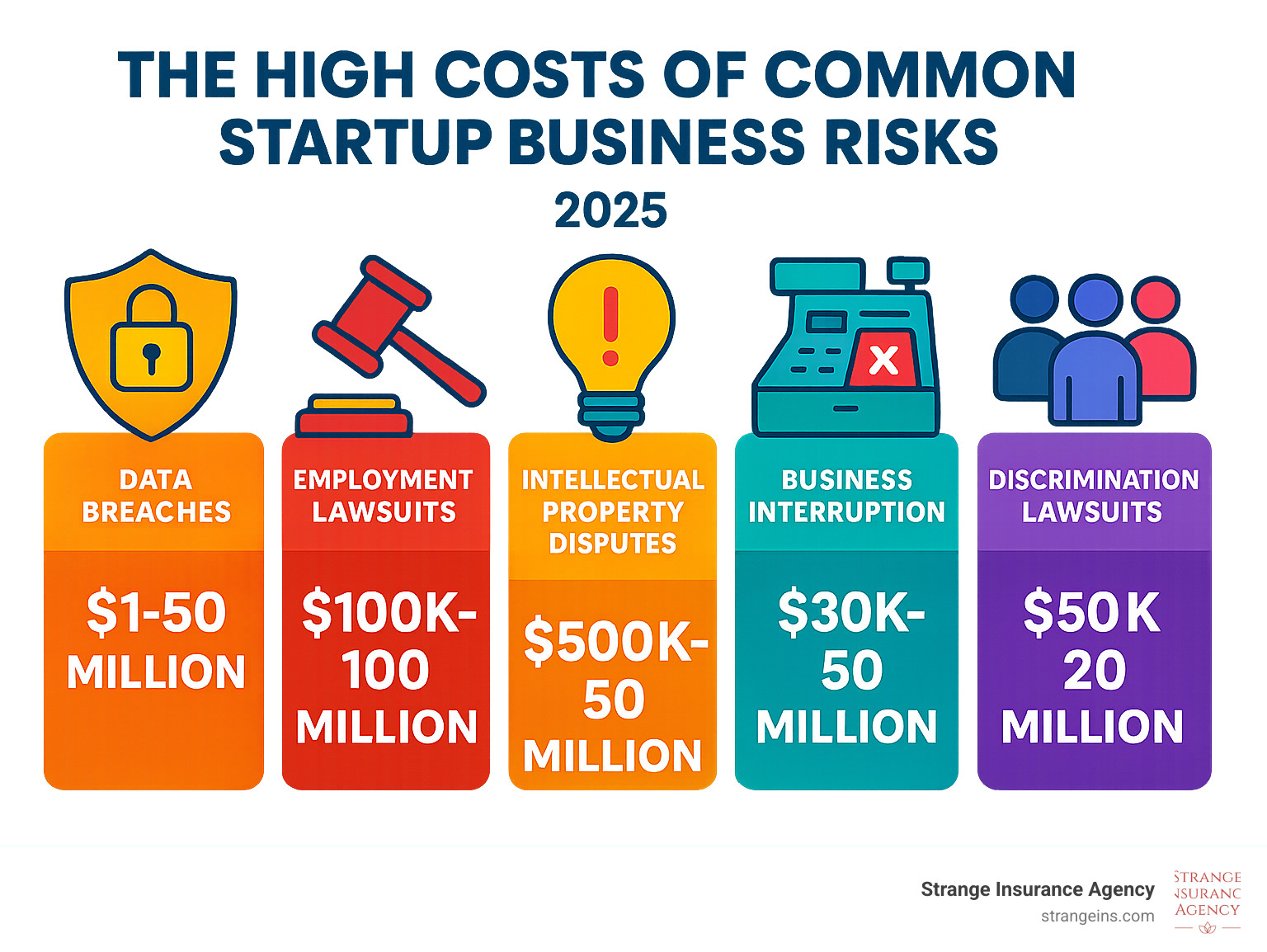
The numbers tell a sobering story. Data breaches can cost startups anywhere from $1 million to $50 million. Employment lawsuits range from $100,000 to $100 million. Intellectual property disputes can run between $500,000 to $50 million. Without proper coverage, a single lawsuit could end your startup before it really begins.
But here’s what most founders don’t realize: insurance does more than just protect against disasters. Two-thirds of repeat entrepreneurs get insurance in place very early because they understand it’s a growth enabler. Having the right coverage speeds up negotiations with investors, satisfies client contract requirements, and demonstrates the kind of professional management that attracts top talent.
As an insurance professional with over 15 years of experience helping businesses steer risk management and financial protection, I’ve seen how business insurance for startups can make the difference between a venture that survives its first major challenge and one that doesn’t. At Strange Insurance Agency, I work specifically with growing companies to build insurance strategies that evolve with their needs—from day one through their first major funding rounds and beyond.
Glossary for business insurance for startups:
- what does business liability insurance cover
- directors & officers insurance
- general liability insurance and workers comp
Why Insurance is a Strategic Tool, Not Just a Cost
When launching a startup, it’s natural to scrutinize every expense. Insurance might feel like a bill you can pay later, but what I’ve learned from working with hundreds of startups is that business insurance for startups isn’t an expense—it’s one of your smartest strategic investments.

Think about it this way: two-thirds of repeat entrepreneurs get insurance early in their next venture. These aren’t first-time founders making cautious decisions—these are battle-tested entrepreneurs who know what can go wrong. They know insurance creates investor confidence, builds client trust, and enables sustainable growth by transferring risks that could otherwise destroy their company.
Building Credibility with Investors and Clients
In the startup world, perception matters as much as performance. When you walk into that investor meeting or pitch a major client, having comprehensive business insurance for startups sends a powerful message: you’re running a legitimate, professional operation.
Venture capital requirements are getting stricter every year. Most VCs now require Directors & Officers (D&O) insurance before they’ll invest, especially for board protection. They’ve seen too many promising startups derailed by management liability claims. Your insurance isn’t just protecting you—it’s protecting their investment and any board members they place in your company.
The same goes for client contracts. Whether you’re trying to land that enterprise client in Charlotte or secure office space in Richmond, you’ll likely face contractual obligations for minimum liability coverage. Many B2B contracts require $2 million or even $5 million in coverage. Having your proof of insurance ready doesn’t just check a box—it speeds up negotiations and demonstrates the kind of operational maturity that wins deals.
Mitigating Risk for Sustainable Growth
Every day, your startup is exposed to risks that could wipe out years of hard work. A customer could slip in your office, your software could crash and cost a client thousands, or a data breach could expose sensitive information. These aren’t distant possibilities; they’re real threats that happen to businesses every day.
Business insurance for startups creates the financial stability you need to weather these storms. Instead of a single lawsuit draining your funding or forcing you to shut down, insurance provides lawsuit protection and ensures business continuity. You can focus on growing your business instead of constantly worrying about what could go wrong.
This risk transfer is especially crucial for operational risks and market risks that come with scaling quickly. When you’re moving fast and breaking things (as startups do), having a financial safety net lets you innovate boldly while protecting your core assets. To understand exactly what’s covered, check out what does business liability insurance cover.
Attracting and Retaining Top Talent
In competitive markets like Virginia’s growing tech scene, the best employees have options. They want to work for companies that offer security and demonstrate long-term thinking. Comprehensive insurance coverage does both.
Workers’ compensation benefits aren’t just legally required once you hire employees—they show your team that you care about their wellbeing. When employees know they’re protected if hurt on the job, they can focus on doing great work.
Employment practices liability coverage protects both you and your employees from wrongful termination, discrimination, and harassment claims. As your team grows, especially in today’s complex employment landscape, this coverage creates a secure work environment that attracts top talent and gives everyone peace of mind.
Don’t forget about employee benefits and fiduciary liability if you’re offering 401(k) plans or other benefits. These protections show you’re thinking about your employees’ futures, not just their paychecks. For specific coverage details, explore our Workers’ Compensation Insurance options.
The bottom line? Insurance transforms from a cost center into a growth enabler when you understand its strategic value. It’s not about what might go wrong—it’s about positioning your startup for everything that’s going to go right.
Core Insurance Policies Every Startup Needs
Building a startup is like constructing a house—you need a solid foundation before you can add the finishing touches. The same principle applies to business insurance for startups. While your specific needs will depend on whether you’re launching a tech company in Charlotte or an e-commerce venture in Richmond, certain insurance policies form the bedrock of protection that every startup should have in place.

Think of these policies as layers of protection. Your foundational coverage handles everyday risks, while specialized policies address the unique challenges facing modern startups. At Strange Insurance Agency, we help you build this protection framework step by step, ensuring you’re covered without breaking the bank. Every industry has its own risk profile, which is why we offer custom solutions through our Insurance by Industry approach.
Foundational Coverage for Day-One Operations
From the moment you sign your first lease or meet with your first client, you’re exposed to risks that could derail your startup before it gets off the ground. These foundational policies protect against the most common—and potentially devastating—everyday risks.
General Liability Insurance is your first line of defense against the unexpected. Picture this: a potential investor visits your office and trips over a loose cable, breaking their wrist. Or imagine your marketing team accidentally uses copyrighted material in a campaign, leading to a lawsuit. General Liability covers bodily injury, property damage, and advertising injury claims that arise from your normal business operations.
This coverage is often required by landlords and clients before you can even get started. A typical policy with $2 million in coverage costs around $450 annually—a small price to pay for protection against potentially bankrupting lawsuits. Most commercial leases won’t let you move in without it, and B2B clients often require proof of coverage before signing contracts. You can learn more about what’s covered in our guide to General Liability Insurance.
Commercial Property Insurance protects your physical assets—everything from your laptops and servers to office furniture and inventory. Whether you’re working from a co-working space in Durham or have your own office in Virginia Beach, this coverage ensures that fire, theft, vandalism, or natural disasters won’t wipe out your business assets overnight.
For startups, losing equipment often means losing momentum. When your entire codebase lives on servers that get destroyed in a fire, or when thieves walk away with the prototypes you’ve spent months perfecting, Commercial Property insurance helps you rebuild and get back to business quickly.
Essential Coverage for Tech and Service-Based Startups
If your startup’s value lies in what you know, what you build, or what you do for others, you face a different category of risks. Your expertise itself becomes a potential liability, and the digital nature of modern business opens up entirely new vulnerabilities.
Errors & Omissions (E&O) Insurance, also called Professional Liability, is crucial for any startup providing advice, services, or technology solutions. This covers claims of professional negligence and service failures that result in financial loss for your clients.
Let’s say your consulting firm gives strategic advice that doesn’t pan out, or your software has a bug that causes a client’s system to crash during a critical sales period. E&O insurance covers the legal costs and potential damages when clients claim your professional work harmed their business. This protection is especially vital for software developers, consultants, marketing agencies, and any startup where your recommendations or deliverables directly impact client outcomes. Learn more about this essential coverage at Errors and Omissions Insurance.
Cyber Liability Insurance has become non-negotiable in our connected world. Every startup that handles customer data, processes payments online, or stores information in the cloud faces cyber risks. Data breaches can cost between $1 million and $50 million, while ransomware attacks can shut down operations for weeks.
This coverage goes beyond just data breaches. It helps with system restoration, legal notifications to affected customers, credit monitoring services, and even ransom payments in certain situations. For e-commerce startups, SaaS companies, and any business collecting customer information, Cyber Liability insurance isn’t optional—it’s survival insurance for the digital age.
Growth-Stage Policies: Protecting Your Leadership and Team
As your startup scales and attracts investment, new risks emerge around leadership decisions and employment practices. These policies protect not just your business, but the personal assets of the people driving your company forward.
Directors & Officers (D&O) Insurance becomes essential once you have a board of directors or are seeking venture capital. This coverage protects the personal assets of founders, directors, and officers from lawsuits alleging wrongful management decisions. Whether it’s claims of misrepresentation to investors, breach of fiduciary duty, or mismanagement of company funds, D&O insurance provides crucial protection.
Many venture capital firms won’t invest without D&O coverage in place. They’ve seen too many cases where investor lawsuits over mismanagement have personally bankrupted founders and board members. This insurance protects everyone involved and demonstrates to investors that you understand the serious responsibilities that come with managing other people’s money.
Employment Practices Liability (EPLI) becomes increasingly important as you grow your team. This coverage protects against claims of wrongful termination, discrimination claims, and harassment filed by current or former employees.
Even well-intentioned startups can face these claims, especially in the early days before formal HR processes are established. EPLI covers legal defense costs, settlements, and judgments for employment-related lawsuits, which can range from $100,000 to $100 million. As you build your team and company culture, this insurance provides peace of mind that one disgruntled employee can’t destroy everything you’ve worked to build.
A Guide to Business Insurance for Startups

Choosing the right business insurance for startups is a custom process. What protects you now may need updates in six months. At Strange Insurance Agency, the best plans start with understanding your unique story, not with generic checklists. Our Commercial Lines Insurance solutions adapt to your specific challenges.
Factors That Influence Your Insurance Costs
Think of pricing as a simple formula. Key inputs include:
- Industry risk – tech, retail, biotech, and others each carry different exposures.
- Team size – more employees increase Workers’ Compensation and EPLI costs.
- Annual revenue – larger contracts can lead to larger claims.
- Location – state regulations, local courts, and weather hazards matter.
- Claims history – a clean record earns discounts; past losses raise rates.
- Coverage limits & deductibles – higher limits cost more, higher deductibles cost less.
How to Choose and Tailor Your Business Insurance for Startups
- Assess your unique risks. Do you handle credit card data? Ship products? Employ remote workers? The answers shape your coverage.
- Read policy details and exclusions. Insurance is a contract—know exactly what is and isn’t covered.
- Work with an experienced broker. We shop 30+ carriers for you and translate the jargon.
- Bundle where possible. A Business Owner’s Policy (BOP) combines General Liability, Commercial Property, and Business Interruption at a lower price. For extra liability capacity, see Business Public Liability.
Evolving Your Coverage as Your Startup Scales
- First employee hired: Add Workers’ Compensation and strongly consider EPLI.
- Securing funding: Investors usually require Directors & Officers coverage.
- New products or services: Re-evaluate for product liability or expanded cyber risk.
- Additional locations or higher revenue: Raise limits or add Commercial Umbrella Insurance.
Treat your annual policy review like a strategy session. Proactive adjustments keep protection aligned with growth, so insurance powers expansion rather than holding it back.
Frequently Asked Questions about Business Insurance for Startups
As we work with founders across Virginia, North Carolina, and beyond, certain questions about business insurance for startups come up again and again. These are the real concerns keeping entrepreneurs up at night, and we’re here to provide clear, honest answers.
When is the right time for a startup to get business insurance?
Here’s the truth that might surprise you: the best time to get business insurance for startups is right at formation—before you hire your first employee, sign that office lease, or even land your first paying customer.
I know what you’re thinking. “But we don’t have revenue yet!” or “Shouldn’t we wait until we’re actually making money?” It’s natural to want to delay what feels like another expense. But here’s what experienced founders have learned the hard way: waiting can be incredibly costly.
Think about it this way—the moment you start operating, you’re exposed to risks. A potential client visits your home office and trips on your front steps. You accidentally damage equipment while setting up at a co-working space. A former employer claims you’re using their confidential information in your new venture. These scenarios can happen on day one, and without coverage, you’re personally on the hook for potentially massive costs.
There’s another crucial reason to get coverage early: it demonstrates professionalism and preparedness. When you can quickly provide proof of insurance to a landlord, client, or investor, it shows you’ve thought through the business fundamentals. This can actually speed up negotiations and help you close deals faster.
What is the most critical insurance for a tech startup?
For most tech startups, the answer isn’t just one policy—it’s the powerful combination of Errors & Omissions (E&O) and Cyber Liability insurance. These two work together to protect against the biggest threats facing modern technology companies.
E&O insurance is your shield against professional liability claims. If your software doesn’t perform as promised, if your app crashes and causes a client to lose money, or if your consulting advice leads to financial losses, E&O steps in to cover legal defense costs and potential settlements. For a SaaS company, this coverage is absolutely essential because your product is your service, and any failure can have far-reaching consequences for your clients.
Cyber Liability insurance, on the other hand, protects against the digital threats that keep tech founders awake at night. Data breaches, ransomware attacks, and system compromises can cost anywhere from hundreds of thousands to millions of dollars. The coverage helps with forensic investigations, customer notification costs, credit monitoring services, and even potential ransom payments.
The reality is that these risks aren’t theoretical for tech startups—they’re daily possibilities. A single coding error or successful phishing attack can trigger claims that could otherwise shut down your business permanently.
Can I get by with just a General Liability policy?
This is probably the most dangerous misconception we encounter. While General Liability insurance is absolutely foundational—it protects against slip-and-fall accidents, property damage, and advertising injury claims—it’s nowhere near sufficient for most modern startups.
Here’s what General Liability doesn’t cover: professional mistakes, data breaches, employment practices issues, or management liability. For a tech startup, these excluded areas represent the biggest actual risks you’ll face. A client won’t likely get injured visiting your office, but they might very well sue you if your software fails during a critical business operation.
Think of General Liability as the foundation of your insurance program, not the entire building. It’s the starting point, but you need additional layers of protection custom to your specific business model and industry risks.
The startups that thrive are the ones that build comprehensive protection from the beginning. This means combining General Liability with E&O, Cyber Liability, and potentially D&O insurance as you grow and take on investors. Each policy covers different aspects of your business, creating a complete safety net that lets you focus on what you do best—building an amazing company.
The bottom line? Business insurance for startups isn’t about checking a box or meeting a requirement. It’s about creating the foundation for sustainable growth and giving yourself the peace of mind to take the calculated risks that lead to breakthrough success.
Secure Your Venture’s Future Today
Your startup journey is just beginning, and every decision you make today shapes tomorrow’s success. As you pour your energy into building something extraordinary, business insurance for startups isn’t just another item on your to-do list—it’s the foundation that lets you dream bigger and take bolder risks.
Think of insurance as your business’s safety net. When you know you’re protected against unexpected lawsuits, data breaches, or employee claims, you can focus entirely on what matters most: growing your company and serving your customers. It’s about proactive risk management that gives you the confidence to pursue ambitious goals.
The strategic importance of having the right coverage extends far beyond protection. It opens doors with investors who see you as a serious, well-prepared entrepreneur. It speeds up contract negotiations with major clients who require proof of insurance. It helps you attract top talent who want to work for a company that values their security and wellbeing.
At Strange Insurance Agency, we understand the unique challenges facing startups throughout Virginia, North Carolina, West Virginia, Florida, and beyond. As a concierge insurance agency, we bring you expert guidance without the hassle of shopping around yourself. We gather multiple quotes from over 30 leading insurance companies, then present you with options custom specifically to your industry, size, and risk profile.
Our team knows that your time is precious and your budget is tight. That’s why we make the process as smooth as possible, helping you secure comprehensive coverage quickly and efficiently. Whether you’re a tech startup in Richmond developing the next breakthrough app, or a consulting firm in Charlotte helping businesses transform, we’ll design an insurance strategy that grows with you.
Don’t wait until you’re facing your first lawsuit or cyber incident to realize the value of proper coverage. The most successful entrepreneurs are the ones who plan ahead, protect what they’ve built, and position themselves for sustainable growth.
Ready to give your startup the protection it deserves? Get a quote for your startup’s needs and find how the right insurance strategy can become your competitive advantage.