
Why Personal Liability Insurance is Your Financial Safety Net
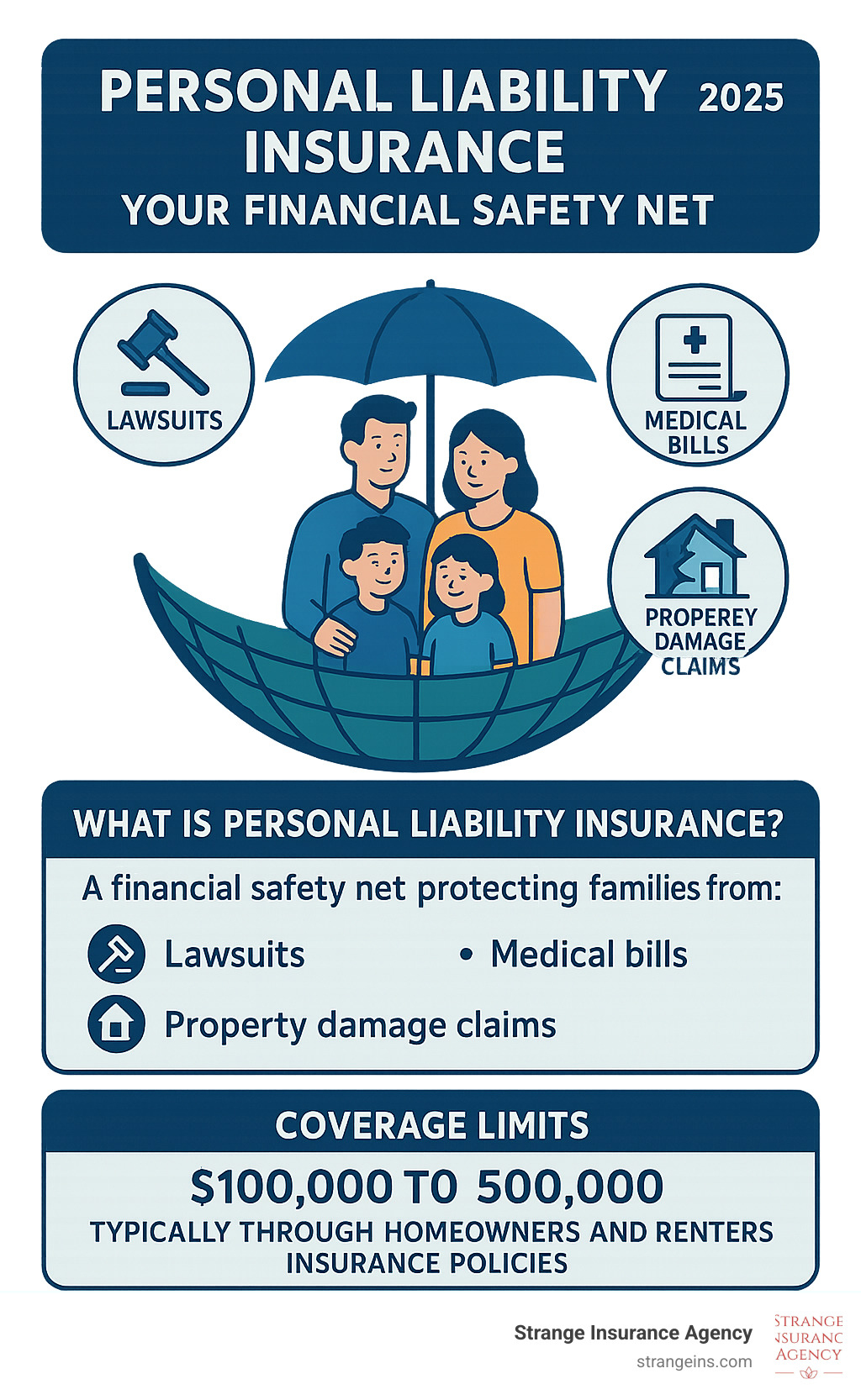
Liability insurance personal protection shields you from devastating financial losses when accidents happen. It covers legal costs and damages up to your policy limits if someone gets hurt on your property or you accidentally damage their belongings.
Quick Answer for Personal Liability Insurance:
- What it is: Financial protection when you’re legally responsible for injuring someone or damaging their property
- Where to get it: Included in homeowners, renters, and condo insurance policies
- Coverage limits: Typically $100,000 to $500,000, with higher limits available
- Cost: Usually just a few dollars per month as part of your home policy
- What it covers: Guest injuries, property damage you cause, legal defense costs
- What it excludes: Auto accidents, intentional harm, business activities, injuries to your household
The risk of legal liability is everywhere. A neighbor’s child could slip on your icy walkway, your dog might bite someone at the park, or your teenager could accidentally break an expensive window. Without proper coverage, these common incidents could lead to lawsuits that drain your savings and threaten your financial future.
Consider this scenario: “A guest visiting your home is injured by a falling ladder in your garage, suffering a broken arm and suing for damages, including medical bills and legal defense fees.” This type of accident happens thousands of times each year, and the costs can quickly escalate into six-figure amounts.
The global liability insurance market reflects this growing need, with projections showing massive growth from $25 billion in 2021 to an expected $433 billion by 2031, as more people recognize the financial risks they face.
I’m Christian Strange. With over 15 years in insurance and risk management at Strange Insurance Agency, I’ve seen how the right liability insurance personal coverage can be the difference between a manageable claim and financial disaster.
Liability insurance personal basics:
What is Personal Liability Insurance and Why is it Crucial?
Imagine your neighbor’s child trips over a garden hose in your backyard and breaks their arm. You could suddenly face thousands in medical bills and a potential lawsuit. This is where liability insurance personal coverage becomes your financial lifeline.
Personal liability insurance is “third-party insurance”—it doesn’t cover your own injuries or property damage. Instead, it steps in when you’re legally responsible for hurting someone else or damaging their belongings. Think of it as your financial bodyguard against life’s unexpected moments.
The key word here is “negligence.” You don’t have to intentionally harm someone to be held liable. Everyday oversights, like forgetting to salt an icy walkway, can lead to accidents. When these incidents cause injury or property damage, liability insurance personal coverage protects your wallet from the aftermath.
Millions of people are recognizing they need protection from lawsuit defense costs and damage claims that could otherwise wipe out their savings.
How Personal Liability Insurance Works
The good news is you probably already have liability insurance personal coverage. It’s typically bundled with policies you already own.
Homeowners insurance includes personal liability coverage as a standard feature. Whether someone gets injured on your property or you accidentally damage a neighbor’s fence, this coverage has your back.
Renters insurance also includes this protection. If your bathtub overflows and damages the apartment below, or if a guest slips in your kitchen, you could still face significant costs.
Condo insurance works similarly, protecting you from liability claims related to your unit.
When a covered incident happens, you contact your insurance company. They investigate, and if you’re found legally responsible, they handle payouts to third parties up to your policy limits. This includes medical expenses, property repairs, legal settlements, and your attorney fees.
The Financial Risk of Going Uninsured
Without adequate liability insurance personal protection, a single accident could devastate your finances. Medical bills alone for serious injuries can reach tens of thousands of dollars.
The real danger is when damages exceed your available cash. Courts can order asset liquidation—forcing you to sell your home, car, or investments—to pay a judgment. Wage garnishment could even follow you for years, taking a portion of every paycheck.
One moment of bad luck could derail decades of financial planning, putting your retirement savings, children’s college fund, and future loans at risk.
These aren’t rare scenarios; they happen to ordinary people. That’s why protecting your future earnings is just as important as protecting your current assets.
What Personal Liability Insurance Covers (and What It Doesn’t)
Liability insurance personal coverage is like a financial bodyguard, protecting you from unexpected accidents that could otherwise devastate your bank account.
Typically listed as “Coverage E” in your homeowners policy, it covers bodily injury or property damage you, your family, or pets accidentally cause to others. It also includes “Medical Payments to Others” (or “Coverage F”), which pays for minor medical expenses if someone is hurt on your property, regardless of fault.
Perhaps most importantly, your liability insurance personal coverage takes care of legal fees if someone sues you. Knowing your insurance company will handle legal defense costs is a huge relief during a stressful time.

Common Scenarios Covered
Your liability insurance personal coverage steps up in more situations than you might expect. Here are some real-world examples.
Guest injuries on your property are among the most common claims. If a friend slips on a wet floor or a neighbor trips on an uneven walkway, your policy helps cover their medical bills and protects you from a lawsuit.
Your child damaging a neighbor’s property is another frequent scenario. Whether it’s a baseball through a window or an expensive lamp knocked over at a friend’s house, your coverage can handle the repair or replacement costs.
Pet-related incidents, like dog bites, are also covered. Your policy typically covers medical expenses and legal defense, though some insurers have restrictions on certain breeds or dogs with a bite history.
Many are surprised to learn that accidents occurring away from home are usually covered. Your personal liability protection follows you. If you knock over an expensive camera at a party or your child damages playground equipment, your liability insurance personal coverage can still help.
What is Typically NOT Covered by Personal Liability Insurance
While liability insurance personal coverage is broad, it doesn’t cover everything. Understanding these exclusions helps you avoid surprises.
Intentional acts are always excluded. Insurance is for accidents, so it excludes intentional harm or property damage.
Injuries to you or household members aren’t covered. This policy covers others, not you or your family. For those injuries, you’ll rely on your health insurance.
Auto accidents are handled by your car insurance. Your personal liability policy steps aside for anything involving vehicles.
Business or professional activities are usually off-limits. If a client gets hurt at your home office, you’d need specialized coverage. We can help you find the right Liability Insurance for Professionals.
Damage from war or communicable disease are other common exclusions that insurance companies handle differently across all policies.
It’s key to read your specific policy carefully, as every insurer has slightly different rules.
How Personal Liability Differs from Other Insurance
Understanding different liability insurance types helps you avoid dangerous coverage gaps. Though many policies use the word “liability,” each protects against different risks. Let’s clarify what’s covered.
Personal Liability vs. Property Liability
Confusing personal liability with property coverage is a common, and potentially costly, mistake. Here’s the key difference:
Personal liability insurance covers damage you cause to other people’s property or injuries you cause to other people. If your teenager throws a baseball through a neighbor’s window, your personal liability coverage handles the replacement. If a delivery driver slips on your steps, this coverage pays their medical bills.
Property coverage, on the other hand, protects your own stuff. This includes dwelling coverage that rebuilds your house after a fire and personal property coverage that replaces your belongings if they’re stolen or damaged.
Both coverages appear on the same policy, but remember: liability insurance personal protection is about what you owe others, while property coverage is about protecting your own assets.
[TABLE] Comparing Personal, Auto, and Business Liability
Different areas of your life need different liability protection. Here’s how personal liability fits into the bigger insurance picture:
| Feature | Personal Liability | Auto Liability | Business Liability |
|---|---|---|---|
| Primary Source | Home/Renters Policy | Auto Policy | CGL/BOP Policy |
| Covers | Non-auto accidents | Vehicle accidents | Business operations |
| Example | Guest slips on ice | At-fault car crash | Customer injury in store |
Each liability insurance type covers specific situations. Your personal liability won’t help in a car accident—that’s for your auto insurance. Likewise, an injury during business operations requires dedicated business coverage. For comprehensive protection for your business, check out Business Liability Insurance.
At Strange Insurance Agency, we help you identify potential gaps and ensure you’re protected no matter where life takes you.
Determining Your Coverage Needs and Costs
Determining how much liability insurance personal coverage you need requires careful thought. You must consider your assets, activities, and overall risk to ensure you’re adequately protected.

The first step is to assess your net worth—everything you own minus what you owe. This includes home equity, savings, retirement funds, and investments. This matters because these are the assets a lawsuit could potentially target.
Next, consider attractive nuisances on your property. A swimming pool, trampoline, or even a treehouse can increase your liability exposure by drawing people (especially children) to your property, creating more opportunities for accidents.
Your lifestyle matters too. Frequently hosting parties, having teenage drivers, or owning pets increases your risk profile. These factors should influence your coverage decisions.
How Much Personal Liability Coverage Do I Need?
Most homeowners policies offer liability insurance personal limits from $100,000 to $500,000 or more. While $100,000 sounds like a lot, it’s often not enough to provide full protection.
Medical bills for a serious injury can easily reach six figures. When you add legal fees, lost wages, and other damages, the expenses can become massive.
The golden rule is to choose coverage that equals or exceeds your net worth. If you’re worth $200,000, having only $100,000 in liability coverage leaves you exposed. The extra $100,000 would have to come from your pocket, potentially forcing you to liquidate assets or face wage garnishment.
Industry experts recommend coverage between $300,000 and $500,000 for most homeowners. This reflects the reality of modern medical costs and legal settlements.
For families with substantial assets, even $500,000 might not be enough. This is where umbrella insurance becomes crucial, offering additional coverage after your primary policy limits are exhausted. If you’re wondering if you need this extra layer of protection, check out our guide: How Much Umbrella Insurance Do I Need?.
How Much Does Personal Liability Insurance Typically Cost?
The good news is that liability insurance personal coverage is one of the most affordable parts of your home insurance policy. Since it’s bundled, you don’t pay a separate premium for it.
The average homeowners insurance policy in the U.S. costs around $1,915 per year, but increasing your liability limits from $100,000 to $500,000 usually adds only a few dollars per month to your premium.
Several factors influence your overall policy cost, including your location, home value, and claims history. In Virginia and North Carolina, where we serve many clients, local risk profiles can play a role. Attractive nuisances like pools or trampolines might also adjust your premium, but the increase is usually modest compared to the protection you gain.
At Strange Insurance Agency, we work with over 30 insurance companies to find you the best combination of coverage and price, ensuring you get comprehensive liability insurance personal protection without overpaying.
How to Get Personal Liability Coverage and Improve It
Getting liability insurance personal protection is straightforward, as it’s included in policies most people already have. The key is ensuring your coverage matches your lifestyle and financial situation.
Where Can I Get Personal Liability Insurance?
For most families, liability insurance personal coverage comes automatically with policies like homeowners insurance. It’s built-in, not an optional add-on. Since mortgage lenders require homeowners insurance, you get this crucial protection as part of the package.
Renters insurance includes the same personal liability coverage, protecting you from accidents in your apartment or damage to your landlord’s property. Many landlords require it.
Condo owners receive personal liability coverage through their specialized condo insurance policies, which works with the condo association’s master policy to protect your personal interests.
While stand-alone personal liability policies exist, they are rare. Most people find it more cost-effective to bundle this coverage with their property insurance.
The Role of a Personal Umbrella Policy
If your standard liability insurance personal coverage isn’t enough, especially with significant assets or high risks, a personal umbrella policy provides an extra layer of protection.

An umbrella policy is excess liability coverage that activates when your primary policies (like home or auto) reach their limits. If you have a $300,000 liability limit but face an $800,000 judgment, an umbrella policy could cover the extra $500,000.
The protection goes beyond just higher limits. Umbrella policies often cover situations your regular policy doesn’t, like libel and slander claims.
High-limit protection is where these policies shine, typically starting at $1 million in coverage. For those with substantial assets or high future earning potential, this ensures one lawsuit doesn’t wipe out decades of hard work.
An umbrella policy is often surprisingly affordable and a wise choice if you own a pool, host gatherings, have teen drivers, or simply want maximum peace of mind. We help our Virginia and North Carolina clients evaluate if this coverage makes sense for them.
To learn more, check out What is Umbrella Coverage? and Personal Umbrella Policy.
Frequently Asked Questions about Personal Liability Insurance
We get many thoughtful questions about liability insurance personal coverage. Here are answers to the most common concerns we hear at Strange Insurance Agency.
Do I have to pay a deductible for a personal liability claim?
You typically don’t pay a deductible for personal liability claims, which surprises many people. This differs from property damage claims, where a deductible applies.
With liability insurance personal coverage, your policy usually pays from dollar one up to your coverage limit. If you’re found liable for $50,000 in damages, your insurance handles the full amount without you paying a deductible first.
However, it’s always smart to double-check your specific policy details. We ensure our clients understand exactly how their coverage works.
Does personal liability insurance cover accidents that happen away from my home?
Yes, your liability insurance personal coverage follows you wherever you go. It’s tied to you and your family, not just your property.
This means you’re covered if your child accidentally breaks something at a friend’s house or if you cause an injury while volunteering. Even if you’re traveling and accidentally damage hotel property, your coverage can help.
The coverage is typically worldwide, though some exceptions may apply. Most everyday scenarios are covered whether you’re in your hometown in Virginia or North Carolina, or traveling across the country.
Can I be required to have personal liability insurance?
While no state law mandates liability insurance personal coverage like they do for auto insurance, you’ll likely need it for practical reasons.
Mortgage lenders almost always require homeowners insurance, which includes personal liability coverage, to protect their investment in your property.
Many landlords require renters insurance for their tenants, specifically for its liability coverage. This protects both you and the landlord from accidents in your unit.
Even without these requirements, carrying liability insurance personal coverage is simply good financial sense. It’s something that seems optional until you desperately need it, and by then it’s too late.
Conclusion
Personal liability insurance isn’t just another policy to check off a list; it’s a financial lifeline. Whether a neighbor’s child falls on your steps or your dog gets too excited at the park, this coverage stands between you and devastating legal costs.
A single accident can turn a financial world upside down with medical bills and legal fees that wipe out years of savings. Personal liability insurance exists to protect what you have today and what you’re working toward tomorrow.
At Strange Insurance Agency, we don’t believe in leaving your financial security to chance. Our team understands the unique challenges facing families in Virginia, North Carolina, and beyond. We know every household has different risks and assets to protect.
That’s where our expertise shines. With access to over 30 insurance companies, we present you with multiple options that fit your budget and protection needs. We’re not just selling a policy; we’re helping you build a safety net that gives you real peace of mind.
We handle the heavy lifting—assessing your situation, explaining options in plain English, and finding coverage that makes sense for your life. No jargon, no pressure, just honest guidance from people who care about protecting your family’s future.
Don’t wait until after an accident to think about liability insurance personal coverage. The best time to secure this protection is now. Your future self will thank you.
Get a personalized consultation for your personal insurance needs.