
Why Understanding Building Insurance and Landlord Insurance Matters
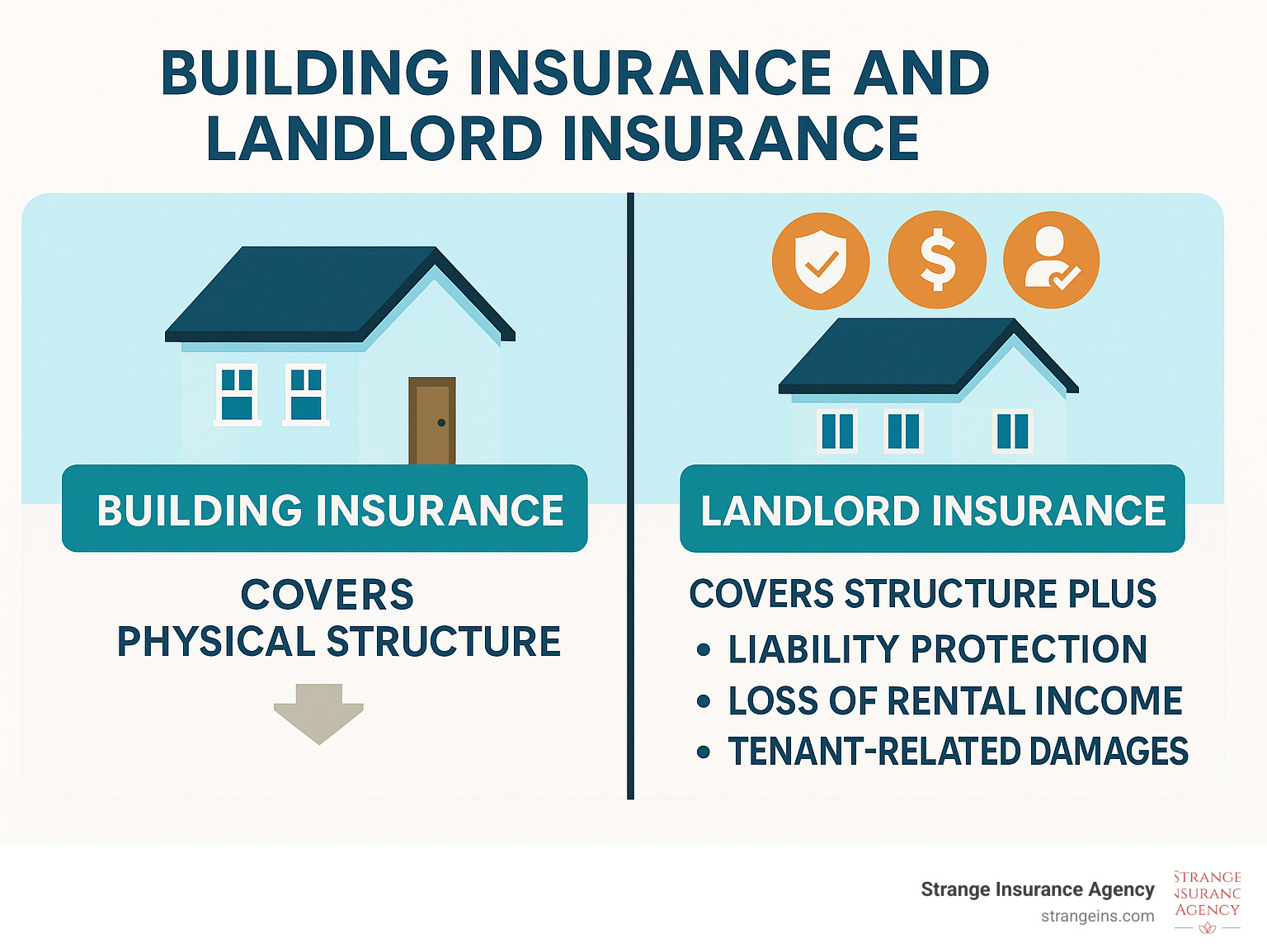
Building insurance and landlord insurance sound similar, but they guard against very different risks:
Building Insurance:
- Protects the physical structure of an owner-occupied home
- Covers fire, storm damage, and vandalism
- Excludes rental-business exposures
Landlord Insurance:
- Includes all building protection plus rental-specific risks
- Adds liability coverage for tenant injuries
- Replaces lost rental income after a covered claim
- Covers accidental tenant-caused damage
- Typically costs about 25 % more than standard building insurance
If you live in the property full-time, building insurance is usually enough. The moment you accept rent—whether for a single room, a long-term lease, or a short-term stay—you need landlord insurance to shield both the structure and your rental revenue. Many “accidental landlords” learn this only after a denied claim.
Strange Insurance Agency compares quotes from 30+ carriers to make sure your coverage matches how you actually use the property.
Common building insurance and landlord insurance vocab:
- average rental property insurance cost
- homeowners insurance policy for rental property
- umbrella insurance policy for rental property
What is Building Insurance? The Foundation of Property Protection
Think of building insurance as the protective shield for your home’s structure. It covers the physical parts of your property you can’t easily move—the walls, roof, floors, and permanent fixtures that make your house a home.
But building insurance goes beyond just the main structure. It also protects detached structures like your garage where you park your car, that garden shed where you store your tools, and other outbuildings scattered around your property. Basically, if it’s built and attached to your land, building insurance has got your back.
The real value of building insurance shines when disaster strikes. Whether it’s a fire that damages your kitchen, a storm that tears off roof shingles, or vandalism that breaks your windows, this coverage steps in to pay for repairs or rebuilding costs. The goal is simple: get your property back to the way it was before the damage happened.
It’s important to know that most mortgage lenders require building insurance as a condition of your loan. This makes sense, as they’ve invested heavily in your property and want to ensure protection is in place if something goes wrong. It’s a safety net for both you and your lender.
Building insurance is really designed with owner-occupiers in mind – people who live in their homes as their primary residence. The coverage assumes you’re using the property for personal enjoyment, not as a business venture. This distinction becomes crucial when we start talking about building insurance and landlord insurance differences.
Who is Building Insurance For?
Building insurance is perfect for homeowners living in their property as their main residence. If you use your home for personal enjoyment and aren’t collecting rent from tenants, then building insurance is what you need.
This coverage also works well for owners of unoccupied properties that aren’t being rented out. Maybe you have a vacation cabin in the mountains that you visit a few times a year, or perhaps you inherited a family home that’s sitting empty while you decide what to do with it. Building insurance can provide that essential basic property protection you need.
However, there’s a catch with vacant properties. Most policies have limits on how long a property can sit empty – usually between 45 to 90 days – before you need specialized coverage. Insurance companies get nervous about unoccupied homes because they’re more vulnerable to break-ins, vandalism, and unnoticed damage.
The beauty of building insurance lies in its focus on structural integrity. It’s straightforward protection that covers the essentials without getting complicated. You’re not dealing with tenant issues, rental income concerns, or business liability – just solid coverage for your property’s physical structure.
If you’re thinking about turning your property into a rental investment, you might want to check out our guide on building insurance for buy-to-let properties. It explains when you’ll need to make the transition to more comprehensive coverage.
What Does Building Insurance Typically Not Cover?

Understanding what building insurance doesn’t cover is just as important as knowing what it does. These gaps become especially significant if you’re considering renting out your property or already have tenants.
Tenant’s possessions are completely off-limits for building insurance. If you’re renting out a room in your home and your tenant’s expensive laptop gets stolen or damaged in a fire, your building insurance won’t pay a penny for it. That’s the tenant’s responsibility to protect with their own renters insurance.
Landlord liability represents a major gap that catches many property owners off guard. Imagine a tenant slips on your icy front steps and breaks their leg, or a visitor gets hurt because of a loose handrail. Building insurance typically won’t provide the liability protection you need for these slips and falls and other accidents. You could be personally responsible for medical bills, legal fees, and potential settlements.
Loss of rental income is another significant exclusion. If a covered disaster makes your property uninhabitable for months while repairs are being made, building insurance won’t compensate you for the rent checks you’re not receiving. This can create serious financial strain if you depend on that rental income to pay your mortgage.
Tenant-related damages present yet another coverage challenge. While building insurance might cover sudden accidental damage, it typically excludes damage caused by tenants through negligence or malicious acts. Normal wear and tear from tenants living in your property is also excluded – insurance companies consider this a normal cost of being in the rental business.
These limitations highlight why the choice between building insurance and landlord insurance becomes so important once you start renting out your property. The moment you become a landlord, even accidentally, you’re exposed to risks that building insurance simply wasn’t designed to handle.
What is Landlord Insurance? Comprehensive Coverage for Rental Investments
When you decide to rent out your property, you’re not just becoming a landlord – you’re starting a business. And like any business, you need specialized protection that goes beyond basic property coverage. That’s where landlord insurance comes in.
Building insurance and landlord insurance serve different purposes, and understanding this distinction can save you from costly surprises down the road. While building insurance protects your property’s structure, landlord insurance treats your rental property as what it truly is: a business investment that needs comprehensive coverage.
Think of landlord insurance as building insurance’s more sophisticated cousin. It includes all the dwelling coverage you’d expect – protection for your structure, detached buildings, and coverage for perils like fire and storm damage. But it doesn’t stop there. Landlord insurance adds crucial layers of protection specifically designed for the unique risks that come with tenants.
Whether you’re a seasoned property investor or an \”accidental landlord\” who’s renting out your home while relocating for work, the moment you accept that first rent check, you need the right coverage. Our landlord insurance policies are designed to protect your investment while giving you peace of mind. For those managing multiple properties, we also offer specialized investment property insurance custom to your portfolio’s needs.
Unique Protections Landlord Insurance Offers
Comparing Building Insurance and Landlord Insurance Side-by-Side
When you’re trying to decide between building insurance and landlord insurance, it helps to see exactly what each policy covers. The differences become clear when you look at them side by side.
| Coverage Area | Building Insurance | Landlord Insurance |
|---|---|---|
| Property Structure | ✓ Covered | ✓ Covered |
| Detached Structures | ✓ Covered | ✓ Covered |
| Landlord’s Contents | ✗ Not Covered | ✓ Covered |
| Tenant’s Belongings | ✗ Not Covered | ✗ Not Covered |
| Liability for Tenant Injury | ✗ Limited/Not Covered | ✓ Covered |
| Loss of Rental Income | ✗ Not Covered | ✓ Covered |
| Tenant-Caused Damage | ✗ Limited Coverage | ✓ Covered |
| Legal Expenses/Eviction | ✗ Not Covered | ✓ Often Covered |
| Malicious Damage | ✗ Limited Coverage | ✓ May be Covered |
This comparison shows why landlord insurance typically costs about 25% more than building insurance. You’re getting significantly more comprehensive protection for the unique risks that come with rental property ownership.
The key takeaway? Building insurance and landlord insurance both protect your property’s structure, but only landlord insurance protects your rental business. If you’re collecting rent from tenants, that extra 25% cost could save you thousands in uncovered losses.
Core Coverages: A Look at Building Insurance and Landlord Insurance
Both types of insurance start with the same foundation – dwelling protection for your property’s structure. This covers your main building, permanent fixtures, and built-in appliances. Both policies also protect other structures on your property like garages, sheds, and fences.
Here’s where they start to differ. Landlord insurance adds personal liability coverage specifically designed for rental situations. If a tenant slips on your icy walkway or gets injured because of a faulty handrail, you’re protected. Building insurance either doesn’t cover this or provides very limited protection.
Loss of rent coverage is exclusive to landlord insurance and can be a financial lifesaver. When a kitchen fire makes your rental uninhabitable for two months, you’ll still receive your rental income while repairs are being made. This protection is crucial if you depend on rental income to cover your mortgage payments.
Landlord furnishings coverage protects the furniture, appliances, and other items you provide for tenants. Since many rentals come furnished or semi-furnished, this creates additional property exposure that building insurance simply doesn’t address.
For comprehensive protection that covers both your building and contents, check out our building and contents insurance for landlords options.
Common Exclusions and Limitations

Both building insurance and landlord insurance have similar exclusions that can catch property owners off guard. Gradual water damage from slow leaks, wear and tear from normal use, and damage from lack of maintenance are typically excluded from both types of policies.
Natural disasters like earthquakes and floods usually require separate coverage, regardless of which policy you choose. With record numbers of billion-dollar disasters hitting the U.S. in recent years, these additional coverages are becoming increasingly important for property owners.
Tenant rent default presents a unique challenge for landlords. If tenants stop paying rent due to job loss or financial hardship rather than property damage, standard landlord insurance won’t help. You’ll need separate rent guarantee insurance or tenant default coverage for this protection.
Maintenance failures and pest infestations are generally excluded from both policy types. Insurance companies consider these normal costs of property ownership. Regular maintenance and prompt attention to small issues can help prevent many excluded losses from becoming major problems.
The good news? Understanding these exclusions helps you plan better and avoid unpleasant surprises when you need to file a claim.
Factors Influencing Your Insurance Costs
Let’s be honest – nobody likes talking about insurance costs, but understanding what drives them can save you money and help you budget smarter. The reality is that building insurance and landlord insurance don’t cost the same, and there’s a good reason for that.
Landlord insurance typically costs about 25% more than building insurance. Before you start groaning about the extra expense, you’re getting significantly more protection. Think of it like comparing a basic car to one with all the safety features – you pay more because you’re getting more.
The cost difference comes down to risk assessment. When you rent out a property, you’re essentially running a business, and businesses face more complex risks than homeowners. You’ve got potential tenant injuries, property damage from renters, and the possibility of losing rental income if something goes wrong. Insurance companies price these additional risks into their policies.
Increased liability exposure is a major factor in pricing. A tenant could slip on your stairs, a guest could get hurt in your backyard, or someone could claim your property wasn’t properly maintained. These scenarios don’t exist when you’re living in your own home, but they’re real concerns for landlords.
Property values also play a role in your costs. The reality is that as property values increase, so do replacement costs and insurance premiums. When it costs more to rebuild or repair your property, your insurance naturally costs more too.
For a detailed breakdown of what you might expect to pay, check out our guide on average rental property insurance cost.
Why Building Insurance and Landlord Insurance Premiums Differ
Several key factors create the premium gap between building insurance and landlord insurance, and understanding them can help you make informed decisions about your coverage.
Property location affects both types of insurance, but it hits landlord policies harder. If you’re in a high-crime area, insurance companies worry more about tenant safety and property damage. Areas with challenging rental markets or frequent tenant turnover also see higher premiums because turnover creates more opportunities for problems.
Weather risks are becoming increasingly important in pricing. Here in Virginia and North Carolina, we deal with hurricanes, severe storms, and other weather events that can damage properties. Rental properties often face higher weather-related premiums because tenants might not protect the property the same way owners would during storms.
Property age and construction materials matter for both policies, but landlord insurance is often more sensitive to these factors. An older property with outdated electrical systems poses liability risks that worry insurance companies. They’re thinking about tenant safety and potential lawsuits, not just structural damage.
Your claims history significantly impacts pricing. If you’ve had multiple claims or your property has a history of problems, expect higher premiums. On the flip side, properties with good maintenance records and claims-free histories often qualify for discounts.
Security features can help reduce your costs. Installing security systems, smoke detectors, proper lighting, and other safety measures shows insurance companies you’re serious about risk management. These improvements often pay for themselves through premium reductions.
Tenant type and rental duration also affect pricing. Short-term rentals typically cost more to insure because of higher turnover and liability exposure. Long-term, stable tenants present lower risks and may help you qualify for better rates.
The coverage limits and deductibles you choose directly impact your premium. Higher deductibles mean lower premiums, but make sure you can afford the out-of-pocket expense if you need to file a claim.
If you’re looking for ways to manage costs without sacrificing protection, explore our low cost rental property insurance options. We work with multiple carriers to find competitive rates that fit your budget.
Frequently Asked Questions about Building and Landlord Insurance
When it comes to building insurance and landlord insurance, property owners often have similar questions. Let me address the most common concerns I hear from clients at Strange Insurance Agency.
Is landlord insurance legally required?
Here’s the thing about landlord insurance – while it’s typically not required by law, you’ll almost certainly need it anyway. Mortgage lenders require adequate insurance coverage as a condition of your loan because they have a financial stake in protecting the property that secures their investment.
Even without legal requirements, landlord insurance is absolutely essential for protecting your investment and personal assets. Think about it this way: without proper coverage, you could face devastating financial losses from property damage, liability claims, or lost rental income. The relatively small cost of insurance premiums is nothing compared to the potential financial ruin of being uninsured.
Some jurisdictions do require landlords to carry minimum liability coverage, but requirements vary significantly by location. It’s always smart to check your local regulations and work with an insurance professional to ensure you meet all requirements.
For comprehensive guidance on coverage requirements, our insuring investment property resource covers everything you need to know about protecting your rental investments.
Does landlord insurance cover damage caused by tenants?
Yes, landlord insurance often covers accidental damage caused by tenants, but the devil is in the details. If a tenant accidentally puts a hole in the wall while moving furniture or causes water damage by leaving a faucet running, most landlord policies will cover these situations.
However, malicious or intentional damage is trickier. Some policies exclude it entirely, while others include limited coverage or offer it as an optional add-on. This is why it’s crucial to review your specific policy terms with your insurance agent.
Pet damage coverage is a valuable feature found in many landlord policies, typically covering up to $4,000 in damage caused by tenants’ pets. Given how much damage pets can cause to flooring, doors, and walls, this coverage can be a real lifesaver.
Security deposits are your first line of defense against tenant damage. While insurance can cover damage that exceeds the deposit amount, collecting adequate security deposits helps minimize claims and keeps your premiums manageable.
Does landlord insurance protect a tenant’s personal belongings?
No, landlord insurance absolutely does not protect a tenant’s personal belongings. Your landlord policy only covers property that you own – the building structure, furniture and appliances you provide to tenants, and other landlord-owned items.
Tenants are completely responsible for protecting their own personal property, including furniture, electronics, clothing, and other belongings. They need to purchase their own renters insurance to protect against theft, fire, water damage, and other covered situations.
As a landlord, I strongly recommend encouraging or even requiring tenants to carry renters insurance. This protects their belongings and provides them with liability coverage, which can actually reduce your exposure to certain types of claims.
Many smart landlords include a renters insurance requirement right in their lease agreements. This benefits everyone by clearly defining responsibility and reducing potential disputes over property damage. It’s a small requirement that can prevent major headaches down the road.
Conclusion: Securing the Right Protection for Your Property
The key takeaway in choosing between building insurance and landlord insurance is simple: your property’s use determines the coverage you need. If you live in your home as your primary residence, building insurance provides the structural protection you need. However, the moment you rent out your property – whether it’s a single room or an entire house – you need landlord insurance to protect against the unique risks of the rental business.
Building insurance focuses on protecting the physical structure of your property from common perils like fire, storm damage, and vandalism. It’s designed for owner-occupiers who use their property for personal rather than business purposes. While adequate for homeowners, building insurance leaves significant gaps in coverage for rental activities.
Landlord insurance provides comprehensive protection for both the physical property and the business of renting. It includes all the structural protection of building insurance plus crucial additional coverages like liability protection, loss of rental income, and tenant-related damage coverage. While it typically costs about 25% more than building insurance, the additional protection is essential for rental property owners.
Making an informed decision about insurance coverage is crucial for protecting your property investment and personal assets. The cost difference between building insurance and landlord insurance is minimal compared to the potential financial losses from being inadequately covered.
At Strange Insurance Agency, we understand the complexities of property insurance and the unique needs of property owners in Virginia, North Carolina, and beyond. Our concierge service approach means we work with you to understand your specific situation and provide multiple quotes from our network of 30+ insurance companies. This ensures you get comprehensive coverage at competitive rates with the quick, personalized service you deserve.
Whether you’re a first-time landlord or an experienced property investor, we’re here to help you steer the insurance landscape and secure the right protection for your property. Our expertise in both building and landlord insurance means you’ll get the coverage you need without paying for protection you don’t.
For additional property insurance options, explore our commercial property insurance solutions for larger rental portfolios and commercial properties.
Contact Strange Insurance Agency today to discuss your property insurance needs and get the protection that’s right for your situation. With our experience and comprehensive carrier network, we’ll help you make the right choice between building insurance and landlord insurance – and ensure you’re properly protected no matter which path you choose.