
Why Property Owners Need Specialized Insurance Protection
Landlord insurance is a specialized policy that protects rental property owners from financial losses. Unlike standard homeowners insurance, it covers the unique risks of renting your property to tenants.
Quick Answer for Property Owners:
- What it covers: Building damage, liability claims, loss of rental income, and the landlord’s personal property.
- What it doesn’t cover: A tenant’s belongings (they need renters insurance), normal wear and tear, or routine maintenance.
- Cost: Varies widely based on property type and location.
- Legal requirement: Not legally required by states, but often mandated by mortgage lenders.
- Key difference from homeowners: Covers business-related risks and loss of rental income.
If you own rental property in Virginia or North Carolina, a standard homeowners policy is not enough. When a tenant accidentally starts a kitchen fire or a guest slips and sues, you need coverage designed for these scenarios. Landlord insurance is an affordable way to protect what is likely one of your biggest investments.
The bottom line: Landlord insurance protects both your property and your rental income when things go wrong.
I’m Christian Strange, and with over 15 years of experience in insurance and risk management, I’ve helped countless property investors steer the complexities of landlord insurance. My expertise has shown me how the right coverage can make or break a rental property business.
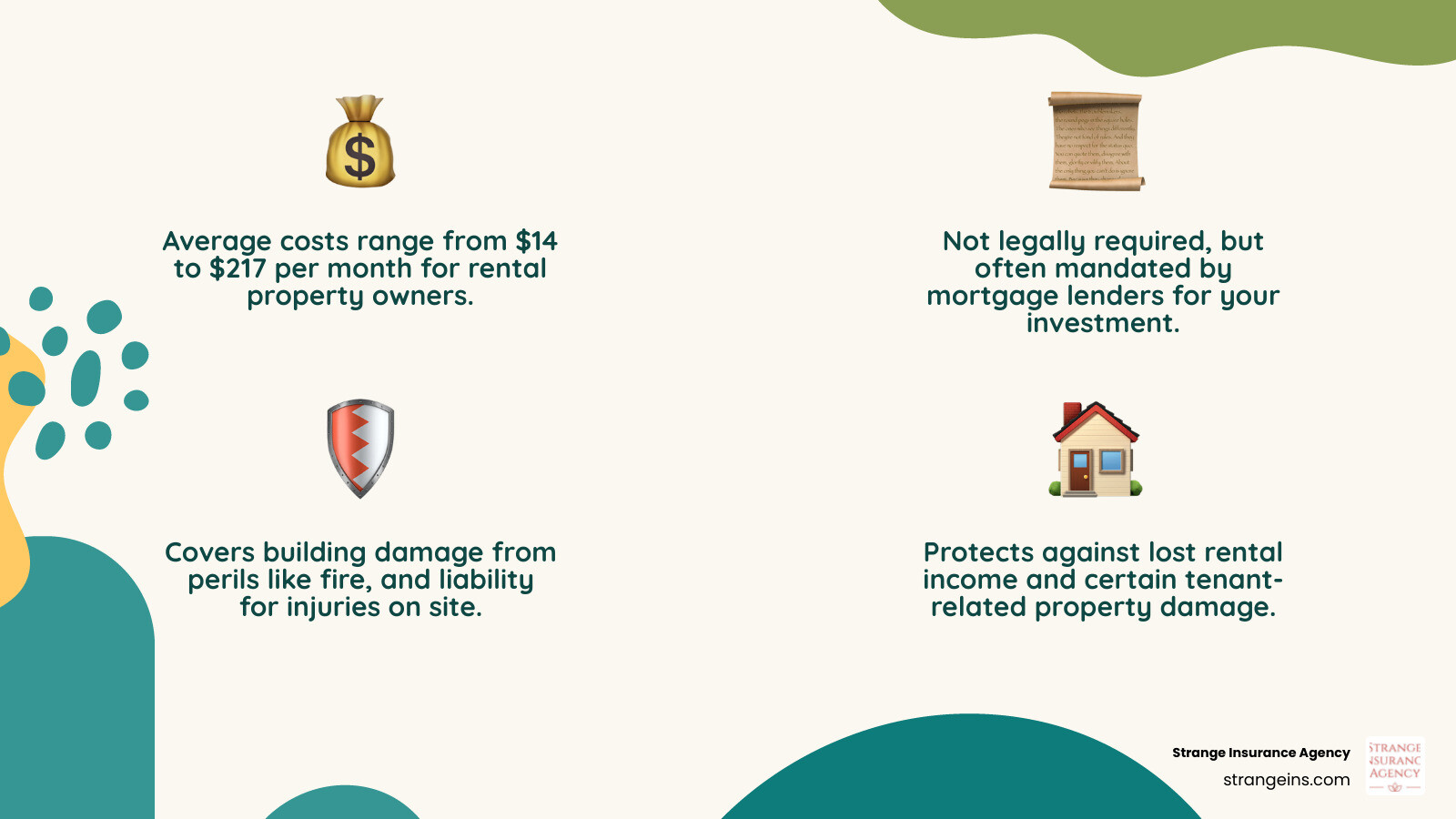
Landlord insurance vocabulary:
- best home insurance for rental properties
- liability coverage for rental property
- average rental property insurance cost
The Fundamentals: What Is Landlord Insurance and Why Is It Crucial?
When you own a rental property, you’re running a business that needs protection beyond what standard homeowners insurance offers. Landlord insurance is your financial lifeline, specifically designed for the unique risks of property investment.
Imagine a cooking fire, a guest who slips and sues, or a storm that damages the roof and forces your tenant to move out. Landlord insurance provides liability coverage for injuries on your property, protects against loss of income when your rental becomes uninhabitable, and covers repairs from perils like natural disasters. It also extends to certain tenant-related risks, like accidental damage.
For property investors looking for comprehensive coverage options, our guide on Investment Property Insurance offers deeper insights.
Key Differences: Homeowners vs. Landlord Insurance
Many new landlords are surprised to learn their homeowners insurance won’t cover a rental property. The policies are fundamentally different because of how the property is used.
Homeowners insurance is for personal, owner-occupied residences. Landlord insurance recognizes you’re running a rental business with different risks.
| Feature | Homeowners Insurance | Landlord Insurance |
|---|---|---|
| Occupancy | Owner-occupied properties only | Non-owner occupied rental properties |
| Liability | Personal liability for your own guests | Business liability for tenants and their visitors |
| Personal Property | Your personal belongings throughout the home | Only landlord-owned items like appliances you provide |
| Loss of Use/Rent | Your temporary housing costs | Lost rental income when property is uninhabitable |
The business use exclusion in homeowners policies is critical. Once you collect rent, you’re conducting a business activity that standard policies exclude, which could lead to claim denial. Rental-specific risks like tenant turnover, liability from multiple occupants, and income loss require specialized coverage. Switching to proper landlord insurance is essential.
Our guide on Homeowners Insurance Policy for Rental Property explains these risks in more detail.
Legal Requirements and Mortgage Stipulations
While Virginia and North Carolina don’t legally require landlord insurance, your mortgage lender almost certainly does. Mortgage lender requirements make this coverage mandatory for most investors.
Lenders for buy-to-let mortgages need to protect their investment and will require proof of insurance before closing and throughout the loan term. Letting your policy lapse could have serious consequences, including loan acceleration.
Even if you own the property outright, some local regulations may have specific insurance requirements, especially for multi-family or short-term rentals. The smart approach is to secure landlord insurance regardless of requirements to protect your investment, income, and personal assets from lawsuits.
Our guide on Mortgage Insurance for Rental Property covers lender requirements in more detail.
Deconstructing Your Policy: What’s Covered and What’s Not
Your landlord insurance policy is a financial roadmap, detailing what’s protected and what’s not. Understanding the covered perils (bad things that can happen) and exclusions (what’s not covered) can save you thousands.

What’s Covered: A Detailed Look
Your policy provides several layers of protection:
- Dwelling protection: This is the backbone, covering the property’s structure—walls, roof, floors—from damage. It pays for repairs or a complete rebuild after a covered event like a fire or storm.
- Other structures: This protects structures not attached to the main building, like a detached garage, shed, or fence.
- Liability coverage: This is crucial protection if someone is injured on your property and sues you. It covers legal fees and settlement costs, which can be substantial. For more details, see our guide on Liability for Rental Property.
- Loss of rental income: This is your financial lifeline if the property becomes uninhabitable due to a covered loss. It reimburses you for the rent you can’t collect during repairs, helping you continue to pay the mortgage.
- Landlord’s personal property: This covers items you own and provide for tenant use, such as appliances or furniture in a furnished unit. It does not cover your tenant’s belongings.
- Tenant damage: Policies typically cover accidental damage by tenants (e.g., breaking a window while moving furniture). However, malicious damage (e.g., intentionally punching a hole in the wall) may require an additional endorsement.
- Fixtures and fittings vs. contents: It’s important to know the difference. Fixtures (built-in cabinets, sinks) are part of the dwelling coverage, while contents (your appliances, furniture) are covered under landlord’s personal property.
Common Exclusions and Limitations
No policy covers everything. Here’s what landlord insurance typically won’t cover:
- Your tenant’s belongings: Their personal property is their responsibility to insure. This is why many landlords require tenants to have renters insurance.
- Normal wear and tear: Insurance is for sudden, accidental events, not for things that wear out over time, like aging carpets or fading paint.
- Maintenance issues: Damage resulting from a lack of routine maintenance, like an ignored roof leak that causes major water damage, is usually excluded.
- Earthquakes and flooding: These perils typically require separate, specialized insurance policies.
- Unoccupied properties: If your rental is vacant for an extended period (often 30-60 days), your coverage may be reduced or certain perils excluded. Vacant properties face higher risks of vandalism or frozen pipes.
Understanding the Cost of Your Landlord Insurance Policy
One of the first questions every landlord asks is, “How much will this cost?” There’s no single answer, as the price of landlord insurance depends on many factors, much like the price of a car depends on its make, model, and features.

While average costs can provide a benchmark, your premium is based on your property’s specific risk profile. The only way to know for sure what you’ll pay is to get a personalized quote. We make this easy with our Rental Property Insurance Quote Online tool.
Factors That Influence Your Premium
Insurers calculate your premium based on several key factors:
- Location: Properties in areas with higher risks, such as coastal regions in Virginia prone to hurricanes or neighborhoods with higher crime rates, will cost more to insure.
- Property Age and Construction: Newer buildings with modern plumbing and electrical systems are typically cheaper to insure than older homes. Brick construction may receive better rates than wood frames in areas with high fire risk.
- Rebuild Cost: This is the cost to completely rebuild your property from the ground up, including labor and materials. It is not the same as market value. A higher rebuild cost means a higher premium. Learn more in our guide on Building Insurance for Buy to Let.
- Security Features: Discounts are often available for properties with smoke detectors, security alarms, and deadbolt locks.
- Claims History: A history of frequent claims can lead to higher premiums.
- Tenant Type: Some insurers adjust rates based on tenant demographics, such as students, due to statistical differences in claim frequency.
- Property Type: A single-family home will have a different rate than a multi-family building.
Smart Ways to Save on Your Premiums
You can lower your landlord insurance costs without sacrificing coverage:
- Insure Multiple Properties: Most insurers offer significant discounts for insuring multiple properties on a single policy.
- Raise Your Deductible: Choosing a higher deductible (the amount you pay out-of-pocket on a claim) will lower your premium. Ensure it’s an amount you can comfortably afford.
- Pay Annually: Paying your premium in one annual lump sum instead of monthly installments can often earn you a discount.
- Bundle Policies: Combine your landlord policy with your home or auto insurance with the same carrier for multi-policy discounts.
- Improve Property Safety: Installing security systems, smoke detectors, and fire extinguishers can lead to discounts. Regular maintenance also reduces the likelihood of claims.
- Shop Around: The most important tip is to compare quotes. We can help you compare options from multiple top-rated companies. For more tips, see our guide on Cheap Buy to Let Building Insurance.
A Practical Guide for Property Investors
Successful landlording is about smart risk management. Landlord insurance is your financial armor, and a proactive approach to protection is what separates successful investors from the rest.

In Virginia and North Carolina, the right insurance strategy can mean the difference between a minor hiccup and a financial disaster. We dig deeper into these strategies in our guide on Insurance for Real Estate Investors.
What Optional Add-Ons Are Available for Landlord Insurance?
Basic policies provide a solid foundation, but optional add-ons let you customize your coverage:
- Rent Guarantee Insurance: Covers your lost income if a tenant stops paying rent while still occupying the property.
- Legal Expenses Coverage: Helps pay for attorney fees and court costs for issues like evictions or property damage disputes.
- Landlord Emergency Cover: Provides 24/7 access to approved contractors for emergencies like burst pipes or electrical failures.
- Vandalism and Burglary Coverage: Offers extra protection, especially for properties in higher-risk areas.
- Boiler and Appliance Cover: Helps with repair or replacement costs for essential systems you provide.
- Landlord Umbrella Insurance: Provides an extra layer of liability protection above your standard policy limits for catastrophic claims.
How to Compare Quotes and Choose the Right Policy
Shopping for landlord insurance requires careful comparison. As a concierge agency, we provide multiple quotes to ensure you get comprehensive coverage at a competitive price.
When comparing policies, look at:
- Coverage Limits: Ensure your dwelling coverage matches the property’s reconstruction cost, not its market value.
- Deductibles: Balance a lower premium with a deductible you can afford to pay.
- Exclusions: Understand what is not covered. Some policies exclude malicious tenant damage or have strict vacancy clauses.
- Provider Reputation: A cheap policy is worthless if the insurer is unresponsive during a claim. We only work with financially stable, reputable insurers. You can research companies and check their complaint records through resources like the National Association of Insurance Commissioners (NAIC).
Our team can help you compare Building Insurance Quotes for Landlords to ensure you understand what you’re buying.
Navigating the Claims Process
If you need to file a claim, a clear process makes all the difference.
- Ensure Safety: Prioritize the safety of everyone involved. Call emergency services if needed.
- Prevent Further Damage: Take reasonable steps to mitigate the loss, like tarping a damaged roof or shutting off the water.
- Contact Us Immediately: Report the damage as soon as possible. The sooner we know, the sooner we can help.
- Document Everything: Take photos and videos of the damage, create a list of affected items, and keep receipts for any emergency repairs. Get a police report for any criminal activity.
An adjuster will typically contact you within 24-48 hours to assess the damage and determine what’s covered. Good documentation and prompt communication are key to a smooth process.
Frequently Asked Questions about Landlord Insurance
We’ve compiled answers to the questions we hear most often from Virginia and North Carolina landlords to provide quick, clear guidance.
Does landlord insurance cover damage caused by my tenants?
Generally, yes, but it depends on the type of damage. Accidental damage caused by a tenant, like a small kitchen fire or a broken window, is typically covered. However, malicious damage—when a tenant intentionally destroys property—often requires a special policy add-on. Damage from long-term neglect may also be excluded. Your tenant’s security deposit should be your first line of defense for minor issues; insurance is for losses that exceed the deposit.
What is the difference between ‘loss of rent’ and ‘rent guarantee’ coverage?
These two coverages are often confused but protect against different risks.
- Loss of Rent Coverage: This is part of a standard landlord policy. It reimburses you for lost rental income if your property becomes uninhabitable due to a covered event, like a fire or storm, and your tenant has to move out during repairs.
- Rent Guarantee Insurance: This is an optional add-on. It protects you if your tenant stops paying rent but continues to live in the property. It covers the unpaid rent and often the legal costs of eviction.
In short: Loss of rent is for when the property is unlivable; rent guarantee is for when the tenant doesn’t pay.
What types of properties can be covered?
Landlord insurance is flexible and can be custom to various property types:
- Single-family homes
- Multi-family properties (duplexes, triplexes, etc.)
- Condominium units (requires a policy that works with the condo association’s master policy)
- Apartments
- Properties under renovation (may have special conditions)
- Commercial rental properties (offices, retail spaces), which require a specialized Commercial Rental Property Insurance policy.
If you own a property that you rent out for income, there is a landlord insurance solution for you.
Conclusion: Secure Your Investment with the Right Partner
Your rental property is a significant investment and a key part of your financial future. Landlord insurance is the essential safety net that protects this asset from the unexpected.
A single incident—a fire, a lawsuit, or a major storm—can jeopardize your investment. In Virginia and North Carolina, landlords who prepare with comprehensive coverage are the ones who successfully weather these challenges.
At Strange Insurance Agency, we make protecting your investment straightforward. As a concierge agency, we do the shopping for you, providing quotes from over 30 top-rated insurers in a single conversation. We focus on finding the right coverage for your unique property, not just the cheapest price.
The peace of mind from proper landlord insurance is invaluable. It allows you to focus on growing your investment, knowing your property, income, and liability are protected.
Don’t leave your investment vulnerable. Protect your investment property today by partnering with us. We’re here to ensure your rental business has the solid foundation it deserves.