
Why Getting a Rental Property Insurance Quote Online Is Essential for Your Investment
Using rental property insurance quote online platforms makes protecting your investment property easier than ever. Whether you own a single-family home, a duplex, or a multi-unit building, securing the right coverage quickly can save you thousands of dollars and significant stress.
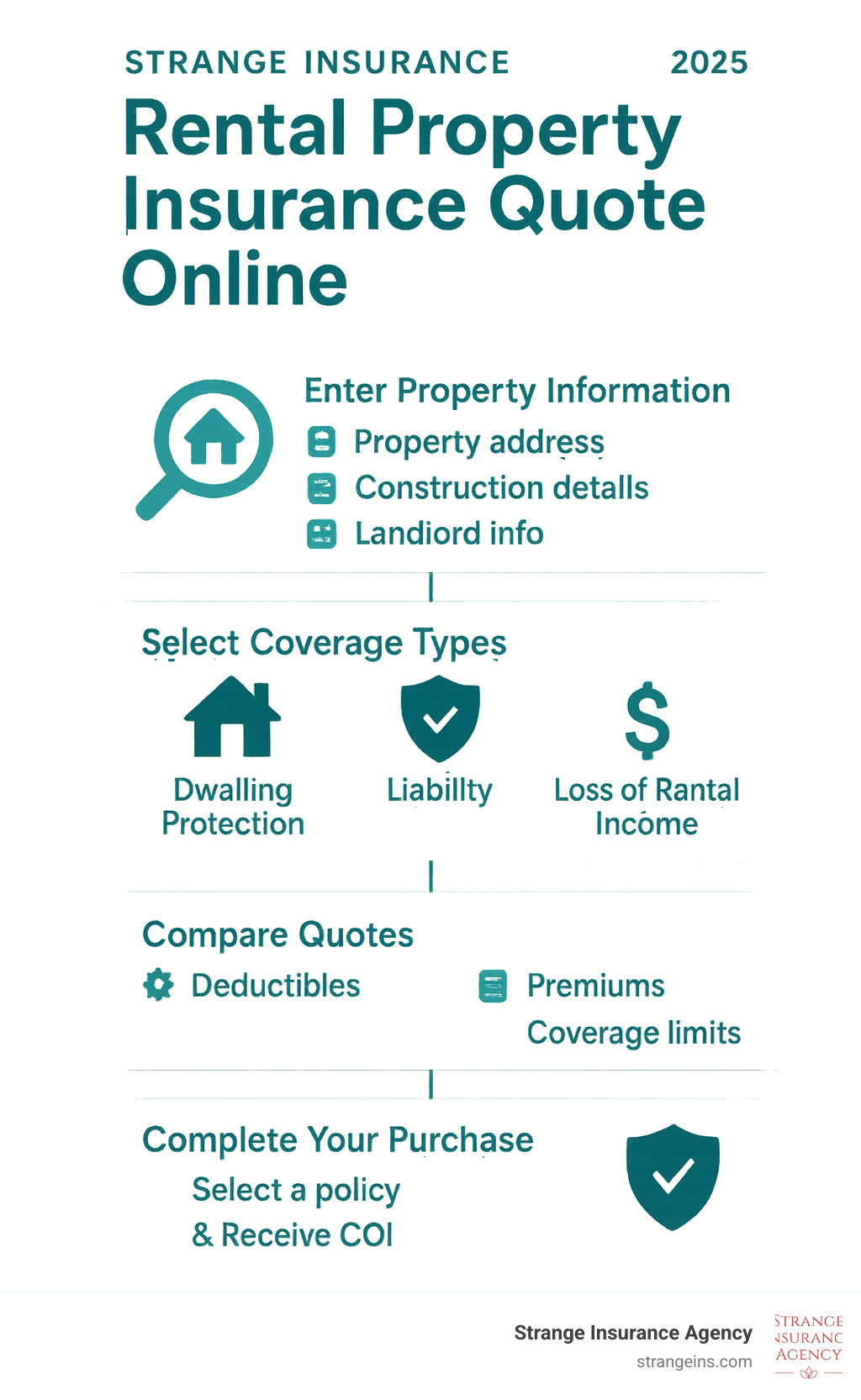
Here’s what you need to know about getting rental property insurance quotes online:
- Start with your property address – Most platforms begin with basic property information.
- Provide landlord information – Include your experience, claims history, and contact details.
- Choose coverage types – Select dwelling protection, liability, loss of rental income, and optional add-ons.
- Compare multiple quotes – Access quotes from different carriers in minutes.
- Complete your purchase – Finalize your policy and receive your Certificate of Insurance (COI).
By comparing quotes online, landlords can save up to 35% on their insurance premiums, with coverage starting from as little as $17 per month. The process is highly efficient, often taking just a few minutes to complete.
Landlord insurance is fundamentally different from homeowners insurance. A homeowners policy protects your primary residence, while landlord insurance is designed for rental properties. It includes coverage for tenant-related risks, loss of rental income, and specialized liability for property owners.
Getting quotes online is about protecting your investment with adequate coverage for unexpected events. From fire and storm damage to tenant injuries, the right policy safeguards your property and rental income.
I’m Christian Strange, and with over 15 years of experience in treasury management and insurance, I’ve helped countless property owners find the right rental property insurance quote online. At Strange Insurance Agency, we work with multiple carriers to ensure landlords get comprehensive coverage at competitive rates.
Common rental property insurance quote online vocab:
- average rental property insurance cost
- best home insurance for rental properties
- liability coverage for rental property
Understanding Landlord Insurance: Your First Line of Defense
As a rental property owner, you’re a business owner with unique risks. Landlord insurance (also known as rented dwelling insurance or Investment Property Insurance) is your essential protection against financial losses that a standard homeowners policy won’t cover.
For a general, third-party overview of this coverage, see Landlord insurance.
Think of it as a financial safety net designed for landlords. Your rental property faces different challenges than a primary residence, from tenant-related damages to lost income when a disaster strikes.
Why is this coverage so crucial? Imagine a kitchen fire makes your unit uninhabitable for months. You’d face repair costs plus thousands in lost rent. Landlord insurance is designed to cover both.
Liability protection is another critical component. If a tenant or visitor is injured on your property due to a faulty handrail or an icy walkway, you could face a costly lawsuit. This specialized coverage protects you from these risks.
Many lenders require landlord insurance before approving a mortgage for a rental property. They understand the unique risks involved and want to ensure their investment is protected, which may tie into your Mortgage Insurance for Rental Property requirements.
The Critical Difference from Homeowners Insurance
Many new landlords mistakenly assume their homeowners insurance covers their rental property. It doesn’t, and the difference is critical.
A homeowners policy protects your primary residence—the home you live in. It covers your personal belongings and liability as the occupant. Rental properties operate under a different set of risks.
Tenant-occupied risks change everything. You don’t control the day-to-day activities, which creates liability exposures that homeowners policies aren’t designed to handle. A Homeowners Insurance Policy for Rental Property simply lacks the specific coverages you need, such as:
- Replacement of lost rental income.
- Liability coverage for tenant-related lawsuits.
- Protection for many types of tenant-caused damages.
Landlord insurance fills these critical gaps. It covers the dwelling, your landlord-owned property (like appliances), specialized liability, and loss of rental income. When you get a rental property insurance quote online, you’ll see policies custom to your business needs.
| Feature | Homeowners Insurance | Landlord Insurance |
|---|---|---|
| Dwelling Coverage | Yes, for owner-occupied home | Yes, for rental property structure |
| Landlord’s Personal Property | Yes, for your belongings in your home | Yes, for landlord-owned items in rental unit |
| Liability Coverage | For incidents at your primary residence | For incidents at your rental property |
| Loss of Rental Income | No | Yes, when property is uninhabitable |
The bottom line: Your rental property is a business that needs business-level protection. Don’t risk your financial future with the wrong coverage.
What Your Rental Property Insurance Policy Covers
When you seek a rental property insurance quote online, understanding what your policy covers is key to making an informed choice. Landlord insurance provides a comprehensive safety net with essential core protections and optional add-ons to fit your unique situation.

Standard Coverage for Your Investment
Every solid landlord policy is built on three pillars of protection to shield you from the most common and costly risks.
Property damage protection is the foundation, safeguarding the physical structure of your rental and attached buildings like garages. This covers damage from fire, storms, and vandalism. Whether it’s a kitchen fire, a tree falling on the roof, or a disgruntled tenant damaging walls, you’re protected. It also typically covers water damage from burst pipes or overflowing appliances. This comprehensive protection for your building is often called Building and Contents Insurance for Landlords.
Landlord’s liability coverage is vital for your financial security. If someone is injured on your property—a tenant slipping on ice or a visitor tripping on a loose board—this coverage handles medical bills, legal fees, and potential settlements. It’s your essential Liability Insurance for Rental Property, and you don’t want to face a lawsuit without it.
Loss of rental income coverage (or fair rental value) protects your cash flow. If a covered event like a fire makes your property uninhabitable, this coverage replaces your lost rental income during the repair period, helping you meet your financial obligations.
Popular Optional Coverages for Improved Protection
Smart landlords often improve their policies with optional coverages to address specific risks.
Improved water damage protection can go beyond the basics to include sewer backup coverage for when municipal systems fail, overland flooding coverage for damage from heavy rains, and sump pump failure coverage to protect your basement.
Equipment breakdown coverage is a lifesaver for properties with older HVAC systems, water heaters, or major appliances. It helps cover repair or replacement costs when essential systems fail.
Landlord Umbrella Insurance provides an extra layer of liability protection. If you own multiple properties or have significant assets, this coverage kicks in when claims exceed your standard policy limits, protecting you from catastrophic lawsuits.
Legal expense insurance is increasingly popular for helping with legal costs related to evictions or property damage disputes.
When you get a rental property insurance quote online, you can easily customize your policy by selecting the optional protections that make sense for your property.
How to Get a Rental Property Insurance Quote Online: A Step-by-Step Guide
Getting a rental property insurance quote online is no longer a tedious process. Today’s digital platforms empower you to protect your investment property quickly and efficiently, often in the time it takes to have a cup of coffee.
This modern approach is about more than convenience; it’s about making an informed decision. By quickly comparing options, you can save hundreds or even thousands of dollars annually, all on your own schedule.

Step 1: Gather the Necessary Information
Being prepared makes the process smoother. Most online platforms can generate a quote in minutes if you have your information ready. You’ll need:
- Property address: This helps the system pre-fill details about your location and local risks.
- Property details: Know the year built, construction type (e.g., brick, wood-frame), square footage, and number of units.
- Roof information: The age and material of your roof are key factors for insurers.
- Your claims history: Be ready to provide information on any past insurance claims you’ve filed for any property you’ve owned.
- Lease information: Some platforms may ask if the property is occupied or for the typical lease term.
Step 2: Finding the Right Platform to Get Your Rental Property Insurance Quote Online
Choosing the right platform can be the difference between a single quote and multiple excellent options.
While many online agencies offer speed, working with an independent agent who specializes in comparison shopping provides a distinct advantage. This is where Strange Insurance Agency excels. As a concierge insurance agency, we partner with over 30 top-rated carriers. We do the heavy lifting, comparing options across multiple providers for you.
Think of us as your personal insurance shopper. We provide multiple quotes from various carriers, ensuring you see comprehensive coverage options at competitive rates, all with the personal touch of working with a real agent who understands your needs. This approach gives you access to the Best Insurance Company for Real Estate Investors by providing choice and expert guidance.
Step 3: Compare Quotes and Choose Your Policy
Now you can review your options and choose the best policy for your investment.
- Coverage Limits: Ensure your dwelling coverage is enough to rebuild your property at today’s costs. Liability limits should be high enough to protect your personal assets.
- Deductible: This is what you pay out-of-pocket on a claim. A higher deductible usually means a lower premium, but be sure you can comfortably afford it.
- Premiums: Don’t just focus on the price. The cheapest policy isn’t a bargain if it has coverage gaps. Find the right balance of protection and affordability.
- Exclusions: Understand what your policy doesn’t cover. Standard policies often exclude flood and earthquake damage, which typically require separate coverage.
- Optional Coverages: Review add-ons like sewer backup or equipment breakdown protection. They can provide significant value for a small additional cost.
Once you’ve made your choice, finalizing the purchase is simple. Most platforms let you buy online and receive your Certificate of Insurance (COI) electronically within minutes. Finding the Best Home Insurance for Rental Properties is about balancing comprehensive protection with smart financial planning.
Factors That Influence Your Insurance Costs and How to Save
No one wants to overpay for insurance. When getting a rental property insurance quote online, you’ll notice prices can vary significantly. Understanding what drives these costs allows you to take smart steps to lower your premiums without sacrificing protection.

What Determines the Price of Your Premium?
Several key factors combine to create your final premium:
- Location: Properties in areas prone to hurricanes, severe storms, or high crime rates will have higher premiums.
- Property Characteristics: A new brick home costs less to insure than an older wood-frame house. The age and condition of the roof, electrical, and plumbing systems are critical.
- Coverage Choices: Higher coverage limits, lower deductibles, and optional add-ons will increase your premium.
- Claims History: A history of frequent claims signals higher risk to insurers and leads to higher rates.
- Deductible Amount: A higher deductible lowers your premium, but you’ll pay more out-of-pocket if you file a claim.
For more on typical costs, see our guide on the Average Rental Property Insurance Cost.
Smart Ways to Lower Your Insurance Premiums
You have more control over your insurance costs than you might think. Here are some effective ways to save:
- Adjust Your Deductible: Raising your deductible from $1,000 to $2,500 can lead to significant annual savings. Just be sure you have the funds to cover it.
- Bundle Policies: Insuring multiple properties or combining your landlord policy with your personal auto or home insurance can open up multi-policy discounts of 15-25%.
- Install Safety Features: Smoke detectors, carbon monoxide alarms, security systems, and water leak detectors can earn you premium credits.
- Maintain Your Property: Proactive maintenance, like regular roof inspections and plumbing repairs, reduces the likelihood of claims and can lead to better rates over time.
- Require Renters Insurance: This reduces your liability exposure, as tenants’ policies can cover incidents that occur in their unit. Make it a requirement in your lease.
- Shop Around Regularly: The insurance market changes. As a concierge agency working with over 30 carriers, we make comparison shopping effortless, bringing you multiple rental property insurance quote online options without the hassle.
Focus on finding comprehensive coverage at a fair price, not just the lowest premium. The best value is a policy that’s there for you when you need it.
Frequently Asked Questions about Rental Property Insurance
We’ve helped countless landlords steer rental property insurance. Here are answers to some of the most common questions we hear when investors are getting a rental property insurance quote online.
What types of rental properties can I insure?
Landlord insurance is highly flexible and can cover nearly any type of residential rental property.
- Single-family homes: The most common type of rental, these are straightforward to insure.
- Condominiums: Your policy covers the unit’s interior and your liability, while the condo association’s master policy covers the exterior and common areas.
- Duplexes, triplexes, or fourplexes: These multi-family properties require more complex coverage for multiple tenants and rental incomes.
- Vacation and short-term rentals: These properties often need special endorsements due to higher guest turnover and unique risks.
- Apartment buildings (5+ units): These larger investments typically require Commercial Rental Property Insurance, a specialized policy for bigger residential buildings.
Why should I require my tenants to have renters insurance?
Requiring renters insurance is one of the smartest moves a landlord can make. It protects your tenants, your investment, and you.
Your landlord policy covers your property and your liability, but it excludes your tenants’ personal belongings. If a pipe bursts and floods the unit, your policy repairs the floors and walls, but the tenant’s furniture and electronics are not covered unless they have renters insurance.
Furthermore, renters insurance includes liability coverage. If your tenant accidentally starts a fire or their guest is injured in the unit, their policy is the first line of defense. This reduces the likelihood of a claim against your policy and potential lawsuits. It’s an affordable requirement (typically $15-30/month for the tenant) that significantly reduces your risk.
What’s the first step to get a rental property insurance quote online?
Getting started is simple. The only thing you need is your property’s complete street address.
Modern quoting platforms use the address to automatically pull key property details, like its age, construction type, and local risk factors. This saves you time and streamlines the process.
After entering the address, you’ll provide some basic information about yourself as the landlord. That’s it. To begin, grab your rental property’s address and visit a trusted platform like our Rental Property Insurance Quotes Online page.
In just a few minutes, you can have real quotes to compare, taking the guesswork out of protecting your valuable investment.
Conclusion
Protecting your rental property doesn’t have to be complicated. Landlord insurance is essential—it’s the foundation that shields your business from unexpected disasters, tenant issues, and costly liability claims. Without it, a single incident could jeopardize your financial future.
Getting a rental property insurance quote online saves you time and money. Instead of spending days calling different agents, you can compare multiple options in minutes and potentially save hundreds of dollars annually.
Understanding your coverage gives you the confidence to make smart decisions. Whether it’s choosing the right deductible or adding optional protections, knowledge is power.
In Virginia and North Carolina, we understand the unique risks properties face, from coastal storms to winter ice. At Strange Insurance Agency, we take a personal approach to helping landlords find comprehensive protection that fits their needs and budget.
As a concierge service, we do the heavy lifting for you. We compare quotes from over 30 top-rated carriers to find you the best coverage at competitive rates.
Ready to protect your investment with confidence? Get started with a personalized rental property insurance quote online. For larger properties, explore our Commercial Property Insurance options as well.
Your rental property is more than a building; it’s your financial future. Let us help you protect it properly.