
Why Smart Landlords Always Compare Building Insurance Quotes
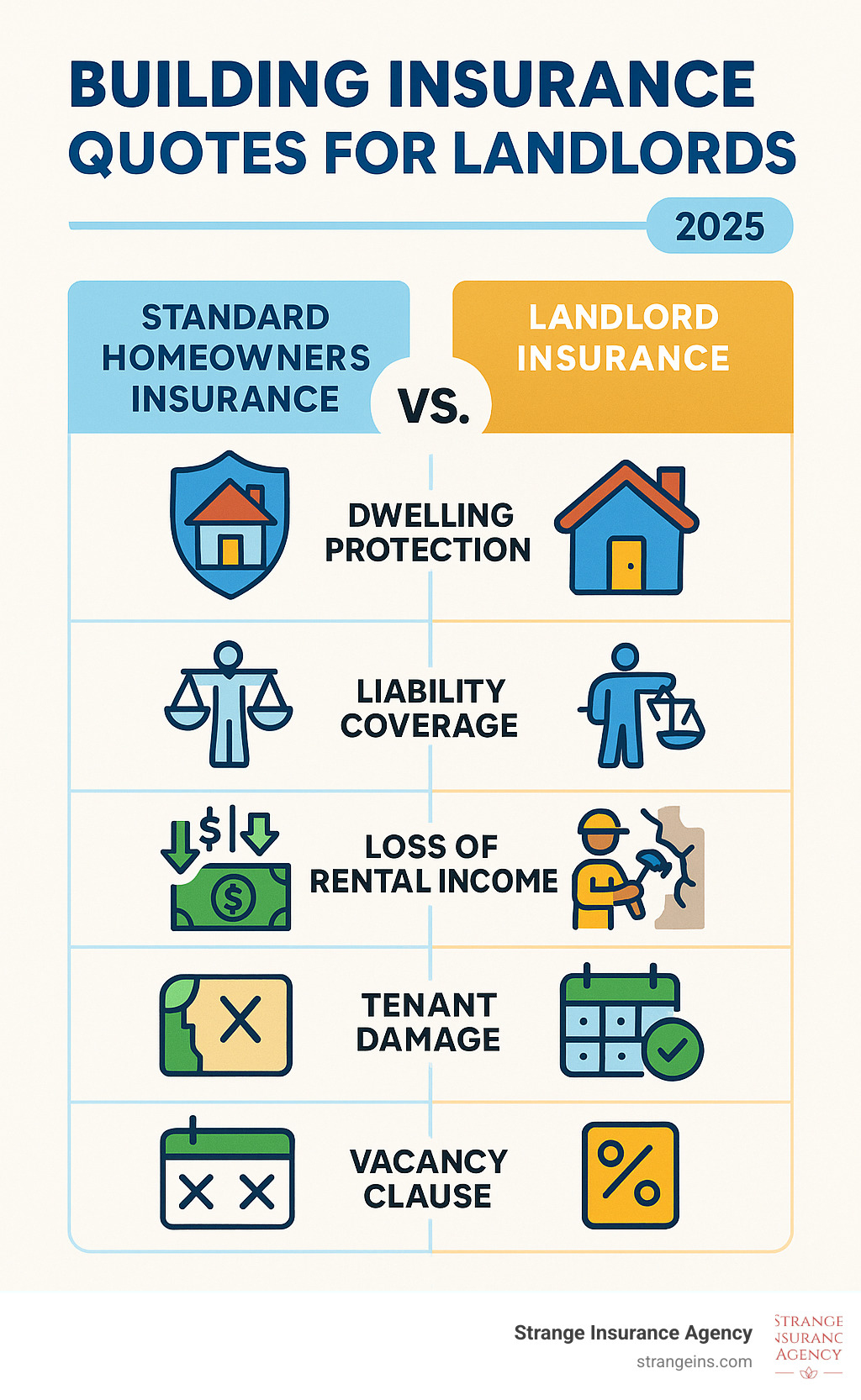
Building insurance quotes for landlords are essential for protecting your rental property investment. As a landlord, your standard homeowners insurance won’t cut it. Rental properties face unique risks—from tenant-caused damage to loss of rental income—that require specialized coverage.
Getting the right protection at the best price is simpler than you think. The key is comparing multiple quotes. Landlords can save up to 35% by shopping around, with some saving over $600 annually. Your actual premium depends on factors like property location, age, and the coverage you choose.
To get started, have this information ready:
- Property Details: Address, age, square footage, construction type
- Coverage Needs: Dwelling protection, liability limits, loss of rental income
- Risk Factors: Location, tenant type, property condition, claims history
Whether you own a single-family home, condo, or multi-unit building, the right insurance protects both your property and your income stream. Without it, a single incident could wipe out years of rental profits. At Strange Insurance Agency, we work with multiple carriers to ensure you get the protection and savings you deserve.
Building insurance quotes for landlords terms at a glance:
- best way to insure rental property
- average rental property insurance cost
- liability coverage for rental property
Understanding Landlord Insurance: Your First Line of Defense
Landlord insurance is a financial safety net for your rental property business. It’s specifically designed to protect property owners from financial losses associated with renting to tenants, covering risks that a standard homeowners policy does not.
Homeowners Insurance vs. Landlord Insurance: A Crucial Distinction
Many property owners mistakenly assume their homeowners policy covers a rental property. It doesn’t. Homeowners insurance is for owner-occupied homes and covers your personal belongings and liability. Once you start collecting rent, you’re operating a business, which changes your risk profile.
Tenants introduce different risks, such as not reporting a small leak that turns into major water damage, or a guest injury that leads to a liability claim. Your Homeowners Insurance Policy for Rental Property isn’t equipped for these scenarios. Dedicated landlord coverage is essential to protect your investment.
What Types of Properties Does Landlord Insurance Cover?
Landlord insurance can be custom to your specific property type:
- Single-family homes: The most common type of coverage.
- Condos: Specialized policies that work alongside your HOA’s master policy.
- Multi-unit buildings: Coverage that scales with the number of units and increased liability exposure, from duplexes to apartment complexes.
- Short-term rentals: Properties like Airbnb units often need special add-ons to address frequent tenant turnover.
For larger properties like office buildings or retail spaces, you’ll need Commercial Rental Property Insurance.
Legal Requirements in the US
While not legally required by federal or state law, landlord insurance is almost always mandated by your mortgage lender to protect their investment. Even if you own the property outright, forgoing insurance is a significant financial risk.
Why Tenant Insurance Matters to You
Your landlord policy does not cover your tenants’ personal belongings or their personal liability. This is why smart landlords require tenants to carry renters insurance in their lease agreements. When tenants have their own policy, it covers their property in case of fire or theft. More importantly for you, it provides liability coverage if they accidentally damage your property or injure someone, creating a protective buffer that can prevent claims from reaching your policy.
For more detailed guidance on landlord responsibilities and insurance requirements, the Insurance Information Institute offers comprehensive resources to help you understand your coverage needs.
Decoding Your Landlord Insurance Policy: What’s Covered (and What’s Not)
When comparing building insurance quotes for landlords, you’ll find policies are built from several key components. Understanding what’s covered, what’s optional, and what’s excluded is crucial for getting the right protection.
For a comprehensive look at how building and contents coverage work together, check out Building and Contents Insurance for Landlords.
Essential Coverages You Can’t Afford to Skip
These foundational coverages are the core of any solid landlord insurance policy.
Property Damage Protection (Dwelling Coverage): This protects the physical structure of your building—walls, roof, and foundation—from perils like fire, wind, and hail. It also includes Other Structures Coverage for detached garages, sheds, and fences.
Landlord Liability Protection: This is your financial shield if someone is injured on your property and you are found legally responsible. It covers medical bills, legal fees, and settlements for events like a slip-and-fall. Given that tenant injuries can lead to significant claims, this coverage is vital. For more details, see Liability for Rental Property.
Loss of Rental Income: Also known as fair rental value coverage, this replaces your lost rental income if your property becomes uninhabitable due to a covered event (like a fire) and needs repairs. It helps you continue paying your mortgage and other expenses while your property is vacant.
Valuable Add-Ons to Consider for Your Policy
Optional coverages can customize your policy to address specific risks.
Sewer Backup Coverage: Standard policies often exclude damage from water backing up through sewers or drains. This add-on is crucial for properties with basements or in areas with older infrastructure.
Overland Water Coverage: Protects against flooding from excessive rain or overflowing rivers, which is often excluded from standard policies. This is especially important in coastal areas or flood-prone regions.
Malicious Damage by Tenants: Standard policies cover accidental tenant damage but exclude intentional acts. This add-on protects you if a disgruntled tenant vandalizes your property.
Extended Landlord Contents Coverage: If you rent furnished units or keep maintenance equipment (like lawnmowers) on-site, this covers those items beyond the basic appliance coverage.
For maximum liability protection, consider an Umbrella Insurance Policy for Rental Property.
| Coverage Type | Standard Coverage | Optional Add-On |
|---|---|---|
| Water Damage | Sudden & accidental (e.g., burst pipe) | Sewer Backup: Covers damage from water backing up through sewers or drains. Overland Water: Covers damage from floods, excessive rain, or overflowing bodies of water (often crucial in coastal areas like Florida or areas prone to heavy rainfall). |
| Tenant Damage | Accidental damage by tenant (e.g., accidental fire) | Malicious Damage by Tenants: Covers intentional damage or vandalism caused by your tenants. This is a big one, as standard policies often exclude intentional acts. |
| Landlord Contents | Limited to appliances you own (fridge, stove) | Extended Contents Insurance: Covers other personal property you keep at the rental, such as furnishings if you rent furnished units, landscaping equipment, or maintenance tools (e.g., a lawnmower). |
| Legal/Income | Lost rent due to covered peril | Legal Expense Insurance: Can cover legal fees for landlord-tenant disputes (e.g., evictions). Rent Guarantee Insurance: Pays out if a tenant stops paying rent, even if they’re still occupying the property (distinct from loss of rental income due to property damage). |
| Natural Disasters | Basic wind/hail | Earthquake Insurance: Essential in seismically active regions. Specific Flood Insurance: Needed for properties in flood zones, as standard policies typically exclude flood damage. |
| Liability Extension | Basic property owner liability | Umbrella Insurance Policy for Rental Property: Provides an extra layer of liability coverage above and beyond your standard landlord policy limits, offering broad protection for significant claims. Highly recommended for landlords with multiple properties or substantial assets. |
Common Exclusions and Claim Scenarios
Knowing what your policy won’t cover is just as important as knowing what it will.
Common Exclusions: Policies typically exclude general wear and tear, maintenance-related problems (like a slow leak you ignored), pest infestations, and damage to your tenant’s personal belongings.
Unoccupied Property Clauses: Most policies limit or void coverage if a property is vacant for an extended period (usually 30-60 days). You may need separate vacant property insurance.
Common Claims: The most frequent claims we see are for water damage from pipes, kitchen fires, and storm damage. These are typically covered by a standard policy, but understanding your exclusions is key to a smooth claims process.
For more insights, explore our guide to the Best Home Insurance for Rental Properties. When reviewing building insurance quotes for landlords, look beyond the premium and dig into the details.
How to Get the Best Building Insurance Quotes for Landlords

Getting the best value on building insurance quotes for landlords isn’t just about finding the lowest price. It’s about understanding how insurers calculate rates and using that knowledge to your advantage. At Strange Insurance Agency, we help you compare options from over 30 carriers to find the right balance of coverage and cost through our Buy to Let Buildings Insurance Quotes.
Factors That Influence Your Building Insurance Quotes for Landlords
Insurers assess risk based on several key factors:
Property Location: Proximity to fire stations and hydrants can lower rates, while high crime rates or risks of natural disasters (hurricanes, floods) can increase them.
Property Age and Construction: Older homes with outdated electrical or plumbing systems may have higher premiums. Upgrades to the roof, wiring, or HVAC can lead to significant savings.
Claims History: A history of frequent claims can increase your rates, as insurers view you as a higher risk.
Security Features: You can earn discounts by installing monitored fire and burglar alarms, deadbolts, and sprinkler systems.
Tenant Screening: While not a direct rating factor, a thorough screening process reduces the risk of tenant-related claims, which positively impacts your claims history over time.
7 Actionable Ways to Save Money on Your Premiums
Use these strategies to lower your insurance costs:
- Bundle Policies: Combine your landlord policy with your personal home and auto insurance for discounts of up to 20%.
- Raise Your Deductible: A higher deductible lowers your premium, but ensure it’s an amount you can comfortably afford to pay out-of-pocket.
- Maintain Your Property: Regular maintenance on the roof, gutters, and HVAC systems reduces the likelihood of claims and shows insurers you’re a responsible owner.
- Install Safety Devices: Monitored alarms, smoke detectors, and water leak sensors can earn you premium discounts.
- Avoid Small Claims: Paying for minor repairs yourself can be more cost-effective than filing a claim and risking a rate increase or losing a claims-free discount.
- Pay Annually: Paying your premium in one annual sum instead of monthly installments often comes with a small discount.
- Review Your Policy Regularly: We recommend an annual review to ensure your coverage still meets your needs and that you’re getting the best possible rate.
Ready to see how much you could save? Getting a Quote is the first step.
The 5-Step Process to Compare and Secure Your Policy

Follow this systematic approach to find the Best Building Insurance for Landlords without the hassle. This five-step roadmap guides you from preparation to policy activation.
Step 1: Gather Your Property Information
To get accurate quotes, you’ll need key details about your property:
- Property address, year built, and square footage
- Construction type (wood frame, brick, etc.)
- Roof age and material
- Dates of any major updates to electrical, plumbing, or HVAC systems
- Estimated rebuild cost (the cost to rebuild from scratch, not market value)
Step 2: Determine Your Coverage Needs
Strategically assess your risks to choose the right coverage:
- Assess Risks: Consider your property’s specific risks, like hurricanes in Florida or storm damage in Virginia.
- Choose Liability Limits: Standard limits are $1 million, but landlords with significant assets often choose $2 million or more.
- Select Your Deductible: Balance lower premiums (higher deductible) with what you can afford to pay out-of-pocket.
- Decide on Optional Coverages: Add endorsements like sewer backup or malicious damage by tenants based on your risk assessment. For more on this, see Building Insurance and Landlord Insurance.
Step 3: Request and Compare Building Insurance Quotes for Landlords
This is where working with an independent agent pays off. As an independent agency, we have the technology and partnerships to shop over 30 top-rated companies for you.
- Compare Multiple Offers: We help you look beyond just the price to compare deductibles, coverage limits, and exclusions.
- Check Insurer Ratings: We only work with financially strong insurers with a proven track record of paying claims.
- Understand Policy Details: We’ll walk you through the fine print so you know exactly what you’re buying.
Step 4: Review and Select the Best Policy
Once you have your quotes, we’ll help you make a confident decision.
- Analyze the Fine Print: We’ll highlight key differences and explain any conditions that could affect your coverage.
- Ask Questions: We’re here to clarify any confusion and ensure you have complete peace of mind.
- Confirm Coverage: We’ll double-check that the policy you choose aligns perfectly with your needs.
Ready to discuss your options? Contact us today.
Step 5: Finalize and Bind Your Coverage
We handle the final steps to get your policy in force.
- Submit Application: We review all forms to ensure a smooth and quick process.
- Pay the Premium: Your policy becomes active once the initial payment is processed.
- Receive Documents: We’ll send you your policy documents and review the key points with you.
- Provide Proof to Lender: If you have a mortgage, we’ll send proof of insurance directly to your lender.
Frequently Asked Questions about Landlord Insurance
When it comes to building insurance quotes for landlords, certain questions come up frequently. Here are clear, concise answers to the most common concerns.
Does landlord insurance cover damages caused by tenants?
Yes, but it’s important to understand the distinction. A standard landlord policy typically covers accidental damage caused by a tenant, such as an accidental kitchen fire. However, it usually excludes intentional damage or vandalism, like a tenant punching holes in the walls. To cover intentional acts, you’ll need a specific add-on for “malicious damage by tenants,” which we often recommend.
What happens if my rental property is vacant for an extended period?
Most landlord policies contain a “vacancy clause” that may limit or suspend coverage if the property is empty for an extended time, typically 30 to 60 days. Vacant properties are a higher risk for theft, vandalism, and undetected damage. If you anticipate a long vacancy, contact us immediately. You will likely need to secure specialized vacant property insurance to remain fully protected.
Can I get one policy for multiple rental properties?
Yes, and it’s often the best approach for landlords with a growing portfolio. A multi-property or portfolio policy consolidates all your rentals under a single plan. This simplifies management by aligning renewal dates and paperwork. More importantly, insurers often provide significant cost savings and multi-property discounts compared to insuring each property separately. We can explore consolidation options for your portfolio, including Commercial Real Estate Property Insurance for larger ventures.
Conclusion: Secure Your Investment with the Right Coverage
Protecting your rental property requires a specialized approach. Your standard homeowners policy is not enough. As we’ve covered, your investment faces unique risks—from tenant liability to loss of rental income—that demand custom landlord insurance.
Proactive protection is always better than reactive repairs. Securing the right coverage now safeguards your property, protects your income stream, and shields you from devastating financial setbacks.
At Strange Insurance Agency, we simplify the process. As an independent agency, we leverage powerful technology to provide access to over 30 top-rated insurance companies. We shop the market for you, comparing quotes and coverage options to find the perfect fit for your needs and budget. Our local expertise in Virginia, North Carolina, West Virginia, and Florida ensures we understand your market.
Don’t leave your investment exposed. The independent agency advantage means more options, better coverage, and competitive rates, all without the hassle.
Get a comprehensive quote for your commercial property insurance today!