
Why Understanding Landlord Insurance Expenses Is Critical for Your Investment
Landlord insurance cost typically ranges from $1,200 to $4,000 annually, with most property owners paying about 25% more than standard homeowners insurance. Here’s what you need to know:
Quick Cost Overview:
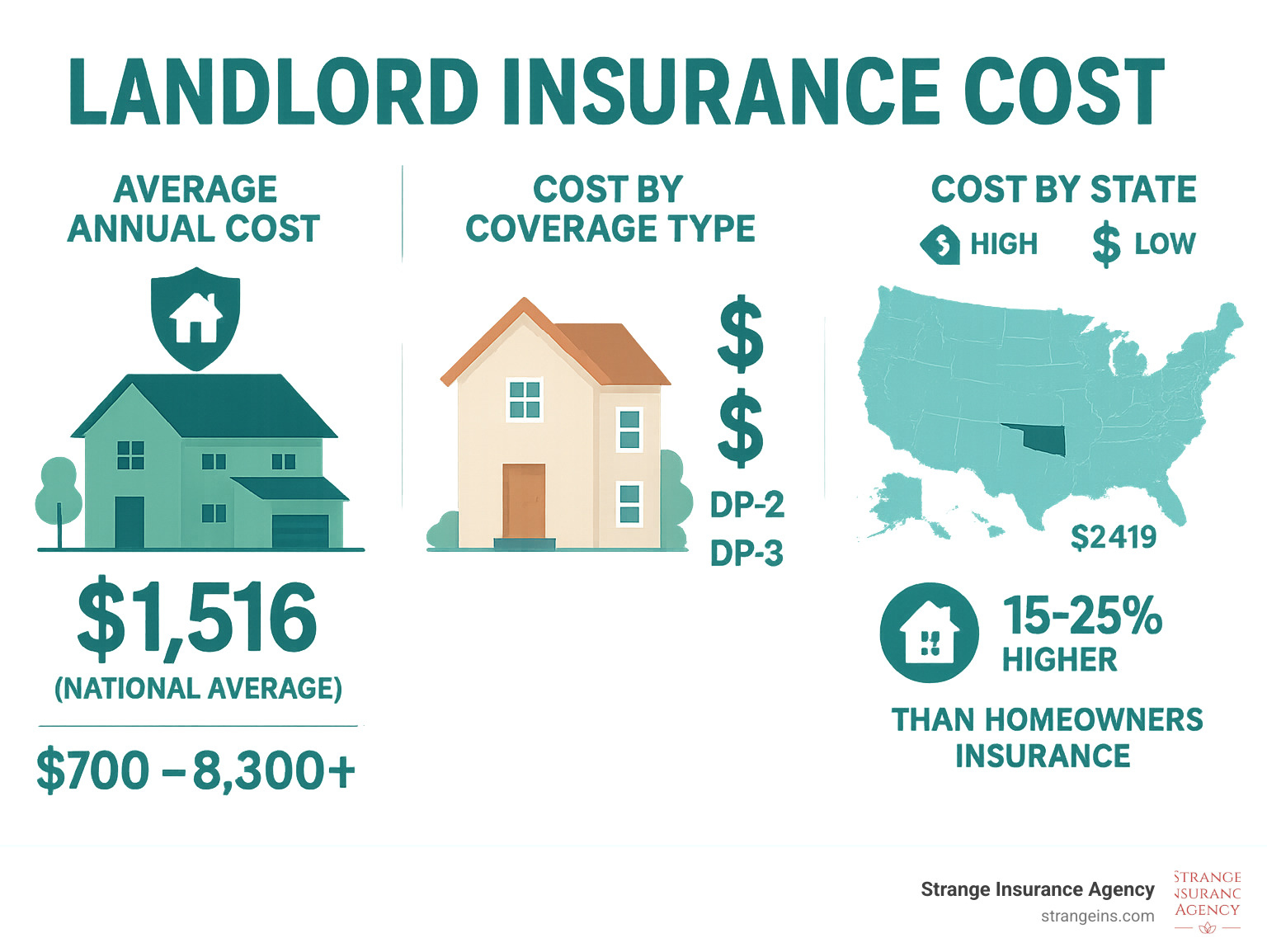
- National Average: $1,516 per year ($126 per month)
- Cost Range: $700 to $8,300+ annually
- Comparison: 15-25% higher than homeowners insurance
- State Variations: Rhode Island ($2,419) vs. Oklahoma ($595)
Key Cost Factors:
- Property location and natural disaster risk
- Building age, condition, and construction materials
- Coverage type (DP-1, DP-2, or DP-3 policies)
- Deductible amount and policy limits
- Claims history and tenant profile
When you purchase rental property, your standard homeowners insurance won’t cover the unique risks that come with being a landlord. Rental properties face higher claim frequencies and larger loss amounts than owner-occupied homes. Tenants may cause accidental damage, guests could get injured on your property, or you might lose rental income if the building becomes uninhabitable.
The good news? Understanding what drives your premium puts you in control. Property location matters most – a rental in flood-prone Louisiana averages $2,484 annually, while the same property in Oregon might cost just $883. Your coverage choices also impact cost significantly. Basic DP-1 policies offer minimal protection, while comprehensive DP-3 policies cover all perils except those specifically excluded.
I’m Christian Strange, and through my 15+ years in insurance and treasury management, I’ve helped countless property owners steer landlord insurance cost decisions while protecting their investments. At Strange Insurance Agency, I understand that busy professionals need efficient solutions that provide comprehensive coverage without breaking the bank.
Landlord insurance cost definitions:
- best way to insure rental property
- building and contents insurance for landlords
- liability coverage for rental property
Breaking Down the Average Landlord Insurance Cost
The landlord insurance cost across the United States averages around $1,516 per year, or $126 monthly. However, this is just a baseline. Your actual premium could range from $700 to over $8,300 annually, depending on your property and coverage choices.
Many new landlords wonder why they can’t use their standard homeowners insurance. The reality is that landlord insurance cost is about 25% higher because rental properties present greater risks. You aren’t on-site daily to monitor the property, and tenants may not be as careful as an owner. Plus, with people coming and going, the liability risk increases. Landlord policies are designed for this commercial activity, often including $1 million or more in liability coverage to protect you from lawsuits if a tenant or guest is injured.
At Strange Insurance Agency, we help property owners across Virginia, North Carolina, West Virginia, and Florida understand these costs upfront. By working with over 30 insurance companies, we find comprehensive coverage that protects your investment without breaking the bank. Check out our Real Estate Insurance options to see how we can help.

How Does Landlord Insurance Cost Vary by State?
Location is a critical factor in determining your insurance costs. The landlord insurance cost differences between states can be staggering. For example, a landlord in Rhode Island might pay an average of $2,419 annually, while the same coverage in Oklahoma could be just $595.
These variations are driven by regional risks. States prone to hurricanes, like Florida and coastal areas of Virginia and North Carolina, naturally have higher premiums. Other factors like local crime rates and property values also play a significant role. Higher property values mean higher replacement costs, which translates to higher premiums. Understanding these state-specific factors is crucial for budgeting your investment properly.
Landlord Insurance vs. Homeowners Insurance: A Cost Comparison
A common mistake for new landlords is assuming their homeowners insurance covers a rental property. Homeowners policies are for owner-occupied properties and exclude the commercial activity of renting. This is why landlord insurance cost is typically 15% to 25% higher.
For that extra cost, you get crucial protections not found in a standard homeowners policy. Key benefits include:
- Increased liability coverage: Landlord policies often include $1 million in liability protection to shield you from lawsuits.
- Loss of income coverage: If your rental becomes uninhabitable due to a covered event like a fire, this coverage reimburses you for lost rent during repairs.
- Tenant-related damage coverage: This can cover issues like vandalism or theft caused by tenants, which a homeowners policy won’t.
Using a homeowners policy for a rental could leave you completely exposed when a claim is filed. We can help you find the right coverage to ensure you’re protected. Learn more about making the switch at Homeowners Insurance Policy for Rental Property.
What Factors Drive Your Premium?
While average costs are a good starting point, your specific landlord insurance cost is determined by a unique blend of factors. Understanding these “ingredients” allows you to influence your final rate. Insurance companies perform a detailed risk assessment, and a well-maintained property in a safe area will always secure a better premium than an older home in a high-risk zone.
At Strange Insurance Agency, we believe in transparency. We’ll help you understand what insurers look for so you can make informed decisions. Get an Investment Property Insurance Estimate to see how these factors affect your bottom line.

Property Characteristics
Your property’s physical features are a primary driver of your premium.
- Property Value: Higher values mean higher replacement costs and, therefore, higher premiums.
- Age and Condition: Newer properties built to modern codes are less risky than older homes with outdated systems (e.g., old wiring, plumbing).
- Construction Materials: Fire-resistant materials like brick can earn discounts compared to wood frames.
- Size and Number of Units: Larger properties and multi-unit buildings have more exposure to potential claims.
- High-Risk Features: Amenities like swimming pools, trampolines, or wood-burning fireplaces increase liability risk and your premium.
Location and Environmental Risks
Where your property is located fundamentally shapes your insurance costs.
- Neighborhood Crime Rates: Properties in areas with low crime are cheaper to insure than those in high-crime zones.
- Proximity to Fire Services: Being close to a fire station and hydrants can lower your premium.
- Flood Zones: Standard policies exclude flood damage. If your property is in a flood zone, you’ll need separate Flood Insurance for Investment Properties.
- Weather Risks: Properties in areas prone to hurricanes (like coastal Virginia, North Carolina, and Florida), tornadoes, or earthquakes will have higher premiums.
Policy and Coverage Choices
The coverage you select has the most direct impact on your landlord insurance cost.
- Coverage Limits: Higher limits offer more protection but increase your premium. We recommend dwelling coverage at 100% of replacement cost.
- Deductible: A higher deductible ($2,000 vs. $500) will lower your annual premium, but ensure you can afford the out-of-pocket cost.
- Claims History: A history of frequent claims will increase your rates.
- ACV vs. RCV: Actual Cash Value (ACV) policies are cheaper but only pay a depreciated value. Replacement Cost Value (RCV) costs more but covers the full cost to rebuild, which we recommend for most landlords.
- Liability Limits: We suggest at least $1 million in Liability Insurance for Rental Property, as the cost to increase this coverage is minimal compared to the protection it provides.
Understanding Your Coverage: Policy Types and Exclusions
Knowing what your policy covers—and what it excludes—is critical for protecting your investment. Understanding the different policy types is the first step to finding the Best Way to Insure Rental Property and managing your landlord insurance cost.
Types of Landlord Policies: DP-1, DP-2, and DP-3
Landlord insurance, or Dwelling Property (DP) insurance, comes in three main forms. Understanding the differences is key to choosing the right coverage.
| Policy Type | Perils Covered | Valuation | Typical Use Case |
|---|---|---|---|
| DP-1 (Basic Form) | Named perils only (e.g., fire, lightning, internal explosion, sometimes vandalism). | Actual Cash Value (ACV) | Vacant properties, properties under renovation, landlords seeking minimal, low-cost coverage. |
| DP-2 (Broad Form) | Named perils (DP-1 + windstorm, hail, falling objects, weight of ice/snow, accidental discharge of water, collapse, etc.). | Replacement Cost Value (RCV) | More comprehensive coverage for standard rental properties. |
| DP-3 (Special Form) | All-risk (covers all perils unless specifically excluded). | Replacement Cost Value (RCV) | Most comprehensive coverage, preferred for most landlords seeking maximum protection. |
- DP-1 (Basic): The most affordable option, covering only a short list of specific perils like fire. It’s best suited for vacant properties where risk is limited.
- DP-2 (Broad): A step up, this policy covers more named perils, including storm damage and burst pipes. It’s a solid middle-ground choice.
- DP-3 (Special): The gold standard. This “all-risk” policy covers everything unless it’s specifically excluded. While it has a higher premium, it offers the most comprehensive protection and is what we recommend for most landlords.
For more details, you can explore information on Dwelling Policies.
What Landlord Insurance Typically Covers
A well-designed policy includes several key protections:
- Dwelling Coverage: Protects the physical structure of your property, including the roof, walls, and built-in systems.
- Other Structures Coverage: Covers detached structures like garages, sheds, or fences.
- Landlord’s Personal Property: Protects items you own that are used for the rental, such as appliances or maintenance equipment.
- Loss of Rental Income: Reimburses you for lost rent if the property becomes uninhabitable due to a covered claim. This is a crucial cash flow protection.
- Liability Coverage: Protects your assets if you’re found legally responsible for an injury on your property. We recommend robust Liability Insurance for Real Estate Investors.
- Medical Payments Coverage: Provides a small amount of immediate coverage for minor injuries, regardless of fault.
Common Policy Exclusions
It’s just as important to know what your policy doesn’t cover:
- Tenant’s Personal Belongings: This is why requiring renters insurance is so important.
- Normal Wear and Tear: Insurance is for sudden and accidental damage, not routine maintenance like aging paint or worn carpets.
- Equipment Breakdown: A standard policy won’t cover a furnace that fails due to age, though you can often add this coverage.
- Intentional Damage by Tenants: Deliberate destruction is typically not covered.
- Non-payment of Rent: Lost income from a tenant who stops paying is not covered by a standard policy.
- Certain Natural Disasters: Floods, earthquakes, and sinkholes almost always require separate, specialized policies. Consider Flood Insurance for Investment Properties if you’re in a high-risk area.
- Pest Infestations: Damage from rodents, insects, or mold (unless caused by a covered peril) is considered a maintenance issue.
Smart Strategies to Lower Your Insurance Rates
While landlord insurance cost is a necessary expense, there are proactive strategies to lower your premiums without compromising on essential coverage. Our goal is to help you find Low Cost Rental Property Insurance through smart risk management.

Potential Discounts and Savings
Here are practical ways to reduce your landlord insurance cost:
- Bundle Policies: Combining your landlord insurance with other policies (like auto or additional properties) is often the fastest way to save. As an independent agency, we can shop over 30 carriers to find the best bundling options for you.
- Install Safety Devices: Smoke detectors, burglar alarms, and fire sprinkler systems can earn you significant discounts.
- Maintain a Clean Claims History: Avoid filing small claims. Insurance is for major, unexpected losses, not routine repairs.
- Choose a Higher Deductible: Increasing your deductible from $500 to $2,000 can lower your annual premium, but be sure you can cover the higher amount.
- Join Professional Associations: Real estate investor groups often have partnerships with insurers that offer member discounts.
- Pay Annually: Paying your premium in one lump sum can eliminate processing fees and may earn you a discount.
Why You Should Require Tenants to Have Renters Insurance
Requiring tenants to carry renters insurance is one of the smartest moves a landlord can make. It creates a layer of protection that benefits everyone.
First, it reduces your liability exposure. If a tenant’s guest is injured, their policy may respond first. Second, it covers the tenant’s personal belongings, meaning they are less likely to seek compensation from you after an event like a fire or theft. This helps keep your claims history clean and your rates low. Renters insurance is very affordable for tenants and provides invaluable peace of mind for all parties.
The Role of an Umbrella Policy
For serious investors, an umbrella policy is essential. This coverage provides extra liability protection that kicks in after your underlying landlord policy limits are exhausted. If you face a $2 million lawsuit but your landlord policy only covers $1 million, an umbrella policy can cover the difference, protecting your personal assets from being seized.
This coverage is surprisingly affordable and crucial for protecting a growing portfolio. We can help you secure Landlord Umbrella Insurance and explain how an Umbrella Insurance Policy for Rental Property fits into your overall strategy.
Frequently Asked Questions about Landlord Insurance
Is landlord insurance tax deductible?
Yes, the landlord insurance cost is typically tax deductible as a business expense. The IRS generally considers insurance premiums necessary for operating a rental property, allowing you to deduct them against your rental income. This can significantly reduce your taxable income. We always recommend consulting with a qualified tax professional to ensure you’re maximizing all available deductions. Learn more at Is Cost of Insurance Deductible on Investment Property?.
Do I need landlord insurance for a short-term rental like an Airbnb?
Absolutely. A standard homeowners policy will not cover the commercial activity of a short-term rental. The moment you accept paying guests, you are operating a business with unique risks, such as frequent guest turnover and higher liability exposure. You need a specialized short-term rental policy or endorsement to protect your investment. Without it, you could face devastating financial loss if a guest is injured or causes significant damage.
What’s the difference between Actual Cash Value (ACV) and Replacement Cost (RCV)?
Understanding this distinction is crucial when choosing your coverage.
- Actual Cash Value (ACV) pays for the depreciated value of your damaged property. An ACV policy has a lower premium but may not provide enough money to fully cover repairs, leaving you to pay the difference out-of-pocket. For example, it would pay for a 15-year-old roof based on its current, depreciated value, not the cost of a new one.
- Replacement Cost Value (RCV) pays the full cost to repair or replace your damaged property with new materials of similar quality, without deducting for depreciation. While RCV policies have higher premiums, they provide true protection for your investment.
For most landlords, we strongly recommend RCV coverage to ensure you can fully restore your property after a loss. You can explore more at Building Insurance and Landlord Insurance.
Find the Right Coverage at the Best Price
Understanding landlord insurance cost is just the beginning—finding the right balance of comprehensive protection and smart pricing is where the real value lies for your rental property business. Throughout this guide, we’ve walked through the key factors that shape your premium, from property location and age to your coverage choices and deductible levels. Now it’s time to put that knowledge to work.
The beauty of working with an independent agent is that we’re not tied to a single insurance company’s products or pricing. At Strange Insurance Agency, we leverage our access to over 30 top-rated carriers, which means we can shop your coverage across the entire marketplace. This isn’t just about finding the cheapest policy—it’s about finding the right policy that protects your investment without paying for coverage you don’t need.
Our concierge approach means we handle the heavy lifting for you. We’ll analyze your specific property characteristics, assess your risk profile, and present you with multiple options that make sense for your situation. Whether you own a single rental home in Virginia or manage multiple properties across North Carolina, West Virginia, and Florida, we understand the regional risks and coverage needs that matter most.
Your Real Estate Business deserves protection that’s as thoughtful as your investment strategy. We’ve seen too many landlords find coverage gaps only after filing a claim, and we’re committed to helping you avoid that situation entirely.
Ready to secure your investment? The process starts with understanding your unique needs and getting quotes that reflect the current market. Don’t let another month pass wondering if you’re properly protected or paying too much for coverage. Get a quote for your Commercial Rental Property Insurance today, and let’s work together to find comprehensive coverage that gives you confidence in your investment’s future.
The cost of proper insurance is always less than the cost of being underinsured when you need it most.